The Sun Crossing the Equator Does Not Mean Every Place Changes Season Together: How the Equinox and Indigenous Seasonal Calendars Illuminate Each Other
Original Chinese title: 太陽跨過赤道,不代表各地同時換季:秋分時刻如何與原住民族季節曆彼此照亮?
The equinox is a precise astronomical event, while Indigenous seasonal calendars describe lived changes in particular places; neither should be used to erase the other.
陳錦瑜
陳錦瑜 teaches courses on chatbots and cultural exploration, with interests in interpreting Taiwan culture and international trends, cultural diversity, the UN SDGs and sustainable global partnerships.
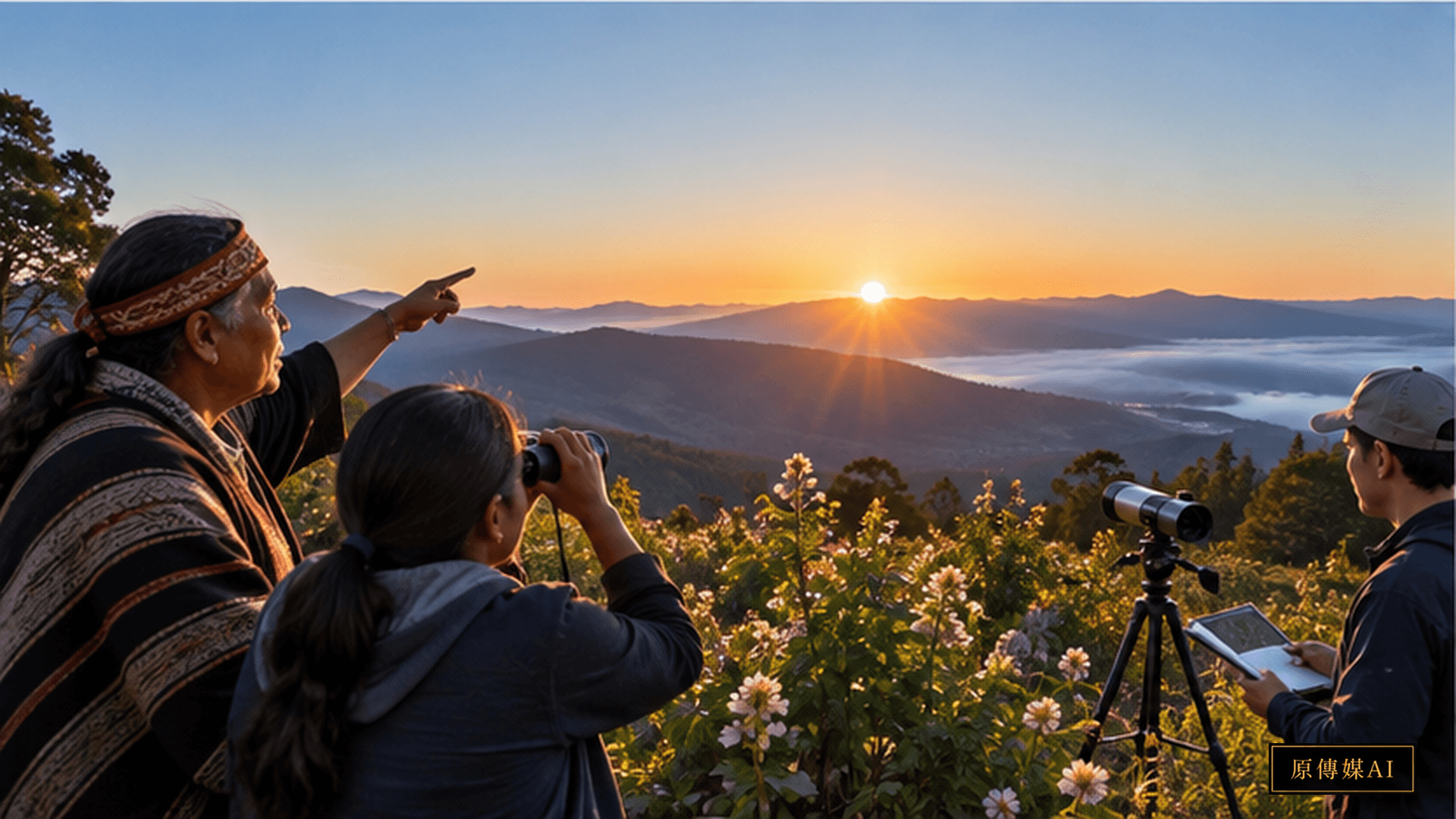
# The Sun Crossing the Equator Does Not Mean Every Place Changes Season Together: How the Equinox and Indigenous Seasonal Calendars Illuminate Each Other
By 陳錦瑜 | Professor, National Taiwan University of Science and Technology
This feature uses the approved primary sources to distinguish what a study or official rule can directly support from interpretation and local governance questions. The evidence concerns the approved topic; it should not be read as a universal outcome for every community, place or institution.
Establish what the evidence can actually say
A reliable reading begins with the population, time period, method and limits of the source. Measured patterns can guide questions, but they do not automatically settle causation, rights or the meaning of a change for people who live with it.
It is equally important to state what was not measured. A finding about one service, watershed, calendar practice or forest-management setting cannot by itself determine what should happen in another place.
Do not make one knowledge system speak for another
Scientific and administrative records can make some conditions visible. Local knowledge holders and frontline practitioners identify responsibilities, relations, changing conditions and boundaries that a dataset cannot infer. A responsible process lets both contributions remain distinct and open to correction.
This does not make evidence optional. It makes the question more precise: which observation supports which claim, who can challenge it, and what should happen when observations conflict?
Design data, consent and accountability together
Data collection needs a stated purpose, access rules, correction routes, retention limits and an explanation of who decides secondary use. Participation is not complete when a meeting is held; people affected by a decision must be able to influence it, challenge it and leave it where appropriate.
Participation also needs material support. Time, travel, translation, caregiving and follow-up work should be budgeted rather than quietly shifted to knowledge holders or frontline workers without compensation.
Do not turn an international case into a shortcut
Astronomical data are highly repeatable: equinoxes can be calculated through shared coordinates and time systems. Seasonal calendars ask a question at another scale—how wind, cloud, sea conditions, plants, animals and work relate at a particular place, and who has responsibility to interpret those changes. A map that places both together must state source and scale rather than recast local observation as a universal astronomical law.
CSIRO's introduction to Indigenous seasonal calendars makes another point: seasonal knowledge is not merely downloadable content, but relates to knowledge holders, place and cultural intellectual property. Public materials can explain the connections, but should not invent language, ritual, harvesting locations or sensitive stories. Communities should decide terms, images, disclosure levels and correction routes.
Begin the Taiwan discussion with governance
For Taiwan, the practical question is how to connect evidence with local authority, transparent responsibilities and a safe way to report error or harm. Technology can assist observation and documentation, but it cannot replace consent, field verification or accountable decision-making.
A workable pathway is to record an observed signal, invite local review, provide a responsible agency response and publish an appropriate explanation without exposing sensitive places or people.
Keep uncertainty inside the institution
Seasonal signals shift with climate, land use and observation conditions, so a record from one year is not a permanent answer. Good documentation identifies date, approximate scale, method and what could not be confirmed; sensitive material can remain conceptual. This teaches that evidence has a time and place, rather than extending one observation to every community.
Courses can read equinox data alongside permitted observations of wind, temperature, plants and animals, recording source, date and limits for both. If knowledge holders take part, compensation, credit and review rights belong in the schedule and budget; a decision not to disclose must remain possible. Platforms may manage versions and permissions, but must not autonomously rewrite terms or infer cultural meaning.
Conclusion: place the verifiable beside the irreplaceable
The durable lesson is not a slogan. It is a process in which evidence, local observation and governance responsibility can correct one another, while rights holders retain meaningful control over disclosure, correction and participation.
Primary sources
AI use and content-safety disclosure
This English edition is an AI-assisted translation of the Chinese article, reviewed for source parity and evidence boundaries.