Awake but Unable to Move: REM Boundaries, Distressing Presences, and Culturally Safe Care in Aotearoa
Original Chinese title: 醒著卻動不了,房間裡還像有「誰」:從 REM 交界到 Aotearoa 文化安全,心理師如何理解睡眠癱瘓?
Sleep paralysis can combine waking awareness, temporary immobility, and vivid sensed presence; the feature separates REM mechanisms, care signals, and cultural safety.
王莉如|諮商心理師督導
Counselling psychologist supervisor focused on trauma recovery, relationships, professional ethics, and social-emotional support.
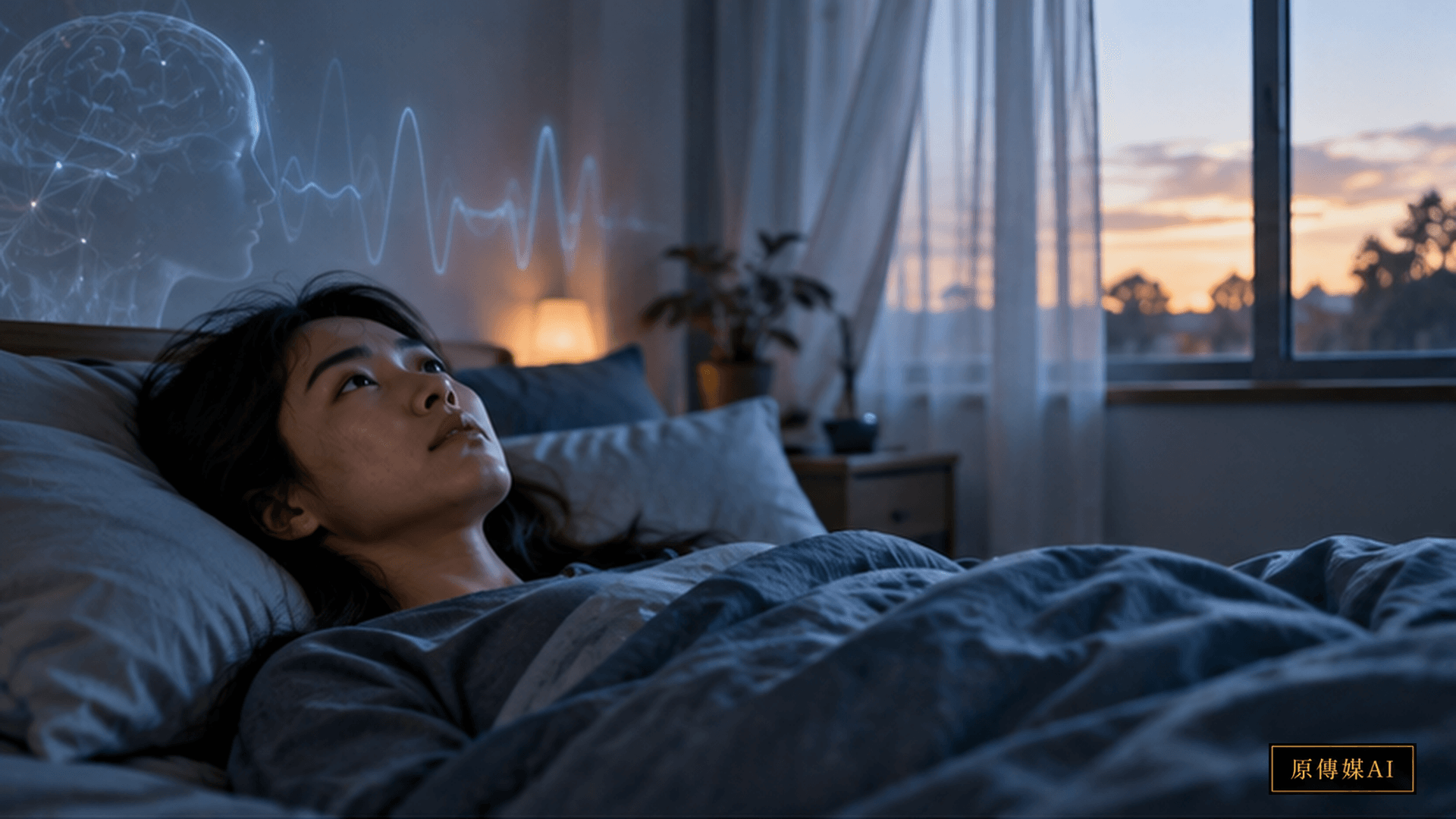
Awake, breathing, and temporarily unable to move
Sleep paralysis can be terrifying because awareness seems to have returned while movement and speech have not. Some people feel pressure; others sense a presence in the room. Those perceptions can be vivid and distressing. Respecting the experience does not require a clinician to impose a supernatural, psychiatric, or culturally predetermined explanation. A useful first assessment asks when the event occurred, how long it lasted, what happened to breathing and awareness, and whether daytime sleepiness or other symptoms are also present.
What the REM boundary explains
Cleveland Clinic explains that muscle atonia during rapid-eye-movement sleep limits large bodily movements while dreaming. Sleep paralysis can occur when awareness returns before that inhibition has fully lifted. This account can explain immobility and dream-like imagery or sounds intruding into waking awareness. It does not establish that every episode has the same content, nor can one episode reveal a person's beliefs, character, or trauma history. Clinicians should separate an observable sleep phenomenon from the meaning a person gives it, while listening seriously to both.
Symptoms, associations, and diagnoses are different
The NHS lists disrupted sleep, insomnia, narcolepsy, post-traumatic stress, anxiety, and panic among associated conditions. Association is not diagnosis. A brief isolated episode is generally not dangerous, while recurrent episodes, fear of sleep, persistent tiredness, or other sleep symptoms deserve assessment. Reporting should not turn associations into a single cause. Evaluation can cover work schedules, medicines, substance use, stress, and other sleep experiences rather than focusing only on what the person saw or felt.
Why an unavailable meta-analysis is not evidence
Background material for this feature mentioned a meta-analysis, but the original paper could not be verified. This article therefore does not repeat its figures, subgroup comparisons, or conclusions. Definitions, recruitment, and whether a study measures one episode or recurrent episodes can all change prevalence estimates. Missing research is not permission to reconstruct a claim from secondary fragments. It is a reason to narrow the article to directly readable clinical guidance and to identify what remains unknown.
Cultural safety is not an ethnic label
In Aotearoa, culturally safe Māori health research does not mean assigning one traditional account to every Māori participant. Health Research Council guidance asks researchers working with Māori participants or Māori health questions to understand the relevant ethical framework before review. Who frames the question, who interprets data, how information is governed, and how findings return to communities are part of research quality. A clinician can ask how a person wishes to describe the event and whether family or a cultural support person should participate, while keeping sleep-medicine assessment available.
What a counsellor can and cannot do
A counsellor can help with fear after an episode, anticipatory anxiety, and avoidance of sleep. With consent, care can be coordinated with sleep medicine. A sensed presence or chest pressure alone should not be treated as proof of psychosis, and physical symptoms should not automatically be psychologized. Recurrent episodes, severe daytime sleepiness, impaired sleep, or safety concerns warrant medical assessment. The aim is not to win an argument about what was real; it is to reduce distress, restore daily functioning, and preserve the person's authority over their own account.
Support from family during and after an episode
Episodes usually end on their own. A family member can speak calmly and avoid restraint, forceful shaking, or recording someone in distress. Afterwards, ask whether the person wants quiet, company, or health information. A sleep diary may record timing, sleep duration, work shifts, position, and daytime symptoms, but it cannot diagnose the cause. Regular sleep and a supportive environment are general measures; changes to medication require a professional who understands the person's health history.
Taiwan: translating more than a diagnosis
Folk accounts, religion, shift work, and family responses can shape how people in Taiwan understand sleep paralysis and whether they seek help. Aotearoa's cultural-safety principles can inspire respect for naming, consent, data governance, and chosen support people, but Māori concepts should not be copied as if Taiwanese communities were equivalent. Local services could co-design readable guidance on common experiences, reasons to seek care, and non-stigmatizing support. That is a proposed service design for Taiwan, not an outcome already tested by the New Zealand guidance.
Questionnaires can also create misunderstanding
A survey that asks only about a frightening presence may mix sleep paralysis with nightmares, night terrors, or other waking experiences. A survey that uses only a medical label may miss people unfamiliar with the term. Better instruments describe timing, awareness, and movement before asking about perceptions, frequency, distress, and care. Translation needs cognitive testing to confirm that versions ask comparable questions. Without measurement equivalence, cultural differences in responses cannot be treated as proof that one group is more anxious, superstitious, or biologically vulnerable.
From one event to a problem needing care
Frequency alone does not determine need. A single episode may create severe fear of sleep, while recurrent episodes may be manageable for someone who understands them. Assessment can include distress, avoidance, daytime function, safety, and associated symptoms, with goals chosen by the person. Follow-up can examine restored routine, understanding, and reduced fear rather than demanding total elimination. Any service promoting a technique should explain its evidence, limits, and referral signals instead of blaming a person when it does not work.
Public guidance needs a usable referral path
Responsible health information cannot stop at saying the event is usually harmless. Readers need to know when to observe, seek primary care, request sleep assessment, or follow local emergency guidance for serious breathing difficulty, injury, or another acute symptom. Intake can ask about recurrence, daytime sleepiness, medicines, shift work, and distress before directing care. Records should not turn cultural accounts into evidence of pathology, and use of traditional or religious support should not exclude medical care. With consent and clear safety boundaries, more than one form of support may coexist.
Keeping uncertainty in the conclusion
The retained sources support a sleep-wake boundary phenomenon that may include immobility, inability to speak, pressure, and a sensed presence. They also support seeking help when recurrence, anxiety, or daytime tiredness becomes significant. They do not support one cultural interpretation for everyone, and they do not justify quoting the unavailable meta-analysis. Good communication offers a credible description, clear care signals, and respect for personal meaning. Separating mechanism, interpretation, and care prevents professional language from becoming another form of dismissal.
Sources and further reading
Role-Driven Inquiry
Yuan Media AI | Guided Questions by Role
Select a role first, then review the complete questions from that perspective; clicking a question will display Yuan Media AI’s response in real time.
Select a role
睡眠醫學臨床人員
Examine the article's evidence, governance boundaries, data rights, and actionable steps from the perspective of a 睡眠醫學臨床人員.
Choose a question
AI use and content-safety disclosure
AI assisted writing and translation. Source-supported facts, editorial interpretation, and implications for Taiwan are distinguished.