Life Expression Lab | When the World Re-Examines Traditional Medicine: Will Scientific Validation Protect Ancestral Knowledge, or Turn It into Someone Else's Database?
Original Chinese title: 生命展現實驗室|當世界重新研究傳統醫療:科學驗證會保護祖傳知識,還是把它變成別人的資料庫?
The World Health Organization deepens the integration of traditional medicine into public health reform. Moving from trauma healing and ethnobotanical data sovereignty to biopiracy prevention, this analysis asks whether scientific validation will protect living ancestral knowledge or serve as a Trojan horse.
王莉如|諮商心理師督導
Counselling psychologist supervisor focused on trauma recovery, somatic and integrative health, helping professional ethics, and social-emotional support.
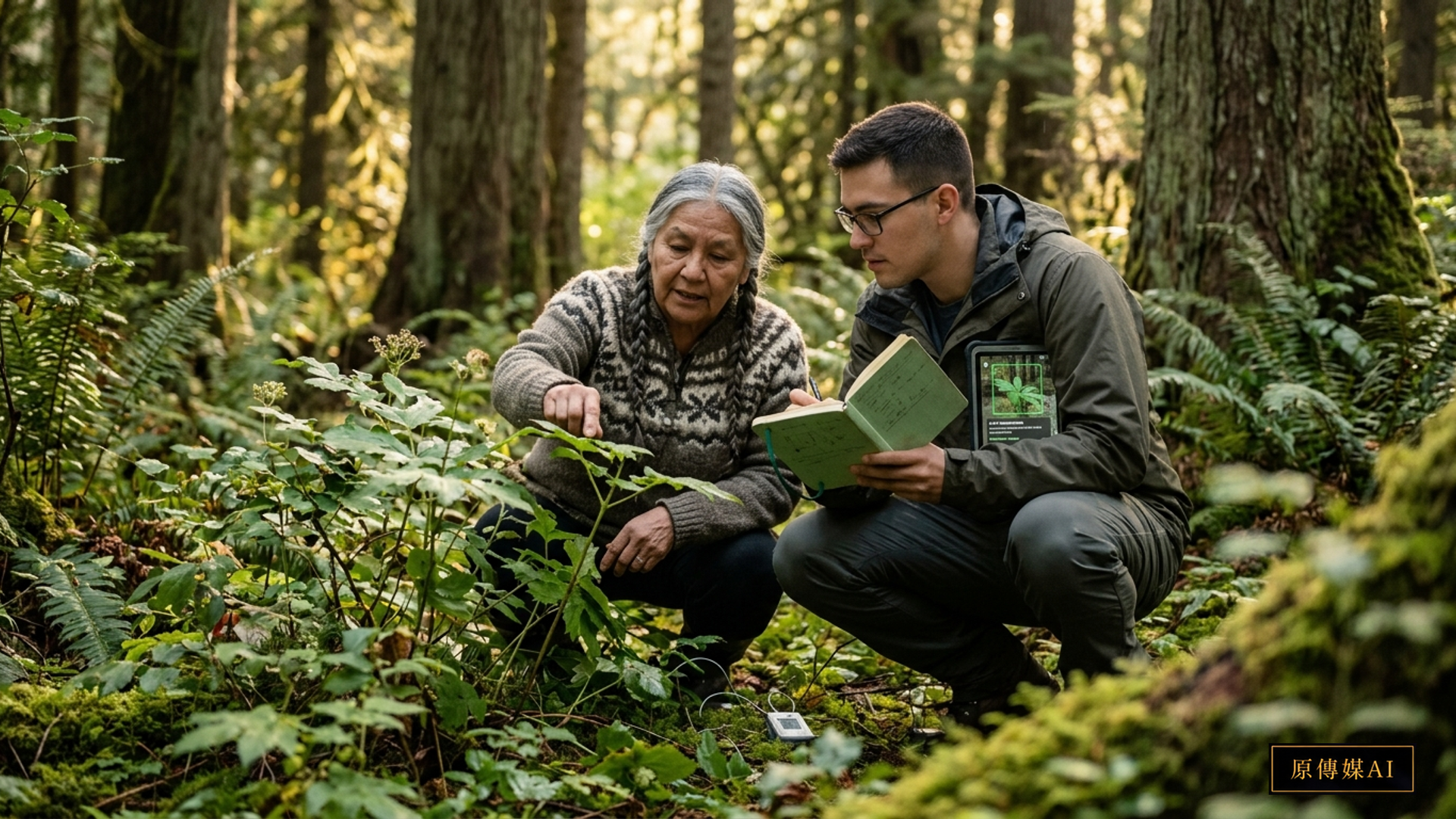
Ancestral Wisdom at the Crossroads: Global Public Health's Systemic Turn
After nearly a century of biomedical hegemony dominating global health systems, public health institutions are undergoing a profound paradigm re-evaluation. On September 9, 2026, high-level policy dialogues hosted by the World Health Organization (WHO) highlighted that traditional, complementary, and integrative medicine (TCIM) is not a peripheral alternative, but the primary healthcare foundation for billions of people worldwide. The WHO Global Traditional Medicine Centre emphasized that as societies confront rapid population aging, chronic metabolic disorders, intractable pain, escalating mental health crises, and the looming threat of antimicrobial resistance (AMR), health systems urgently need integrative approaches that harmonize holistic mind-body well-being with ecological adaptation.
Yet as international biomedical consortia and corporate biotechnology enterprises turn their gaze toward Indigenous traditional medicine under the banner of scientific modernization, Indigenous communities experience deep, understandable apprehension. On one hand, rigorous clinical validation can dispel colonial prejudices that brand ancestral wisdom as unscientific superstition, affirming the biological efficacy and psychological therapeutic value of botanical formulations. On the other hand, painful historical experience warns communities that without robust governance safeguards and data sovereignty protections, scientific research functions as an elegant Trojan horse designed to extract plant pharmacopeias, converting living heritage into proprietary chemical patents and commercial machine-learning training corpora.
The crux of this confrontation is fundamental: will scientific validation protect living traditional knowledge and the dignity of Indigenous nations, or will it accelerate digital and patent appropriation, reducing ancestral medicine to a lucrative database for foreign interests?
Rejecting Mechanical Reductionism: Traditional Healing Is Not a Lookup Table
Western laboratory research evaluates traditional medicine through rigorous chemical reductionism: isolating botanical specimens, conducting mass spectrometry assays, purifying active single molecules, and measuring receptor binding affinities in cell cultures and animal models. This methodology has unlocked epochal drugs, from aspirin and quinine to artemisinin and digitalis. However, when reductionism is treated as the sole arbiter of therapeutic truth, it obliterates the foundational philosophy of Indigenous healing traditions.
In Indigenous healing ontologies, the potency of a medicinal plant does not exist as an isolated chemical formula. It is woven into an intricate ecological, social, and spiritual matrix: was the harvesting site approached with customary spiritual permissions? Was the plant collected at dawn before dew evaporated or under specific lunar phases? Was the sun-facing root selected, or the mature bark of a grandfather vine? Most critically, traditional healers never view the human body as a malfunctioning biological machine. Healing investigates whether the patient has fractured ethical covenants with family, clan, or ancestors, whether unresolved intergenerational grief lingers in the body, or whether harmony with forest, water, and soil has been broken.
If scientific research flattens traditional healing into an abstract lookup table linking isolated plants to diagnosed pathologies—severed from ceremonial protocols, relational ethics, and healer-patient reciprocity—it destroys the living coherence of the healing system even as it extracts an active compound. Authentic integrative medicine must recognize that recovery encompasses spiritual renewal, social connection, and cultural identity alongside cellular biochemical modulation.
Digital Biopiracy: From Botanical Specimens to Algorithmic Extraction
In an era defined by artificial intelligence and big data, the appropriation of Indigenous medical knowledge has evolved from physical biopiracy to covert digital extraction. Historically, biopiracy involved unauthorized prospectors transporting seeds, cuttings, or dried herbs across borders to secure foreign patents. Today, digital biopiracy utilizes web scrapers, open-access academic archives, and satellite remote sensing to systematically digitize ethnobotanical field surveys, elder oral testimonies, and GPS coordinates of wild stands.
Smartphone plant identification apps illustrate this emerging frontier. Commercial platforms train convolutional neural networks on millions of crowd-sourced botanical images, enabling users to identify flora with a camera click. To attract commercial subscribers, however, many applications display unsubstantiated medical claims, folk remedies, and cancer-prevention assertions without rigorous clinical validation. This practice introduces severe public safety hazards and ethical violations. Many toxic plants share deceptive morphological resemblances with edible or medicinal herbs; algorithmic misclassifications of a few millimeters can result in fatal poisonings. Simultaneously, commercial developers extract generations of Indigenous toxicity knowledge without attribution, paywalling the data while completely excluding originating communities from commercial revenues.
This digital appropriation violates the Access and Benefit-Sharing (ABS) framework established by the Nagoya Protocol under the Convention on Biological Diversity, as well as the universal right to Free, Prior and Informed Consent (FPIC). Preventing digital biopiracy requires enforceable governance: all digital initiatives engaging Indigenous medical knowledge must recognize communities' perpetual ownership and veto rights, guaranteeing shared governance and equitable revenue redistribution across all downstream algorithms and patents.
Responsible Botanical AI: Three-Tier Safety and Governance Architecture
Recognizing these ethical and physiological hazards does not require rejecting technology entirely; it requires embedding ethical humility and technical boundaries into system architecture. For public agencies and Indigenous organizations developing plant identification tools, responsible design demands a three-tier architecture:
Tier 1: Morphological Verification and Toxicity Warnings. The computer vision layer processes uploaded photographs of leaves, flowers, bark, and seeds, generating candidate species with transparent confidence scores rather than claiming singular certainty. Crucially, the system enforces prominent warnings whenever candidate matches resemble toxic lookalikes, displaying mandatory disclaimers that computational identification never constitutes confirmation of safety or therapeutic suitability.
Tier 2: Evidence-Stratified Contextual Knowledge. The interface explicitly distinguishes modern botanical classifications, published pharmacological and toxicological studies, statutory safety warnings, and community-authorized ethnobotanical narratives. It presents evidence tiers transparently, allowing users to differentiate between laboratory-tested data, documented oral heritage, and potential poisoning risks without misrepresenting folk claims as clinical prescriptions.
Tier 3: Cultural Sovereignty and Access Governance. Secret clan remedies, precise processing formulas, sacred ceremonial applications, and exact coordinates of endangered wild medicinal populations are strictly encrypted and withheld from public generative language models. For inquiries seeking deeper cultural understanding, the system provides official contact channels for community cultural boards, returning instructional authority to local elders.
Encoding safety warnings and sovereignty boundaries directly into application architecture ensures that computational tools foster ecological education without catalyzing bio-prospecting or risking human lives.
Taiwan Indigenous Healing Heritage and Living Manifestation
Across Taiwan's biodiverse island landscapes, Indigenous healing traditions preserve profound psychological and ecological wisdom. The Pulingaw (traditional healers and ritual intermediaries) of the Paiwan and Rukai nations heal deep somatized distress through ancestral dialogue, sacred chanting, and targeted plant preparations. Elders across Amis, Atayal, and Bunun communities understand the subtle hot-cold attributes of montane and foothill flora, providing vital domestic care for traumatic injuries, postpartum recovery, and seasonal fevers.
Within Taiwan's contemporary legal framework, however, traditional healing remains confined to precarious legal gray zones. Biomedical regulations strictly limit therapeutic practice to licensed medical practitioners, exposing traditional healers to regulatory penalties. Furthermore, when external pharmaceutical developers collect native botanicals like Cinnamomum osmophloeum (native cinnamon), Anoectochilus formosanus (jewel orchid), or Antrodia cinnamomea (stout camphor fungus) for commercial patenting, tribal communities frequently watch intellectual property revenues flow entirely to outside corporations.
To achieve meaningful social integration, Taiwan must enact decisive policy reforms under Articles 13 and 15 of the Indigenous Peoples Basic Law. The Ministry of Health and Welfare, Taiwan and the Council of Indigenous Peoples, Taiwan must collaborate to establish cultural practitioner accreditations and legal protections for indigenous traditional healers. Scientific research into tribal botanical knowledge must mandate ethical clearance and legally binding benefit-sharing covenants to prevent uncompensated patenting. Furthermore, counseling psychology and psychiatry must embrace Indigenous relational worldviews, bridging modern trauma therapy with traditional community support systems.
Honoring the Vital Thread: Flourishing Wisdom in Dignity
Life manifestation does not mean fragmenting living traditions to satisfy external quantitative benchmarks; it means standing whole, rooted in one's land, language, and ancestral memory. Indigenous traditional medicine has survived centuries of colonial suppression because it carries communities' deepest love for the earth, reverence for living beings, and compassionate companionship through suffering.
As global public health turns its gaze back toward this ocean of ancestral knowledge, we must not repeat extractive histories of cold test tubes, predatory patent filings, and decontextualized algorithms. We must build a genuine cross-cultural dialogue founded on humility, sovereignty, and reciprocity. Let modern scientific lenses serve as shields defending traditional ecosystems, while ancestral ethics guide contemporary medicine toward healing the whole person. Only through mutual respect and sovereignty can ancient wisdom illuminate our shared human future.
Sources and Further Reading
Role-Driven Inquiry
Yuan Media AI | Guided Questions by Role
Select a role first, then review the complete questions from that perspective; clicking a question will display Yuan Media AI’s response in real time.
Select a role
整合醫學與公共衛生研究員
Examine the article's evidence, governance boundaries, data rights, and actionable steps from the perspective of a 整合醫學與公共衛生研究員.
Choose a question
AI use and content-safety disclosure
AI assisted writing and translation. Source-supported facts, editorial interpretation, and implications for Taiwan are distinguished.