Why are wildfires burning hotter? How a millennial lake core proves cultural burning is governance
Original Chinese title: 森林為何愈燒愈烈?一根千年湖芯如何重新證明文化燃燒是治理權
A 1,000-year lake sediment record proves colonial fire suppression caused dangerous shrub expansion and ladder fuels, disrupting Indigenous fire regimes. Cultural fire is environmental governance.
全明正
Bunun from Shuanglong Village | Cultural and visual documentarian | Long-term focus on energy transition, materials science, low-carbon supply chains, industrial policy, and local environmental governance
1. A lake sediment core: millennial archives of fire and forest ecology
Stepping into the forests of Gippsland in southeastern Australia, one frequently encounters dense, head-high thickets of shrubs and underbrush accumulated beneath towering eucalyptus canopies. In recent years, exacerbated by climate change, catastrophic Black Summer megafires have repeatedly erupted, with infernos reaching thousands of degrees Celsius consuming millions of hectares of native bushland. Forestry authorities and mainstream commentary habitually attribute these disasters exclusively to global heating and protracted drought; however, a breakthrough paleoecological study published in Nature analyzes a continuous lake sediment core, uncovering an ecological truth spanning over a millennium that colonial narratives systematically erased.
The research consortium extracted a continuous sediment core extending several meters into the lakebed within the ancestral territories of the Gunaikurnai Aboriginal people, documenting environmental shifts across 1,100 continuous years. This sedimentary record functions as a natural chronometer: microscopic charcoal particles reflect historical fire frequency and relative severity, while fossilized pollen profiles reconstruct the changing taxonomic proportions of canopy trees, mid-story shrubs, and understory grasses. Utilizing radiocarbon dating alongside advanced geochemical assays, paleoecologists revealed the profound ecological rupture dividing pre-colonial Indigenous stewardship from post-colonial state administration.
The sedimentary record demonstrates striking historical continuity: for more than seven centuries prior to European pastoral invasion and violent Indigenous dispossession in the 1840s, micro-charcoal deposition was remarkably frequent and stable, yet pollen profiles were dominated by mature eucalyptus trees and open grassy understories, with shrub pollen suppressed at negligible levels. Under continuous Indigenous stewardship, this landscape experienced frequent, low-intensity fire, yet destructive crown fires were virtually non-existent. Only following colonial fire bans and the prohibition of cultural burning did shrub pollen explode, setting the stage for contemporary megafires.
2. The disruption of millennial balance: how fire suppression created ladder fuels
European settlers brought with them an agrarian paranoia regarding wildland fire. In the eyes of colonial administrators and early foresters, fire was an existential enemy of civil order, a destroyer of timber resources, and a hazard to be eliminated. Viewing Aboriginal cultural burning as primitive, reckless nomadism, colonial authorities enacted strict fire bans across forests and pastoral leases, forcefully severing Gunaikurnai relationships with ancestral lands. The colonial apparatus operated under the naive assumption that banishing human ignition would return nature to an idealized, virginal equilibrium.
However, modern forest ecology and extensive retrospective analyses published in Science deliver a sobering verdict: absolute fire suppression did not preserve forests; it constructed an ecological tinderbox. In the absence of regular, low-intensity cultural fire, open grassy forest floors were swiftly colonized by dense shade-tolerant shrubs, eucalyptus saplings, and hanging dry vines. In ecological forestry, this vertical vegetation corridor spanning the forest floor to mature upper canopies is known as ladder fuels.
Once ladder fuels accumulate critical mass, lightning strikes or accidental ignitions readily climb this continuous vertical pathway from surface leaf litter into forest canopies tens of meters above. When surface fire transitions into an active crown fire, radiative energy release multiplies exponentially, spawning pyrocumulonimbus storm clouds and fire whirlwinds capable of regional devastation. The lake core provides undeniable proof: contemporary catastrophic wildfires are not an inevitable natural reality, but rather the direct ecological consequence of colonial fire suppression.
3. The essence of cultural burning: an ecological relationship, not a mechanical hazard tool
Confronted by uncontrollable megafire seasons, Australian forestry agencies and rural fire services have increasingly turned to Indigenous knowledge holders, attempting to incorporate cultural burning into modern disaster management. In bureaucratic frameworks, however, cultural burning is frequently mischaracterized as a mechanical synonym for agency hazard-reduction burning. Government agencies calculate fire via operational quotas, containment costs, and bulldozer perimeter lines; to Gunaikurnai custodians, however, cultural burning represents a holistic custodial practice rooted in ancestral law, kinship ethics, and relational ecology.
The Gunaikurnai Land and Waters Aboriginal Corporation (GLaWAC) emphasizes that traditional burning constitutes cool burns and right fire. Custodians determine ignition timing through intimate ecological observation rather than calendar schedules: assessing soil moisture, morning breeze direction, acacia flowering stages, bird nesting cycles, and escape corridors for ground-dwelling fauna. Cultural fires burn with ankle-height flames at slow speeds and low temperatures, consuming dry surface litter and invasive shrubs while leaving canopy bark and wildlife habitats entirely undamaged.
The vital distinction resides in sovereignty and emotional kinship. For Indigenous custodians, Country is not an inanimate resource to be exploited or protected from afar, but a living ancestor demanding attentive care. Regular burning fulfills an ancestral obligation: cleansing Country promotes native seed germination, stimulates tender shoots for wallabies, and protects freshwater catchments. While modern sedimentary science validates the efficacy of cultural burning, we must recognize that its core foundation is an ontological posture of human humility within living ecological networks.
4. The struggle for authority: transitioning from consultation to shared governance
Given that paleoecological science has verified the ecological excellence of cultural burning, why do Indigenous custodians continue to encounter bureaucratic resistance when applying fire on ancestral Country? This dynamic exposes the core contradiction in contemporary Indigenous policy: the reluctance of state institutions to surrender administrative sovereignty. Historically, government agencies relegated Traditional Owners to consultative stakeholders or ceremonial figureheads, delivering token Acknowledgements of Country while monopolizing zoning authority, permit issuance, and forestry budgets.
For years, Gunaikurnai custodians have mobilized legal challenges, Native Title agreements, and policy advocacy to substantiate genuine Joint Management arrangements. They argue that cultural burning cannot be subcontracted to conventional fire agencies; only when custodians walk ancestral lands with sovereign authority as rightful managers can cultural fire unlock its full ecological and spiritual restorative capacity. Rekindling cool burns on ancestral soil cleanses accumulated fuel loads while actively healing intergenerational cultural trauma inflicted by colonial violence.
This landscape governance transformation in southeastern Australia offers a powerful blueprint for global Indigenous land justice movements. It dismantles the colonial wilderness myth that pristine conservation requires expelling Indigenous peoples, demonstrating that Traditional Ecological Knowledge represents sophisticated, empirically validated adaptive science. Restoring Indigenous fire authority embodies the implementation of the UN Declaration on the Rights of Indigenous Peoples, honoring inherent rights to self-determination and environmental jurisdiction.
5. Lessons for Taiwan: Bunun hunting territories, forest governance, and regulatory reform
Reflecting upon Taiwan's Central Mountain Range, the historical insights from this Australian lake core evoke profound resonance with our domestic conservation struggles. As a Bunun native from Shuanglong Village in Nantou County, I grew up listening to tribal elders describe mountain stewardship: in ancestral seasonal calendars and hunting governance, fire served as an indispensable ally. Elders understood how to deploy controlled fire within fallow swidden plots and hunting grounds under specific microclimatic conditions, clearing underbrush, encouraging palatable browse for game, and maintaining open sightlines.
Following the Japanese colonial period, Taiwan's mountain governance assimilated state-dominated forestry regimes. The colonial and post-war governments established national forest compartments and national parks, enacting penal codes that classified traditional mountain fire as criminal arson. Under the Forestry Act, cultural burning and swidden clearing were criminalized. Tribal hunters faced severe prosecution for lighting warming fires, causing younger generations to lose ancestral weather-reading and fire-tending arts, while dry biomass accumulated across montane forests, exacerbating modern wildfire hazards.
Fortunately, through collaborative partnerships between the Forestry and Nature Conservation Agency and Indigenous communities, Taiwan's forest governance is experiencing historic breakthroughs. Forest co-management pilots across Tsou, Truku, and central Bunun traditional territories are institutionalizing the legitimacy of ancestral foraging, hunting, and customary knowledge, initiating monitored cultural burning trials. This breakthrough demonstrates that transcending bureaucratic monopolies and empowering tribal co-governance is essential for restoring ecological balance amidst accelerating climate volatility.
6. Toward coexistence with fire: reweaving human-nature compacts in the climate crisis
The modern obsession with total fire suppression formed the psychological foundation of industrial expansion. Industrial societies sought to domesticate nature behind concrete perimeters and administrative decrees. Yet catastrophic wildfires across the globe deliver a harsh reality check: the arrogance of attempting to banish fire ultimately breeds apocalyptic infernos. Many terrestrial biomes evolved alongside fire; suppressing fire entirely halts the natural heartbeat of forest rejuvenation.
A thousand-year lake core from southeastern Australia offers an urgent lesson across time: cultural burning is not a primitive relic of the past, but an indispensable ark for our shared future. Resolving catastrophic wildfire crises requires transforming our relational posture toward the living world rather than acquiring more firefighting helicopters or building larger reservoirs. We must abandon illusions of dominion, restoring Indigenous stewards to the center of ecological decision-making.
Fire can serve as a catastrophic weapon of destruction or as a gentle instrument of landscape renewal, determined by whether the hand holding the torch acts with reverence and humility. When Indigenous custodians rekindle gentle smoke within morning mountain mists, it marks not an emergency alarm, but a sacred prayer re-establishing relational compacts with the living Earth. Cultivating coexistence with fire empowers humanity to protect verdant, resilient forests for future generations on an increasingly warmer planet.
Sources and Further Reading
Role-Driven Inquiry
Yuan Media AI | Guided Questions by Role
Select a role first, then review the complete questions from that perspective; clicking a question will display Yuan Media AI’s response in real time.
Select a role
Tribal Elder and Cultural Fire Practitioner
Examine the article's evidence, governance boundaries, data rights, and actionable steps from the perspective of a Tribal Elder and Cultural Fire Practitioner.
Choose a question
AI use and content-safety disclosure
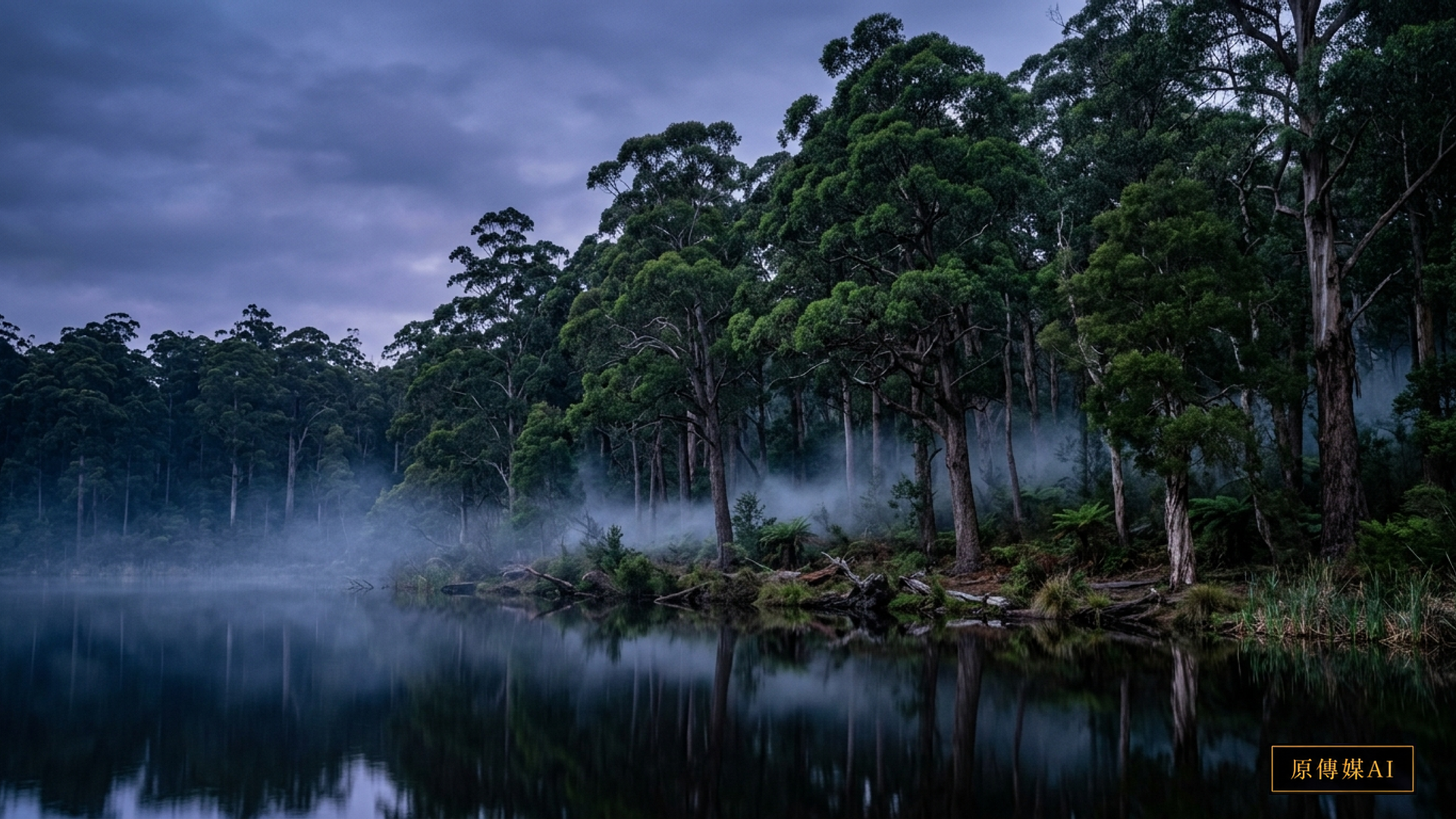
AI assisted in organizing public research and institutional information for this article and its guided questions. Findings, limitations and practical proposals are distinguished. The cover is an AI-generated concept image.