More Than Bars on a Screen: How Tribal Nations Integrate Community Priorities into Public Safety Broadband Governance
Original Chinese title: 不是多一格訊號就叫安全:Tribal Nations 如何把部落需求帶進公共安全寬頻治理
Rural telecommunications are often reduced to coverage maps and signal bars, but true emergency resilience requires grounding network infrastructure in community realities. Drawing on FirstNet Authority's Tribal Advisory Group partnerships with the Catawba Nation and Choctaw Nation, we examine how Two-Eyed Seeing bridges telecom engineering and Indigenous local knowledge.
雙向知識實驗室
Interdisciplinary lab bridging Indigenous traditional knowledge and contemporary scientific governance through Two-Eyed Seeing in conservation, resource management, and cultural data sovereignty.
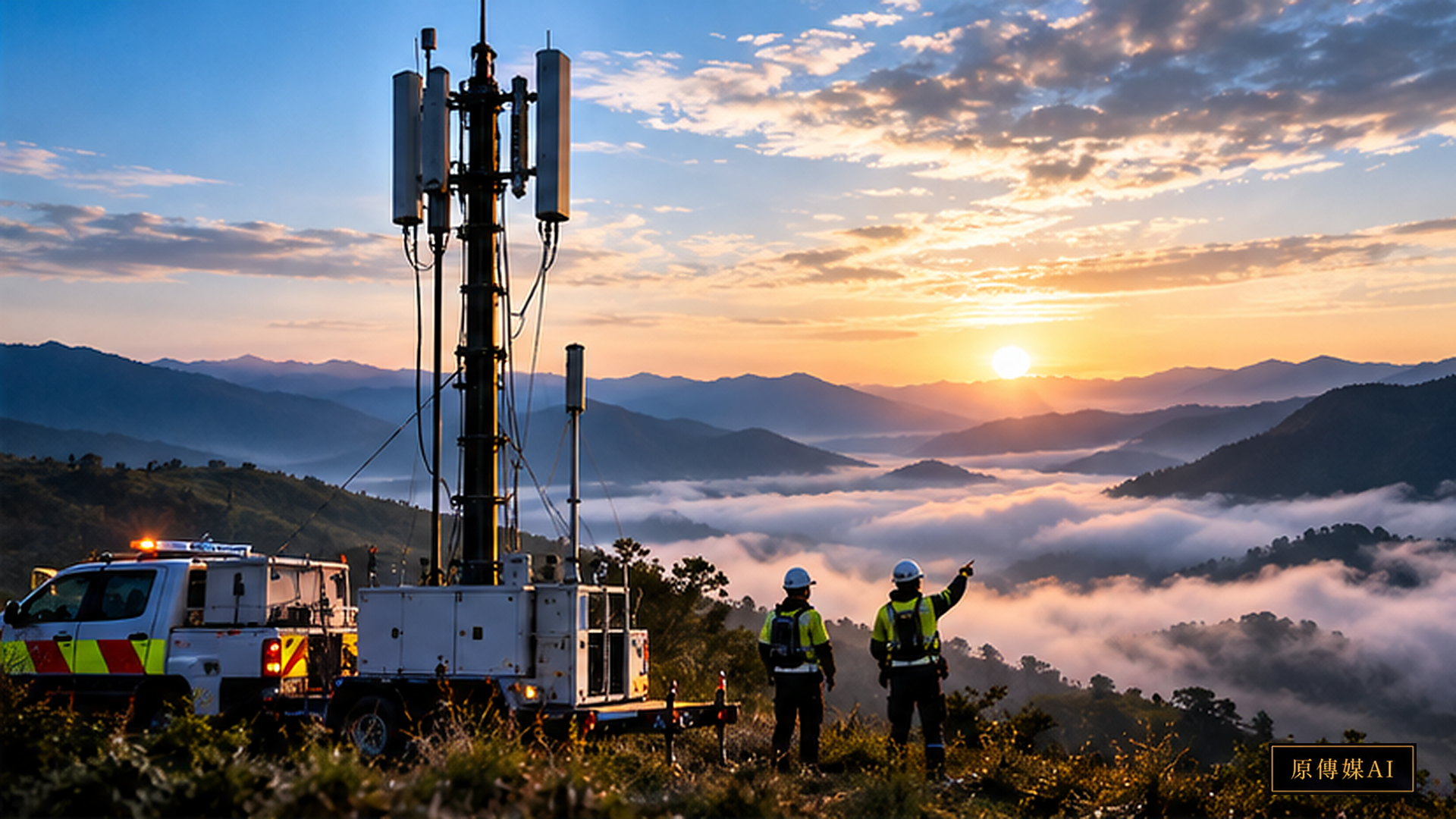
1. The Blind Spot of Coverage Metrics: When Telecom Maps Diverge from Tribal Realities
For decades, telecommunications infrastructure in remote and Indigenous tribal communities has been reduced in regulatory reports and commercial spreadsheets to abstract indicators such as "95% population coverage" or "theoretical cellular signal penetration." However, any community resident, elder, or frontline search-and-rescue volunteer living across rugged mountains, river basins, or remote coastlines knows that these corporate coverage maps harbor lethal disconnects from lived reality. Reported coverage frequently measures signal strength only along major highway corridors; once individuals step into ancestral territories, traditional foraging grounds, watershed headwaters, or unpaved community access routes, cellular reception vanishes into the shadow of steep topography.
The deeper systemic flaw lies in commercial network deployment economics, which are optimized exclusively for routine population density and daily billable call volumes. Commercial networks fail to account for systemic vulnerability during extreme climate emergencies. When severe typhoons, catastrophic debris flows, or mountain wildfires strike remote regions, legacy fiber optic lines and commercial power cables strung along vulnerable utility poles are frequently severed first, instantly severing communities from the outside world. The one or two bars of weak signal normally visible on mobile screens plummet to zero, cutting off local emergency management offices from regional command centers, halting emergency medical dispatch, and preventing evacuation status reports from reaching emergency managers. Having bars on a screen under fair-weather conditions is entirely distinct from possessing a resilient public safety communications lifeline.
Relying on traditional top-down engineering procurement fails to resolve the structural vulnerabilities of remote communications. When network architects have never set foot across a community's watershed or evacuation trails, cell towers end up placed at road turns that are cheap to maintain but functionally useless during a disaster. Overcoming this engineering impasse, Indigenous public safety broadband governance in the United States offers a compelling cross-cultural governance model. As highlighted by FirstNet Authority|Tribal Advisory Group highlights reliable, redundant communications support, only when tribal community needs, spatial knowledge, and self-governing authority are centered at the core of network planning can public safety broadband genuinely protect vulnerable remote lives and assets.
2. Institutional Architecture of FirstNet's Tribal Advisory Group: Elevating Sovereign Entities to Governance
To provide law enforcement, firefighters, and emergency medical personnel with dedicated, unthrottled spectrum during catastrophic emergencies, the United States Congress authorized the establishment of the First Responder Network Authority (FirstNet Authority). Unlike conventional federal infrastructure initiatives, FirstNet's statutory framework recognized from its inception that more than five hundred federally recognized Tribal Nations across the country are not mere remote service consumers or local interest groups, but sovereign political entities possessing inherent rights under treaties and constitutional doctrine.
This legal status gave rise to an institutionalized consultative apparatus. Under the charter of the FirstNet Authority|PSAC Tribal Advisory Group, established within the Public Safety Advisory Committee (PSAC), the specialized Tribal Advisory Group (TAG) was formed. The TAG comprises tribal delegates from diverse geographic regions with extensive backgrounds in tribal emergency operations, public safety dispatch, and community governance. These tribal representatives engage in regular consultative sessions with federal officials, senior telecom network architects, and homeland security experts, directly shaping nationwide broadband policy, spectrum rollout priorities, deployable asset specifications, and tribal Service Level Agreements (SLAs).
Elevating sovereign tribal nations directly into core governance altered the dynamics of rural communications policy. While commercial carriers historically cited low population density and insufficient return on investment to delay rural builds, FirstNet's tribal governance model empowers delegates to review annual buildout benchmarks across tribal lands and enforce contractual infrastructure milestones. Crucially, the TAG ensures that Tribal Nations possess collective bargaining leverage and a formal seat at the policy table, transforming public safety broadband from discretionary grant funding into a binding fulfillment of federal trust responsibilities toward Indigenous nations.
3. Deployable Communications Assets and Off-Grid Redundancy: Operational Lessons from Catawba and Choctaw Nations
Supported by institutionalized consultation, FirstNet's technical deployment exhibits operational agility in the field. Permanent cell towers require lengthy environmental assessments and construction cycles, and remain vulnerable to power grid collapse during extreme weather events. Recognizing that remote tribal lands span vast expanses of fragmented terrain and severe climatic hazards, FirstNet collaborated with tribal leadership to prioritize agile, deployable communications assets. The operational experiences of the Catawba Nation and Choctaw Nation illustrate how mobile redundancy transforms local disaster response.
According to operational field assessments documented by FirstNet Authority|Tribal Advisory Group highlights reliable, redundant communications support, the Catawba Nation's public safety apparatus utilizes Compact Rapid Deployables (CRDs) and heavy-duty Cells on Wheels (COWs) during major tribal community gatherings and severe hurricane response operations. These dedicated mobile assets, engineered for extreme off-road terrain, can be fully deployed by one or two trained personnel in under two hours. Leveraging satellite broadband uplinks to interface directly with FirstNet's dedicated network core, they generate high-capacity dedicated cellular bubbles covering several square miles across mountain valleys or incident command posts where commercial signals are absent or down.
Similarly, the Choctaw Nation's operational protocols demonstrate the necessity of continuous emergency preparedness exercises. Spanning a vast multi-county reservation, the Choctaw Nation Office of Emergency Management and tribal emergency services conduct routine off-grid operational drills. When severe tornadoes devastate regional utility networks, tribal first responders activate pre-positioned deployable terminals and utilize FirstNet's always-on priority and preemption capabilities, ensuring that telemetry from mobile ambulances and voice dispatches for wildland firefighters bypass commercial cellular gridlock. This combination of mobile rapid deployment and hardened off-grid satellite connectivity ensures that emergency communications remain under the direct operational command of tribal responders.
4. Two-Eyed Seeing in Telecommunications Engineering: Fusing Modern Spectrum with Indigenous Ecological Knowledge
Examined through technological philosophy and Indigenous studies, the work of FirstNet's Tribal Advisory Group exemplifies the Two-Eyed Seeing (*Etuaptmumk*) governance philosophy conceptualized by Mi'kmaw Elder Albert Marshall. Two-Eyed Seeing advocates: viewing the world through one eye with the deep strengths of Indigenous traditional knowledge and lived earth-based wisdom, viewing the world through the other eye with the analytical precision of contemporary Western scientific and engineering practices, and learning to use both eyes together for comprehensive, culturally grounded insight.
In public safety communications engineering, modern telecommunications provides dedicated Band 14 public safety spectrum, low Earth orbit satellite backhaul, hardened microwave relays, and dynamic Quality-of-Service bandwidth prioritization. Simultaneously, the ecological knowledge preserved by tribal elders and community hunters encompasses microclimate wind funnels through mountain gaps, century-long historical flood lines, localized rockfall hazards, and seasonal community gathering routes. An engineering team relying solely on Western models might position an expensive relay tower on an exposed ridge vulnerable to lightning strikes or winter ice shearing. Incorporating generational observations from community elders ensures infrastructure is placed on sheltered saddles that overlook primary evacuation routes while avoiding natural hazard zones.
As compiled within the technical guidelines of FirstNet Authority|Tribal Nations 公共安全資源入口, this synthesis creates contextualized local emergency communications maps. Tribal elders work with telecom engineers to cross-reference traditional toponyms with physical infrastructure points. During mountain search-and-rescue operations or flash flood responses, field teams' ruggedized terminals display not only high-precision GPS coordinates, but also ancestral trail designations and natural shelter formations. Here, technological spectrum capability and ancestral land-based knowledge harmonize, ensuring that engineering serves the living landscape.
5. Data Sovereignty and Cultural Boundaries: Protecting Sacred and Sensitive Information in Emergency Networks
In advancing modern digital connectivity across tribal lands, an indispensable imperative is safeguarding Indigenous Data Sovereignty. Tribal ancestral lands encompass sacred burial grounds, ceremonial chambers, habitats of endangered ceremonial flora, and unexcavated cultural archaeological sites. In expanding GIS mapping, siting communications repeaters, and establishing inter-agency emergency data exchanges, the absence of stringent cultural data protocols risks turning technology into an instrument that breaches community privacy and cultural intellectual property.
FirstNet's tribal engagement model institutionalizes rigorous free, prior, and informed consent (FPIC) standards. Data collected via tribal public safety networks—including patrol routes, infrastructure telemetry, and emergency dispatch logs—remains the sovereign property of the respective Tribal Government. Federal agencies and commercial carriers are prohibited from repurposing these data streams for commercial marketing or unauthorized public research. As underscored by FirstNet Authority|PSAC Tribal Advisory Group, all infrastructure deployment on tribal lands must respect culturally defined exclusion boundaries established by tribal authorities.
Upholding cultural data sovereignty strengthens rather than inhibits public safety efficacy. When tribal elders and community leaders are confident that emergency network deployment will not expose sacred sites or leak traditional knowledge, they can share vital terrain and ecological intelligence necessary for disaster mitigation with full confidence. Modern network governance demonstrates that technological progress does not require surrendering cultural rights; honoring cultural boundaries is the foundation upon which enduring infrastructure partnerships are built.
6. Lessons for Taiwan's Indigenous Communities: Building Community-Led Emergency Communications Resilience
Reflecting upon the situation in Taiwan—from the Wanli Creek basin and Xiulin Township in Hualien, to Ren'ai and Xinyi in Nantou, to Mudan and Wutai in Pingtung—every typhoon season and seismic event brings repeated reports of severed telecommunications and isolated villages. Although the National Communications Commission (NCC) and the Ministry of Digital Affairs (MODA) have deployed disaster-resilient mobile base stations and non-geostationary satellite receivers, decision-making remains heavily concentrated within central agencies and contracted engineering firms, while tribal administrative offices and community assemblies are often treated as passive recipients of external services.
Taiwan's emergency governance must embrace the core lessons of FirstNet's tribal advisory framework to achieve authentic community empowerment. Policymakers should statutorily recognize Indigenous tribal communities as formal negotiating partners in communications resilience planning. Establishing a permanent "Indigenous Rural Communications and Disaster Governance Advisory Council" would allow community elders, youth search-and-rescue volunteers, and forest patrols to directly participate in siting micro-cell nodes, deploying satellite communication kits, and planning emergency generator logistics.
Furthermore, policy must transcend reliance on centralized permanent towers by deploying community-managed mobile communications modules. Equipping vulnerable tribal villages with portable, off-grid satellite communication units and battery storage—and training local youth as certified emergency communications volunteers—ensures immediate self-reliance during disasters without helplessly awaiting external repair crews. Moving beyond passive "bars on a screen" toward autonomous, resilient community networks is an urgent step forward for digital equity and public safety governance in Taiwan.
Sources
1. FirstNet Authority|Tribal Advisory Group highlights reliable, redundant communications support
Role-Driven Inquiry
Yuan Media AI | Guided Questions by Role
Select a role first, then review the complete questions from that perspective; clicking a question will display Yuan Media AI’s response in real time.
Select a role
Tribal Public Safety Director
Examine the article's evidence, governance boundaries, data rights, and actionable steps from the perspective of a Tribal Public Safety Director.
Choose a question
AI use and content-safety disclosure
AI assisted in organizing public research and institutional information for this article and its guided questions. Findings, limitations and practical proposals are distinguished. The cover is an AI-generated concept image.