Early Avian Evolution Beyond "Flying Better": How a Short-Winged Fossil Rewrites the Single-Trajectory Narrative
Original Chinese title: 早期鳥類不只朝「飛得更好」前進:一具短翼化石如何改寫單一路線想像
A landmark Nature study on Yuezhuornis yangyuanensis from the Late Jurassic of Fujian reveals profoundly reduced forelimbs paired with elongated cursorial hindlimbs, dismantling the long-standing assumption that early birds evolved exclusively along a linear trajectory toward powered flight. This analysis explores skeletal anatomy, adaptive radiation, interpretive boundaries of unique holotypes, and humanistic reflections on biological diversity.
娜塔莎・加夫雷連科(Наташа Гавреленко,筆名)
Retired professor at Saint Petersburg University, Russia; studied in Taiwan in earlier years; specializes in literature, comparative literature, and humanistic arts, with interdisciplinary focus on paleontology, evolutionary life, and natural history.
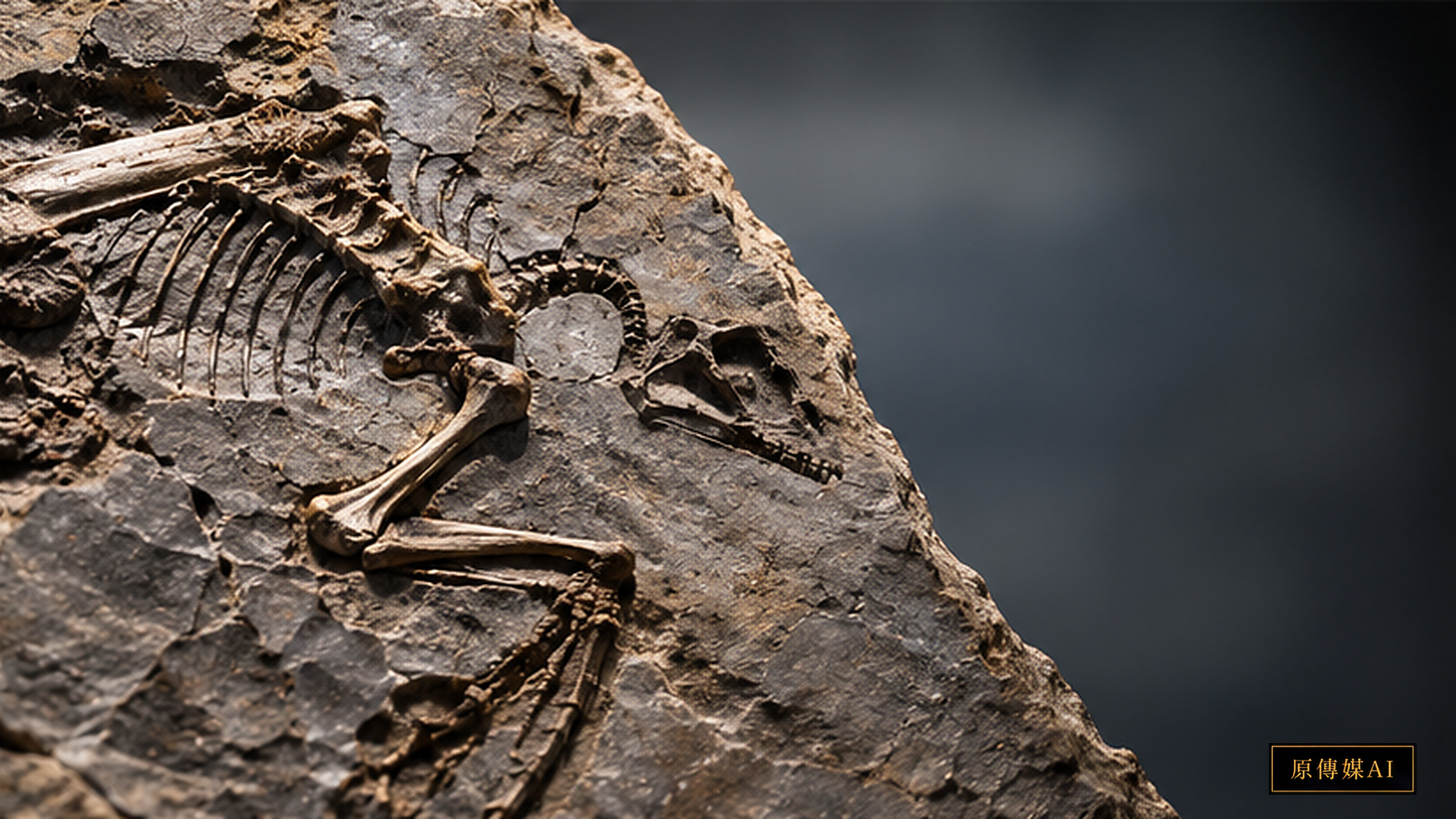
1. Beyond the Fog of Archaeopteryx: The Groundbreaking Discovery of a Late Jurassic Short-Winged Avialan in Fujian
For more than a century, paleontology textbooks have framed the early evolutionary history of birds as a linear sprint toward a single destination. Ever since the 1861 discovery of *Archaeopteryx* from the 150-million-year-old Solnhofen limestone of Germany, mainstream scientific narratives have persistently depicted all Late Jurassic and Early Cretaceous avialans as intermediate stages in an inexorable trajectory: forelimbs progressively elongating, feather vaning becoming increasingly aerodynamic, and the sternum developing a deep keel to power increasingly perfected flapping flight. Under this teleological framing, powered aerial flight was treated as the ultimate objective of avian evolution, while any deviations in skeletal anatomy were casually dismissed as transient, unspecialized evolutionary experiments.
However, a landmark paleontological study published in the international journal Nature in October 2026, Nature Original Study, fundamentally dismantles this reductionist linear view. A joint research consortium led by the Institute of Vertebrate Paleontology and Paleoanthropology (IVPP) of the Chinese Academy of Sciences described and formally named a spectacular new fossil avialan: *Yuezhuornis yangyuanensis*. Recovered from the Late Jurassic Zhenghe Fauna in Fujian Province, southeastern China, dating to approximately 150 million years ago, this remarkably articulated skeleton pushes back the confirmed fossil record of Jurassic Avialae in East Asia while astonishing global paleontologists with its unexpected anatomical specializations.
Unlike *Archaeopteryx*, which possessed elongated forelimbs capable of supporting flight feathers, the most striking anatomical characteristic of *Yuezhuornis* is its profoundly reduced forelimbs paired with exceptionally elongated hindlimbs. As documented in the comprehensive institutional report Chinese Academy of Sciences Research Brief, the forelimb of *Yuezhuornis* measures only approximately forty percent of its hindlimb length. Its carpometacarpus lacks the robust fusion required to anchor powerful flight musculature, and its flat sternum completely lacks a sternal keel, providing conclusive biomechanical proof that this animal was incapable of sustained powered flapping flight. The discovery confirms that in the earliest dawn of avian evolution, life was not progressing along a single linear path toward flying faster or higher; rather, avialans were actively exploring diverse ecological niches 150 million years ago.
2. Skeletal Morphology Decoded: How Reduced Wings and Cursorial Legs Shatter Orthogenetic Flight Trajectories
Detailed morphological examination of the *Yuezhuornis* skeleton reveals unambiguous adaptations for cursorial locomotion and wetland foraging. High-resolution micro-computed tomography (Micro-CT) scanning of the articulated bones, as analyzed in the Chinese Academy of Sciences IVPP Research Dispatch, demonstrates that the tibiotarsus and tarsometatarsus are exceptionally slender and elongated. The skeletal limb proportions exhibit striking convergent evolutionary parallels with modern ratites, rails, and wading shorebirds. Furthermore, the pelvic architecture features a broad postacetabular ilium and robust ischial symphysis, providing expansive attachment zones for hypertrophied femoral retractors and indicating rapid terrestrial running capabilities across Jurassic lacustrine shorelines.
In sharp contrast to its powerful cursorial hindquarters stands the extreme reduction of its pectoral girdle and wing elements. In traditional models of bird origins, theropod dinosaurs gradually elongated their forelimbs to facilitate gliding or wing-assisted running. Yet the humerus, radius, and ulna of *Yuezhuornis* are remarkably stout and abbreviated, manual phalanges show marked reduction, and the ulna lacks quill knobs or ligamentous scars indicative of aerodynamic remiges. This mosaic evolutionary configuration—pairing hyper-elongated running legs with rudimentary, flightless wings—demonstrates the remarkable developmental plasticity inherent in early avialan body plans.
Under rigorous evolutionary scrutiny, this morphological disparity delivers a decisive challenge to the long-standing "single flight origin and progressive specialization" paradigm. While historical scholarship interpreted every avialan bone through the lens of flight preparation, *Yuezhuornis* proves that as avialans diverged from non-avian theropods, forelimb evolution was not restricted to elongation for flight. In specialized lacustrine wetlands or island ecosystems, rapidly reducing forelimbs while elongating hindlimbs to exploit ground-dwelling niches represented an equally viable and competitive evolutionary strategy. Evolution was never a single ladder climbing toward a predetermined aerial summit; it was a flourishing tree expanding across all ecological domains.
3. Early Ecological Radiations: Powered Flight Was Not the Sole Destination of Avian Life
The discovery of *Yuezhuornis* compels scientists to thoroughly re-evaluate Late Jurassic terrestrial ecosystems. For decades, the global understanding of Jurassic avialans rested almost exclusively upon the solitary German genus *Archaeopteryx*, creating an entrenched historical bias that all early birds were arboreal gliders. In contrast, the volcanic and sedimentary geology of the Zhenghe Fauna in Fujian reveals an inland subtropical basin intersected by river drainages, shallow freshwater lakes, and lush vegetation. This complex mosaic of microhabitats provided the ideal crucible for rapid adaptive radiation.
Within this lacustrine environment, *Yuezhuornis* occupied an ecological niche distinct from that of *Archaeopteryx*. While *Archaeopteryx* inhabited coastal lagoon scrubs, using developed plumages for short-distance glides between perches to forage or escape predators, *Yuezhuornis* thrived along muddy marsh shorelines. Its long, stilt-like hindlimbs allowed it to navigate dense reeds and soft sediments with speed and agility, preying on freshwater invertebrates, small crustaceans, and mollusks. Its reduced forelimbs may have functioned merely as dynamic rudders during rapid terrestrial sprints or as display structures during courtship, rather than flight foils.
This paleoecological reconstruction yields a profound insight for modern biology: while powered flight is undoubtedly one of the most transformative innovations in vertebrate history, it was never the sole evolutionary destination of Avialae. In the earliest radiation of birds, the developmental blueprint was characterized by profound experimentation, where ground-dwelling cursoriality, wading, and arboreal gliding coexisted simultaneously. *Yuezhuornis* reminds us that evaluating deep-time evolutionary success solely through modern aerial adaptations blinds us to the multifaceted richness of ancient biodiversity that briefly flourished with breathtaking evolutionary elegance.
4. Boundaries of Skeletal Reconstruction and Public Science Communication: Avoiding Overextrapolations from a Single Specimen
While the scientific implications of *Yuezhuornis* are revolutionary, paleontologists, science communicators, and museum educators must maintain rigorous methodological vigilance when interpreting fossil discoveries. The enduring fascination of paleontology lies in the scarcity and irreplaceable nature of fossil evidence, but this scarcity also defines its epistemic vulnerability. The formal description of *Yuezhuornis* currently rests upon a single, albeit remarkably preserved, holotype specimen. In scientific methodology, conclusions drawn from unique specimens must be treated with measured caution.
Translating raw osteological data into public museum displays and artistic life restorations involves substantial interpretative risk. While skeletal measurements verify reduced forelimb proportions, the sedimentary slab did not preserve articulated, feather-vane microstructures. Consequently, paleontologists cannot conclusively determine whether its wings were covered with downy contour feathers or remained partially bare. Furthermore, whether *Yuezhuornis* was an obligate wader or a generalist forest-floor runner requires additional sedimentological and taphonomic verification, alongside future discoveries of gut contents or coprolites. When sensationalized media reports hastily label the specimen as a "Jurassic Ostrich" or a "Freakish Flightless Bird," they risk conflating plausible scientific hypotheses with fully verified facts.
The ethical responsibility of science communication lies not only in celebrating what has been discovered, but also in transparently communicating where evidential boundaries lie. Museum curators, science journalists, and researchers have an obligation to clearly distinguish between fossilized skeletal reality, cladistic statistical inferences, and speculative artistic restorations. When presenting life models or digital animations, public institutions should explicitly explain which anatomical elements are verified from the stone and which reflect artistic reconstructions based on extant birds. Maintaining this transparent boundary fosters genuine public critical literacy, preventing paleontology from devolving into sensationalist spectacle.
5. Humanistic Reflections on Evolutionary Life: Rediscovering the Philosophy of Coexistence from Natural History
Contemplating this short-winged fossil that lay dormant within the Jurassic siltstones of Fujian for 150 million years, the insights we glean transcend anatomical measurements. Since the nineteenth-century rise of Social Darwinism and mechanical progressivism, human civilization has frequently succumbed to a narrow worldview that misinterprets biological evolution as a ruthless elimination tournament governed solely by strength, speed, and expansion. Under this domineering logic, power and conquest are glorified as the supreme metrics of life, while whatever appears fragile, non-conforming, or uncompetitive is dismissed as an evolutionary failure destined for extinction.
Yet *Yuezhuornis*, through its unexpected skeletal proportions, offers a profound philosophical critique to modern humanity. If, in the primordial Jurassic forests where birds first emerged, life was capable of resisting the singular imperative to fly higher and faster, carving out a peaceful, grounded existence along the muddy marshes, why does our modern civilization struggle to accommodate diverse pathways and non-linear values? When contemporary societies evaluate all human worth through monolithic metrics of economic output, hyper-competitive testing, or technological dominance, we regress toward an impoverished, biological totalitarianism.
Natural history never imposes an arrogant hierarchy of superiority upon living beings. In the vast symphony of evolution, the eagle soaring across alpine skies possesses no greater intrinsic nobility than the rail foraging quietly through lakeside reeds. Reduced forelimbs and elongated legs were not signs of deficiency, but magnificent adaptations forged through humble coexistence with the Earth. This fossil from the Late Jurassic of Fujian, like a poem written in ancient stone, offers a gentle yet enduring reminder: the true truth of evolutionary life is not singular conquest, but infinite, compassionate coexistence. Only by learning to honor every unique form of life can humanity rediscover the wisdom to dwell peacefully upon our fragile planet.
Sources and Further Reading
- Nature Original Study: The breakthrough research by Xing Xu, Min Wang, Zhonghe Zhou, and colleagues describing *Yuezhuornis yangyuanensis*, a Late Jurassic short-winged avialan from the Zhenghe Fauna, establishing taxonomic diagnosis and anatomical measurements.
- Chinese Academy of Sciences Research Brief: Press briefing released by the Institute of Vertebrate Paleontology and Paleoanthropology (IVPP) detailing the morphological adaptations, forelimb reduction, and wading paleoecology of *Yuezhuornis*.
- Chinese Academy of Sciences IVPP Research Dispatch: Official institutional dispatch analyzing the evolutionary implications of Late Jurassic avialan divergence, mosaic skeletal evolution, and non-aerial ecological radiation in East Asia.
Role-Driven Inquiry
Yuan Media AI | Guided Questions by Role
Select a role first, then review the complete questions from that perspective; clicking a question will display Yuan Media AI’s response in real time.
Select a role
Paleontologist
Examine the article's evidence, governance boundaries, data rights, and actionable steps from the perspective of a Paleontologist.
Choose a question
AI use and content-safety disclosure
AI assisted in organizing public research and institutional information for this article and its guided questions. Findings, limitations and practical proposals are distinguished. The cover is an AI-generated concept image.