EV Chargers Beyond Simple Sockets: Can Software-Defined Hardware Turn Parking Lots into Resilient Microgrids?
Original Chinese title: 電動車充電器不只是插座:軟體定義硬體,能否把停車場變成微電網的一部分?
Groundbreaking research in Scientific Reports proposes a software-defined EV charger architecture capable of dynamically reconfiguring power electronics topology via software algorithms, unlocking bidirectional charging, reactive power support, and millisecond grid dispatch. This analysis evaluates the engineering leap transforming fleet parking lots into distributed virtual power plants (VPP), interrogates battery degradation costs and interoperability standards, and assesses critical policy pathways for grid resilience across Taiwan's regional and rural landscapes.
鄭淑禎
Full-time assistant professor at Shih Chien University, focusing on industrial transformation, agricultural value chains, local economies, and technology applications.
# EV Chargers Beyond Simple Sockets: Can Software-Defined Hardware Turn Parking Lots into Resilient Microgrids?
As the global transition toward transportation electrification accelerates, millions of electric vehicles (EVs) are deploying onto highway networks worldwide. However, through the analytical lens of power systems engineers, these mobile clean-energy platforms carrying massive lithium-ion battery packs simultaneously represent unprecedented structural pressure upon existing electricity transmission and distribution grids. Conventional paradigms routinely treat electric vehicle chargers as passive electrical sockets—purely responsible for rectifying alternating current (AC) into direct current (DC) to recharge vehicle batteries, thereby acting as inflexible, heavy electrical loads. When commuters plug in simultaneously during evening peak hours, localized demand spikes threaten to trigger severe distribution transformer overloading, distribution feeder voltage sags, and cascading service interruptions.
Nevertheless, groundbreaking engineering research published in the journal Scientific Reports offers an innovative technological pathway out of this grid transition bottleneck. The study, documented in the Scientific Reports Software-Defined EV Charging Architecture Study, introduces an unprecedented Software-Defined Charger (SDC) architecture. By dynamically reconfiguring internal power electronics topologies via real-time algorithmic control, this paradigm dismantles rigid hardware constraints, enabling ordinary fleet parking lots to function as resilient distributed microgrids and coordinated Virtual Power Plants (VPP).
Software-Defined Hardware: Dismantling Fixed Topologies in Power Electronics
The fundamental limitation of legacy charging infrastructure stems from static power electronic topologies. Standard Level 2 AC supply equipment and DC fast chargers rely on dedicated transformers, bridge rectifiers, and passive filter stages hardwired at manufacture, restricting their function to unidirectional power delivery within preconfigured voltage and current bounds.
In contrast, the core breakthrough of the software-defined charging architecture lies in decoupling power conversion topologies from fixed physical circuits. According to engineering specifications detailed in the Scientific Reports Software-Defined EV Charging Architecture Study, researchers harnessed the high-frequency switching capabilities of wide-bandgap semiconductors, specifically silicon carbide (SiC) and gallium nitride (GaN), within a modular switching matrix. Embedded central microcontrollers dynamically rearrange the series-parallel connectivity of modular power blocks on millisecond intervals.
Consequently, a single hardware installation can operate as an ultra-fast unidirectional DC charger during normal operations, yet seamlessly pivot into a grid-forming bidirectional Vehicle-to-Grid (V2G) inverter whenever localized grid perturbations occur. Furthermore, the architecture executes microsecond-level reactive power compensation and active harmonic filtering, effectively endowing every connected charging port with the dynamic stabilization performance of a Static Synchronous Compensator (STATCOM). As emphasized in the US Department of Energy Vehicle-Grid Integration Strategy, transforming rigid power hardware into flexible, software-orchestrated grid assets represents a pivotal pillar for utility-scale vehicle-grid integration (VGI) and accommodating volatile renewable energy generation.
Transforming Fleet Parking Lots into Virtual Power Plants: The Power of Distributed Microgrids
When dozens or hundreds of software-defined charging units aggregate across commercial parking structures, logistics depots, or transit terminals, their collective system benefits fundamentally redefine grid balancing dynamics.
According to grid modeling simulations published in the US DOE Alternative Fuels Data Center EV Infrastructure Development Guide, personal passenger vehicles remain parked for approximately ninety-five percent of their operational lifespan. Aggregating these stationary vehicle batteries through high-speed software coordination transforms commercial parking facilities into multi-megawatt-hour electrochemical energy storage assets.
During midday periods when utility-scale solar generation creates acute duck curve dynamics and localized negative wholesale pricing, smart charging algorithms modulate collective charging rates to absorb excess renewable generation. Conversely, during evening peak demand when solar output vanishes, the software-defined fleet injects stored energy back into the distribution network to perform automated peak shaving without compromising drivers' scheduled departure ranges. In scenarios where severe weather disasters trigger transmission line failures, grid-forming parking hubs can isolate into autonomous microgrid islands, utilizing EV batteries to sustain emergency shelters, community clinics, and telecommunications towers.
Engineering Prototypes vs. Commercial Scale: Battery Aging and Interoperability Hurdles
Although software-defined charging architectures achieve remarkable precision and rapid dynamic response on academic testbenches, scaling from controlled prototypes to widespread commercial deployment confronts substantial engineering, economic, and regulatory barriers.
The foremost operational dilemma concerns electrochemical battery cycle degradation. Lithium-ion battery state of health (SOH) is intricately tied to depth of discharge (DoD), cycling frequency, and thermal management. When vehicles participate continuously in bidirectional V2G discharges and frequency regulation, accelerated mechanical strain across cathode lattices and continuous solid electrolyte interphase (SEI) growth on graphite anodes accelerate irreversible capacity loss and internal resistance. Automotive manufacturers, committed to standard eight-year or 160,000-kilometer powertrain warranties, strictly restrict reverse discharge authorizations. Unless utility revenue-sharing models fully compensate owners for battery depreciation and potential warranty disputes, consumer adoption will face insurmountable resistance.
A second systemic vulnerability involves communications interoperability and cyber-physical security. Harmonizing diverse vehicle models, proprietary battery management systems (BMS), and software-defined charging controllers requires flawless standardization across ISO 15118-20, OCPP 2.0.1, and IEEE 2030.5 protocols. Currently, commercial EV models exhibit inconsistent protocol compliance. More critically, centralizing remote algorithmic dispatch across millions of connected bidirectional chargers creates severe cyber-physical attack vectors. Malicious intrusions exploiting firmware vulnerabilities could issue synchronized load-reversal commands, precipitating catastrophic power grid frequency destabilization.
Grid Resilience in Taiwan: Regional Tourism and Community Microgrids
Examining Taiwan's ongoing energy transition, software-defined charging architectures provide strategic insights for modernizing island grid resilience. Operating an isolated island grid lacking international cross-border interconnections, Taiwan Power Company (Taipower) faces acute midday solar overgeneration followed by steep evening peak ramps as solar photovoltaic penetration continues to expand.
Moreover, Taiwan presents unique geographical and infrastructural challenges: mountainous tourist destinations and Indigenous communities—including Alishan, Sun Moon Lake, and scenic corridors across Hualien and Taitung—absorb massive weekend tourist traffic. The electrical infrastructure serving these rural corridors consists primarily of long, vulnerable radial distribution lines. Installing conventional unmanaged high-power fast-charging stations across rural scenic hubs threatens to overload local substation capacities, displacing essential power supplies required by surrounding agricultural and residential communities.
To resolve these structural bottlenecks, Taiwan must advance three targeted deployment strategies:
First, pilot software-defined microgrids within public transit and commercial logistics fleets. Municipal electric buses and logistics fleets operate under predictable schedules, fixed routes, and centralized ownership, making them ideal environments for precise battery wear accounting and bidirectional peak-shaving integration without consumer coordination frictions.
Second, construct integrated microgrid hubs across rural tourist gateways and disaster response centers. Integrating rooftop solar photovoltaics, stationary battery storage, and software-defined bidirectional chargers enables scenic parking hubs to buffer weekend charging surges during normal conditions, while functioning as autonomous emergency power sanctuaries during typhoon-induced grid disruptions.
Third, establish standardized V2G regulatory frameworks and dynamic tariff structures. The Energy Administration and Taipower must finalize national V2G certification standards aligned with ISO 15118-20, while introducing dynamic time-of-use tariffs that enable third-party aggregators to pass transparent market-based compensation directly to participating vehicle owners.
The evolution of EV charging infrastructure represents far more than a transition in plug standards or charging speeds; it marks an architectural paradigm shift from centralized, one-way electricity delivery toward decentralized, bidirectional grid intelligence. By empowering power electronics with algorithmic awareness, stationary electric vehicles transform into vital partners in grid resilience, providing foundational stability for a decarbonized energy future.
資料來源與延伸閱讀
Role-Driven Inquiry
Yuan Media AI | Guided Questions by Role
Select a role first, then review the complete questions from that perspective; clicking a question will display Yuan Media AI’s response in real time.
Select a role
Power Systems Engineer
Examine the article's evidence, governance boundaries, data rights, and actionable steps from the perspective of a Power Systems Engineer.
Choose a question
AI use and content-safety disclosure
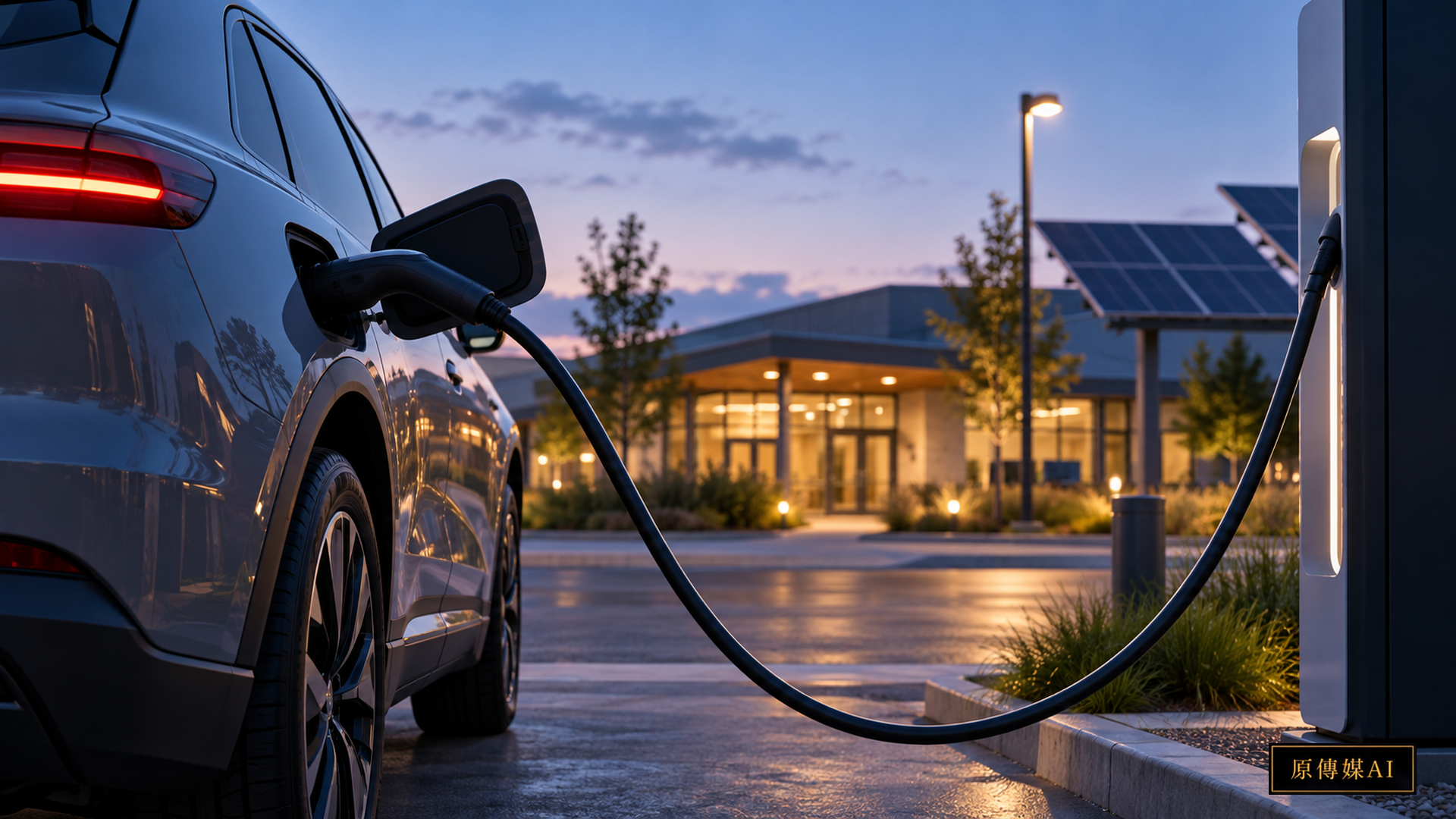
AI assisted in organizing public research and institutional information for this article and its guided questions. Findings, limitations and practical proposals are distinguished. The cover is an AI-generated concept image.