The Brain May Not Stem from a Single Lineage: How Two Progenitor Populations Fuse into One Organ
Original Chinese title: 大腦可能不是由同一條發育路徑長成:兩群前驅細胞如何在胚胎期「接成一個器官」
For centuries, neurobiology has regarded the vertebrate brain as a unified organ arising from a single early progenitor cell population. A landmark study led by Stanford Medicine developmental biologists in Nature Neuroscience overturns this foundational paradigm: the human brain originates from two distinct, evolutionarily divergent progenitor populations that fuse seamlessly during embryonic development. The hindbrain—governing vital autonomic functions such as respiration, cardiac regulation, and motor control—diverges fundamentally in molecular origin from the forebrain responsible for consciousness, language, and abstract thought. This revelation resolves decades-long stumbling blocks in generating human hindbrain motor neurons in vitro and illuminates transformative avenues for investigating devastating neurological conditions such as amyotrophic lateral sclerosis (ALS) and spinal muscular atrophy (SMA).
娜塔莎・加夫雷連科(Наташа Гавреленко,筆名)
Retired professor from Saint Petersburg University who studied in Taiwan in her early years, focusing on literature, comparative literature, and the arts, alongside interdisciplinary research into paleontology, evolutionary biology, and natural history.
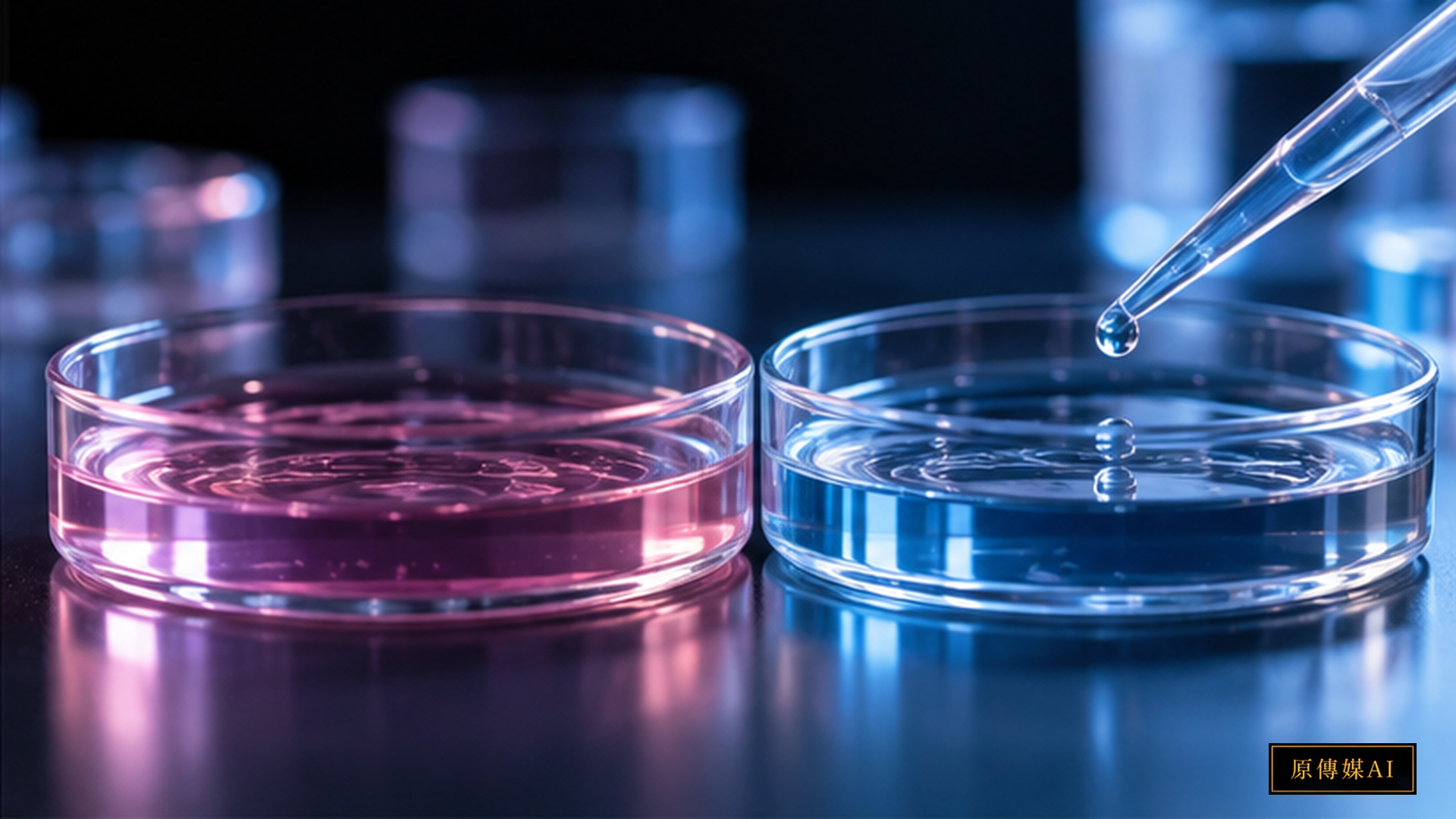
# The Brain May Not Stem from a Single Lineage: How Two Progenitor Populations Fuse into One Organ
Across centuries of biological inquiry, the human brain has stood as the supreme emblem of anatomical unity and evolutionary refinement. Medical textbooks and classical neuroembryology have long depicted this 1.4-kilogram organ as an integrated structure expanding continuously along the rostral-caudal axis from a singular embryonic neural tube. From the primitive brainstem governing heartbeat and respiration to the cerebral cortex enabling language, philosophical contemplation, and artistic creativity, prevailing doctrine posited that all neurons descend from a common pool of neural progenitor cells sharing an identical developmental destiny.
However, groundbreaking research led by developmental biologists at Stanford Medicine and published in *Nature Neuroscience* has fundamentally overturned this enduring scientific premise. Utilizing high-resolution single-cell transcriptomics and human pluripotent stem cell differentiation platforms, the team demonstrated that the human brain does not derive from a monolithic lineage. Instead, it arises from two distinct, evolutionarily divergent progenitor populations that fuse seamlessly during embryonic gestation. This finding not only redraws neurodevelopmental maps but also provides transformative insights into intractable stem cell cultivation bottlenecks and fatal neurodegenerative diseases.
Overturning the Single Progenitor Model: Stanford Medicine's Discovery
For decades, developmental biology operated under a foundational assumption: following gastrulation and neural tube closure, a homogenous population of anterior neural progenitors responds to graded signaling morphogens along the anterior-posterior axis, sequentially specifying the forebrain, midbrain, and hindbrain. Under this paradigm, whether a cell matured into a frontal cortex projection neuron or a medullary swallowing motor neuron, it traced its lineage to an identical embryonic progenitor pool.
As reported by Stanford Medicine News: Human Brain Is Two Separate Organs, Study Finds, research led by Dr. Kyle Loh, associate professor of developmental biology, decisively upended this model. Co-first authors Carolyn "C" Dundes and Rayyan Jokhai discovered that the developmental trajectories of anterior and posterior brain structures diverge far earlier than previously recognized.
According to the team's publication in Nature Neuroscience: Divergent progenitor lineages orchestrate human brain regionalization, the forebrain and midbrain emerge from classic anterior neural ectoderm, whereas the hindbrain—comprising the cerebellum, pons, and medulla oblongata—and cervical spinal cord arise from distinct posterior progenitor cells. These two populations differ fundamentally in molecular induction requirements: posterior progenitors require precise concentrations of Wnt and FGF signaling while expressing specific Hox transcription factors; conversely, anterior progenitors require active suppression of these pathways to develop properly.
In his academic summary at the Stanford University Faculty Profiles: Kyle M. Loh Laboratory, Dr. Loh noted: "We’ve shown for the first time that the front of the brain arises from a totally different progenitor cell than the back of the brain. Our discovery means that the human brain consists of two ancient nervous systems cleverly packaged together."
Two Evolutionary Brains: Primitive Survival and Cognitive Expansion
Examined through natural history and comparative anatomy, this developmental dichotomy reveals profound evolutionary logic. The adult brain exhibits distinct functional strata. The hindbrain, situated at the base of the skull and incorporating the brainstem, is the phylogenetically ancient core of the vertebrate nervous system. Operating autonomously, it regulates respiration, cardiac rhythms, sleep architecture, hunger, and blood pressure, while coordinating facial, glossal, and pharyngeal musculature essential for speech and swallowing.
In contrast, the anterior brain—particularly the expanded neocortex—represents an evolutionary innovation of mammals, enabling abstract reasoning, symbolic communication, ethical reflection, and self-awareness. Historically, scientists viewed this hierarchy as a progressive layering of new cortical circuits atop ancient chassis. Stanford's discovery suggests an alternative narrative: the centers of higher cognition and autonomic visceral survival originated as separate anatomical systems.
Throughout hundreds of millions of years of metazoan evolution, ancestral lineages likely developed distinct cephalic sensory clusters and posterior visceral ganglia. Over deep time, embryonic mechanisms evolved to stitch these disparate nervous networks together into a single cranial organ. The brain is not a monolithic structure, but an evolutionary palimpsest uniting ancient survival circuits with modern cognitive architecture.
Resolving Decades of In Vitro Stem Cell Bottlenecks
Beyond theoretical anatomy, this discovery resolves persistent hurdles in regenerative medicine. For decades, stem cell biologists successfully generated functional cortical neurons in petri dishes, yet repeatedly failed to cultivate authentic, mature human hindbrain motor neurons. Experimental cultures routinely yielded unviable, heterogeneous, or poorly differentiated cells.
Researchers previously blamed inadequate culture media or lacking extracellular matrices. The Stanford findings illuminate the true impediment: scientists were attempting to convert anterior-specified neural progenitors into hindbrain cells through chemical cues. Forcing cells down an incongruent developmental lineage inevitably failed.
By identifying the authentic posterior progenitor pathway, the Loh laboratory established reliable differentiation protocols to generate pure, electrophysiologically active human hindbrain motor neurons from pluripotent stem cells. This provides an unprecedented platform for studying brainstem physiology in standardized laboratory settings.
New Hope for Neurodegenerative Diseases: Targeting ALS and SMA
Cultivating authentic hindbrain motor neurons offers critical breakthroughs for fatal neurodegenerative disorders, notably amyotrophic lateral sclerosis (ALS) and spinal muscular atrophy (SMA).
In ALS, motor neuron demise frequently manifests in the brainstem. Bulbar-onset ALS impairs swallowing and speech, culminating in fatal respiratory failure. Due to anatomical disparities in animal models and the historical unavailability of live human hindbrain neurons, the vulnerabilities of bulbar motor neurons remained poorly understood.
Harnessing these distinct posterior progenitor differentiation techniques, researchers can reprogram patient somatic cells into induced pluripotent stem cells (iPSCs) and generate patient-derived hindbrain neurons. This permits real-time single-cell investigation of protein aggregation, mitochondrial breakdown, and neuroinflammatory apoptosis, while accelerating high-throughput drug screening against authentic disease-affected cell types.
Reflections from Natural History: Evolutionary Synthesis and Wholeness
As a scholar examining comparative literature, natural history, and paleontology, this discovery evokes deep philosophical resonance. Western intellectual traditions since the Renaissance frequently elevated human rationality above physical embodiment, casting the brain as an omnipotent command center detached from visceral instinct.
Developmental biology now presents rigorous experimental evidence demonstrating that the cerebral cortex—enabling philosophical inquiry, artistic composition, and scientific invention—is an evolutionary newcomer. In embryonic gestation, it meets and integrates with ancient posterior progenitors that have safeguarded respiration and survival across hundreds of millions of years.
This recalls Tolstoy's meditations on human existence: the profound beauty of life resides not in abstract rationality detached from reality, but in the harmonious reconciliation of instinct and intellect. The human brain embodies an evolutionary epic written in cellular genomes, uniting primal biological rhythms with the persistent quest for truth. In revealing these distinct lineages, science reveals not fragmentation, but the breathtaking synergy through which life weaves diversity into wholeness.
Sources and Further Reading
Role-Driven Inquiry
Yuan Media AI | Guided Questions by Role
Select a role first, then review the complete questions from that perspective; clicking a question will display Yuan Media AI’s response in real time.
Select a role
Developmental Biologists
Examine the article's evidence, governance boundaries, data rights, and actionable steps from the perspective of a Developmental Biologists.
Choose a question
AI use and content-safety disclosure
AI assisted in organizing public research and institutional information for this article and its guided questions. Findings, limitations and practical proposals are distinguished. The cover is an AI-generated concept image.