1.5°C Has Shifted from Avoiding Overshoot to How Long It Lasts: Reading the UNEP Emissions Gap Report Without Confusing Scenarios with Prophecy
Original Chinese title: 1.5°C 已從「避免超標」變成「超標多久」:聯合國排放差距報告如何讀,才不會把情境當預言
The United Nations Environment Programme (UNEP) has released its definitive Emissions Gap Report 2026: The Point of Return, formally declaring that the opportunity to stabilize global warming within 1.5°C without overshoot has expired, thrusting global climate governance into a new era focused on minimizing overshoot magnitude and duration. Under its lowest possible overshoot pathway, global emissions must decline relative to 2025 levels by 18% by 2030, 45% by 2035, and 69% by 2040 to limit peak temperatures to 1.7°C–1.8°C before returning to 1.5°C by 2100. Authored by Bunun cultural documentarian Chuan Ming-cheng, this analysis scrutinizes technological assumptions surrounding large-scale carbon dioxide removal, evaluates national NDC shortfalls, and examines climate justice for Indigenous community lands confronting decarbonization pressures.
全明正
Cultural and documentary visual practitioner from the Bunun Shuanglong community, long focusing on energy transition, materials technology, low-carbon supply chains, industrial policies, and local environmental governance.
# 1.5°C Has Shifted from Avoiding Overshoot to How Long It Lasts: Reading the UNEP Emissions Gap Report Without Confusing Scenarios with Prophecy
At a critical juncture marked by severe geopolitical friction and planetary crises, the United Nations Environment Programme (UNEP) has released its flagship assessment: the UNEP Emissions Gap Report 2026. Subtitled *The Point of Return*, this landmark publication delivers an unsparing historical reckoning: due to decades of insufficient mitigation and policy reversals across major emitters, humanity's window of opportunity to stabilize global surface temperatures permanently within 1.5°C above pre-industrial levels—with no or negligible overshoot—has definitively closed.
This declaration signals an unavoidable paradigm shift across international climate governance. The focal point of multilateral diplomacy is no longer whether the 1.5°C boundary can be maintained seamlessly, but how to manage Plan B: limiting the magnitude and duration of the impending temperature breach, and ensuring temperatures can be safely clawed back by 2100. Yet, as underscored in the UNEP Official Press Release, acknowledging overshoot is not an admission of defeat. Articulating overshoot pathways is designed to compel immediate accountability through empirical reality, rather than granting fossil fuel interests an excuse for sustained delay.
The Historical Window to Avoid Temperature Overshoot Has Formally Closed
Following the adoption of the Paris Agreement in 2015, global policymakers harbored cautious optimism that accelerated renewable deployment and efficiency gains could plateau emissions, stabilizing global warming safely at 1.5°C. In reality, carbon budget depletion outpaced diplomatic declarations. Atmospheric carbon dioxide concentrations surged unabated, accompanied by record heatwaves, megadroughts, glacial retreat, and marine heatwaves across every continent.
UNEP scientists state unequivocally that the remaining carbon budget for 1.5°C without overshoot is effectively exhausted. Even under theoretical scenarios where all fossil infrastructure ceased operations immediately, thermal inertia and existing industrial capital lock-in render a near-term breach of 1.5°C virtually inevitable. This conclusion is rooted in thermodynamics and energy system realities, not defeatism. Confronting this closed window is the prerequisite for grounded climate action.
Decarbonization Stepladders from 2030 to 2040 and Peak Warming Trajectories
Recognizing the collapse of non-overshoot pathways, UNEP modeled the Lowest Possible Overshoot Pathway. As detailed in the UNEP Report Feature Story, minimizing catastrophic ecological fallout demands radical emissions reductions relative to 2025 levels: an 18% cut by 2030, a 45% reduction by 2035, and an unprecedented 69% decline by 2040.
Under this trajectory, global mean surface temperatures would peak around mid-century (c. 2050) between 1.7°C and 1.8°C, before massive carbon dioxide removal (CDR) and natural carbon sinks gradually bring warming back to 1.5°C by 2100. However, scientists repeatedly caution that every tenth of a degree above 1.5°C, and every year spent in that thermal bracket, exponentially elevates the risk of crossing irreversible planetary tipping points—including the collapse of the West Antarctic and Greenland ice sheets, widespread permafrost thaw releasing gigatons of methane, and near-total coral reef mortality.
The Chasm Between Nationally Determined Contributions and Real Policy Implementation
Yet, contrasted against this steep decarbonization stepladder, the gulf between Nationally Determined Contributions (NDCs) submitted under the Paris Agreement and current real-world policies remains alarming. The report calculates that even if all unconditional NDCs were fully implemented, global emissions would fall by merely 5% to 8% by 2030 and 11% to 15% by 2035—grossly insufficient compared to the 45% required for a viable overshoot trajectory.
Compounding this shortfall, geopolitical fragmentation and backsliding in major emitter nations have frayed international trust. The report emphasizes that formal withdrawals from climate treaties and postponed coal phase-outs have driven global fossil consumption and subsidies to historic highs. Under current operational policies without dramatic course corrections, the world is heading toward a catastrophic 2.8°C warming by century's end, unraveling the hydrological and agricultural systems underpinning human civilization.
Ecological and Spatial Assumptions Underlying Large-Scale Carbon Dioxide Removal
Beneath the elegant mathematical modeling of the lowest overshoot pathway lies a contentious technological premise: the deployment of multi-gigaton carbon dioxide removal (CDR) during the latter half of the century. Models heavily assume humanity can harness bioenergy with carbon capture and storage (BECCS), direct air capture (DACCS), and massive afforestation to extract hundreds of gigatons of carbon from the atmosphere.
As an Indigenous Bunun visual documentarian observing mountain ecosystems, I recognize that these algorithmic carbon removal assumptions conceal profound land and ecological justice conflicts. Deploying planetary-scale BECCS or tree monocultures demands immense land and freshwater resources, risking food security and sparking green grabbing that threatens Indigenous ancestral domains. Furthermore, long-term geological storage integrity, seismic risks, and parasitic energy demands lack century-long empirical proof. Banking human survival on unproven negative-emission technologies is an existential gamble.
Integrated Climate Assessment Models Are Policy Scenarios Rather Than Inevitable Destinies
Confronting this sobering assessment requires critical scientific literacy: Integrated Assessment Models (IAMs) generate conditional scenarios predicated upon explicit socio-economic, technological, and demographic assumptions, not fatalistic prophecies. Scenarios serve to stress-test policy choices, not dictate inescapable outcomes.
When news outlets trumpet the death of 1.5°C or promise a seamless return by 2100, they obscure wide confidence intervals and real-world systemic complexities. We must not succumb to climate fatalism that abandons accountability over current fossil projects; nor can we indulge in technocratic complacency assuming future inventions will erase present emissions. Scientific integrity requires exposing genuine risks so policymakers are forced to confront ecological boundaries with humility.
Downscaling Global Pathways to Tribal Forestry and Just Energy Transition
While global reports operate at the macro-scale of gigatons and global mean temperatures, regional governance must downscale these imperatives into actionable, just transition frameworks. In Taiwan, mountainous headwaters inhabited by Indigenous communities serve as crucial hydrological catchments and biodiversity refugia. Facing intensified typhoon storms and debris flows under overshoot conditions, communities do not need extractive utility-scale solar farms or exclusionary offset enclosures; they require resilient microgrids, community forestry co-management, and legally recognized land tenure.
Just transition must embody procedural justice and authentic economic co-benefits. Central authorities revising regional pathways must prioritize grid modernization in remote areas, technical support for decentralized micro-hydro and biomass, and strict enforcement of Free, Prior, and Informed Consent (FPIC) for renewable developments on traditional lands. Climate policy secures moral authority only when frontline communities become genuine co-governors and direct beneficiaries of decarbonization.
Conclusion
The UNEP Emissions Gap Report 2026 sounds an unmistakable alarm, inaugurating an era of temperature overshoot that is precarious yet unavoidable. While the window for a clean 1.5°C ceiling has closed, every fraction of a degree averted and every avoided ton of carbon dictates whether warming peaks at 1.7°C or spirals toward 2.8°C.
Climate justice is not passive reliance on speculative techno-fixes, but immediate responsibility grounded in the living landscape. In Bunun traditional knowledge, elders remind us that the breath of the forest and the survival of humanity are intimately bound; only through restraint and reciprocity with the land can generations flourish. Translating global climate scenarios into resolute civic oversight and grassroots ecological stewardship remains our enduring obligation to the future.
Sources and Further Reading
Role-Driven Inquiry
Yuan Media AI | Guided Questions by Role
Select a role first, then review the complete questions from that perspective; clicking a question will display Yuan Media AI’s response in real time.
Select a role
Climate Modeling Researchers
Examine the article's evidence, governance boundaries, data rights, and actionable steps from the perspective of a Climate Modeling Researchers.
Choose a question
AI use and content-safety disclosure
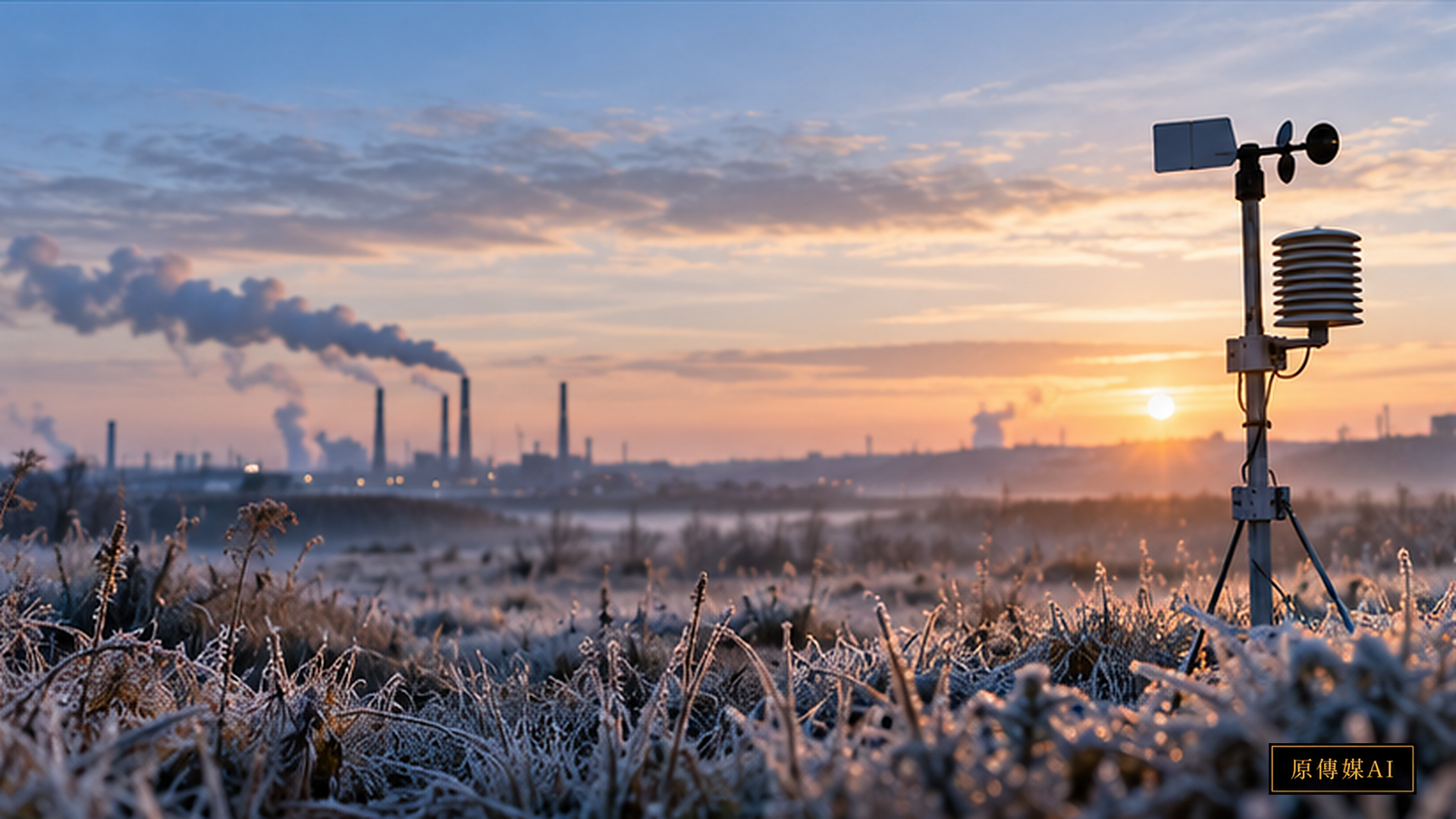
AI assisted in organizing public research and institutional information for this article and its guided questions. Findings, limitations and practical proposals are distinguished. The cover is an AI-generated concept image.