Culturally Safe Menopause Care Beyond Literal Translation: How First Nations Women Co-Design Accessible Health Services
Original Chinese title: 更年期資訊不是翻譯完就算文化安全:第一民族女性如何共同設計可用的健康服務
The Australian Department of Health has launched First Nations-led co-designed menopause resources, moving beyond conventional top-down translation paradigms. Utilizing community Yarning Circles, the initiative reframes the menopausal transition as The Change of Life. This analysis examines how cultural safety reconfigures clinical power dynamics, outlines methodological distinctions between educational posters and individual clinical care, enforces strict prohibitions against appropriating First Nations cultural motifs, and delivers transformative recommendations for Indigenous women's healthcare in Taiwan.
雙向知識實驗室
Dedicated to complementary governance between Indigenous traditional knowledge and contemporary science, exploring practical pathways for Two-Eyed Seeing in ecological conservation, resource management, public services, and data sovereignty.
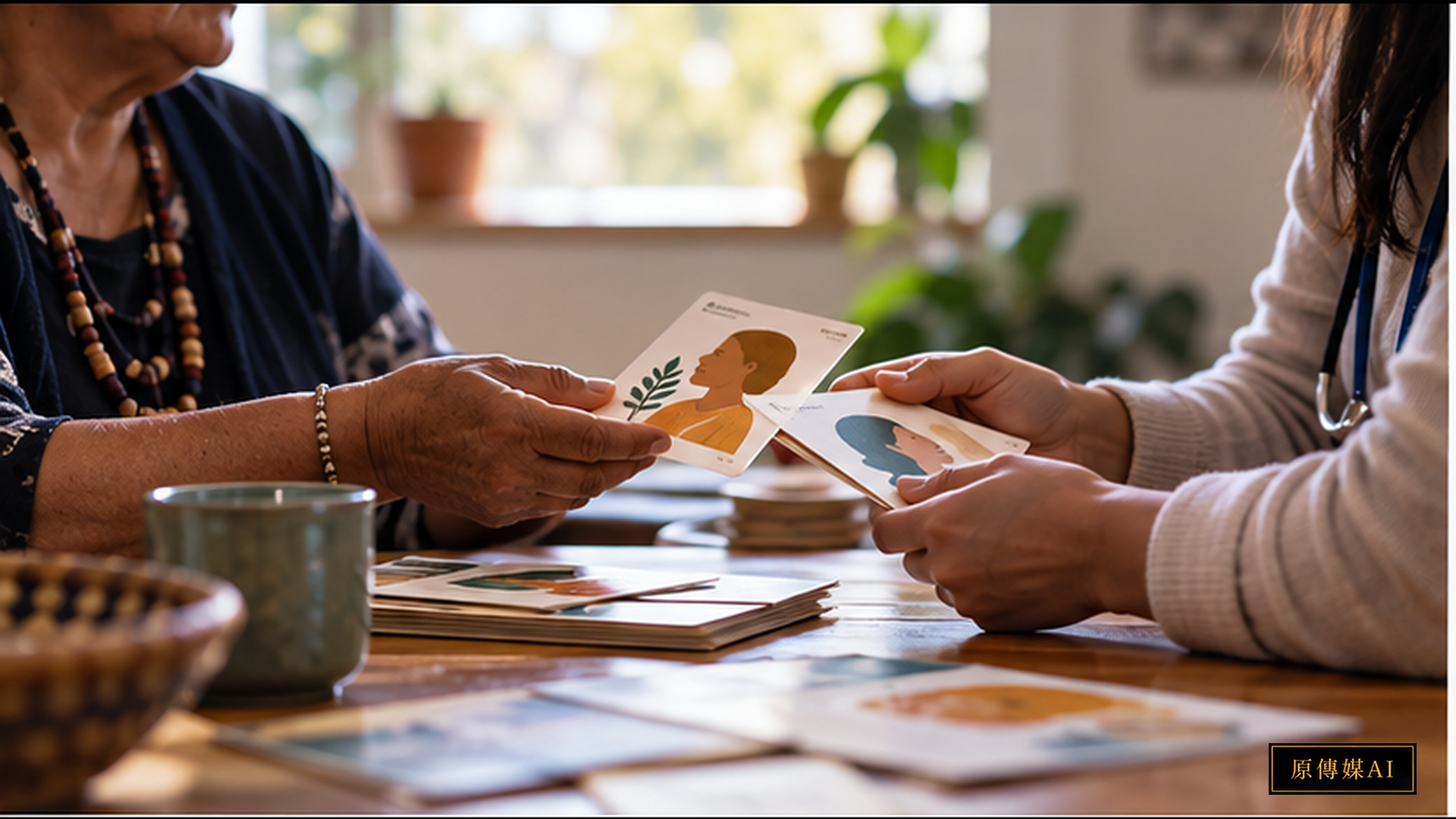
For decades, global public health systems addressing Indigenous women's health disparities have overwhelmingly relied on a top-down, unidirectional pedagogical transfer model. This conventional paradigm assumes that merely commissioning literal translations of biomedical jargon from metropolitan health flyers into vernacular dialects automatically bridges healthcare access barriers in tribal settlements. However, a landmark initiative led by the Australian Government Department of Health, Disability and Ageing concerning First Nations perimenopause and menopause health represents a structural departure from traditional health communication. The initiative demonstrates that menopause guidance cannot achieve authentic cultural safety through literal textual translation alone; without rooting systemic healthcare redesign in the lived experiences of First Nations women, kinship support systems, and community dialogue, clinical pamphlets remain ineffective pieces of paper that fail to alleviate institutional alienation and clinical intimidation in dominant healthcare settings.
Policy Realignment and Core Evidence: Transforming Passive Targets into Co-Design Partners
According to the policy architecture established on the Australian Health Department First Nations Menopause Portal, the Australian Commonwealth government allocated dedicated resources within its broader menopause strategy to fund initiatives co-designed directly by Indigenous health liaison networks and First Nations women's collectives. Rather than commissioning external marketing consultants to draft generic brochures in federal offices, the project embraced the traditional Indigenous practice of Yarning Circles. Rooted in traditional First Nations communication ethics, a Yarning Circle is a non-hierarchical, relational dialogue space where participants gather in cultural safety to share bodily transitions, emotional turbulence, shifts in family responsibilities, and lived encounters with systemic microaggressions within mainstream clinics.
Through dozens of community circles conducted across urban centers, regional towns, and remote settlements, researchers and public health designers documented unfiltered life narratives from Indigenous women. Many participants revealed that conventional clinical literature predominantly frames menopause as a catastrophic hormonal deficiency disease fraught with biomedical risks and clinical codes, leaving women who anchor extended families feeling disempowered and clinically pathologized. Conversely, within First Nations cosmologies, transitioning past reproductive years signifies a revered ascension into community leadership, spiritual wisdom, and cultural guardianship, universally celebrated as The Change of Life.
Consequently, in the Australian Health Department Change of Life Poster Bulletin, the co-design team discarded patronizing clinical warnings in favor of warm, culturally resonant visual layouts. The poster replaces intimidatory clinical checklists with approachable inquiries reflecting daily life: unexplained changes in menstrual rhythms, night sweats, joint fatigue, unpredictable emotional swings, and sleep disruption. It encourages women to view these physiological signs as natural phases of life while empowering them to initiate uninhibited conversations with trusted Aboriginal Health Workers.
Two-Eyed Seeing and Cultural Safety: Restructuring Power Dynamics in Clinical Encounters
Framed through the epistemic lens of Two-Eyed Seeing—which weaves the strengths of Indigenous knowledge with contemporary clinical science—this initiative fundamentally transforms the power dynamics inherent in patient-practitioner relationships. Scholars of Indigenous health sovereignty and bioethics consistently differentiate cultural competency from cultural safety: while competency merely instructs clinicians in superficial customs, cultural safety demands rigorous structural self-reflection from healthcare institutions, challenging institutional biases that marginalize Indigenous patients.
In conventional consultation rooms, First Nations women describing hot flushes or physical exhaustion frequently encounter clinical condescension, with systemic symptoms dismissed as lifestyle neglect or minor psychosomatic distress. Such exclusionary encounters cause many women to conceal acute physical distress until severe osteoporotic complications, cardiovascular morbidity, or depressive symptoms force emergency interventions. Directly confronting this barrier, the Australian Health Department Hot Flush Symptom Bulletin deploys empathetic visual metaphors and accessible prose to demystify why women experience sudden, intense sensations of heat, explaining clearly how hormonal fluctuations affect hypothalamic thermoregulation.
Crucially, each co-designed resource concludes with structured conversational prompts enabling women to assert agency during clinical visits. The guides encourage women to document the frequency of their symptoms, outline how sleep deprivation impairs caregiving and community work, and proactively ask physicians about non-hormonal lifestyle adjustments, nutritional adaptations, and medical interventions. By equipping women to define the terms of clinical consultation, this co-design paradigm transforms menopause support from passive biomedical compliance into an active journey of collective self-determination and health literacy.
Methodological Boundaries and Ethical Governance: Rejecting Cultural Appropriation
While celebrating this Australian public health milestone, responsible scholarship must delineate its analytical boundaries and enforce strict bioethical safeguards. Public health practitioners emphasize that digital posters and informational leaflets are primary health promotion instruments that must never be misconstrued as substitutes for individual medical diagnosis or customized pharmacological prescriptions. Endocrine transitions, cardiovascular profiles, metabolic comorbidities such as diabetes, and genetic predispositions vary significantly across individuals, making comprehensive clinical evaluation by qualified physicians or midwives indispensable prior to initiating hormone replacement therapies.
Furthermore, a vital ethical mandate prohibits the transcultural appropriation of First Nations artistic motifs, portraits, and cultural symbols. In graphic communication, the earthy palettes, native botanical silhouettes, and female figures featured in Australian resources underwent rigorous months of community authorization and elder oversight across specific land councils. For international healthcare entities or media outlets to replicate these motifs or invent homogenized tribal dress would constitute an egregious violation of Indigenous cultural and intellectual property rights, trivializing distinct localized heritages.
Across different nations and Indigenous communities, cultural ontologies surrounding female aging, bodily autonomy, and maternal transitions diverge profoundly. Authentic cultural safety does not consist of imitating imported aesthetic templates; rather, it lies in replicating the co-design methodology that transfers communicative authority and editorial governance back to local women. Unregulated cultural borrowing dilutes genuine systemic reform, replacing structural healthcare equity with tokenistic aestheticism.
Comparative Realities and Lessons for Taiwan's Indigenous Healthcare Services
Reflecting upon Taiwan's healthcare infrastructure, Australia's co-design framework offers profound institutional lessons for addressing standardized blind spots in Indigenous healthcare delivery. Taiwan officially recognizes sixteen Indigenous nations, spanning matrilineal traditions such as the Amis and Puyuma as well as patrilineal social organizations including the Atayal, Bunun, and Paiwan across the Central Mountain Range and eastern valleys. Nevertheless, preventive health brochures and menopause education campaigns managed by local health bureaus deploy standardized national templates, occasionally appending literal Romanized phonetic translations that fail to capture cultural nuance.
Indigenous nurses and community practitioners in Taiwan's mountain townships observe that middle-aged Indigenous women, who shoulder agricultural labor, family caregiving, and church leadership, frequently treat severe hot flushes, insomnia, and joint pain as an unavoidable female fate. Compounding this suffering, rural health clinics often lack private consultation spaces, deterring mature women from discussing gynecological distress with transient medical personnel. Moreover, mainstream brochures prescribing expensive gym memberships or costly specialized dietary supplements alienate rural families whose daily rhythms center on mountain farming and localized food systems.
Emulating the Australian co-design paradigm, Taiwan must initiate localized Two-Eyed Seeing healthcare reforms. The Ministry of Health and Welfare and the Council of Indigenous Peoples, Taiwan should convene participatory health workshops engaging tribal female elders, women's associations, long-term care station staff, and Indigenous healthcare professionals. In terms of linguistic framing, clinical literature must replace intimidating biomedical terminology with poetic, culturally grounded idioms from native languages that frame menopause as a seasonal shift in physical energy or an entrance into maternal wisdom. Furthermore, tribal care stations (Cakatang) must be fortified with interdisciplinary resources, evolving into culturally secure sanctuaries where elders discuss reproductive wellness in their native mother tongues without fear of stigmatization.
Conclusion and Future Verifiable Metrics: Building Durable Indigenous Health Sovereignty
The Australian Department of Health's co-designed menopause resources for First Nations women establish a decisive precedent: the true efficacy of public health delivery depends entirely on the humility of institutional architects to step aside and listen to community voices. Cultural safety is never an ephemeral publicity pamphlet; it is an enduring institutional journey toward healthcare equity and democratic accountability.
Looking forward, evaluating the long-term impact of culturally safe health innovations requires robust, multidimensional benchmarks. Key verifiable metrics include: quantifiable increases in gynecological consultations facilitated by Indigenous health practitioners; measurable improvements in self-reported cultural safety and respect scores during primary care visits; and long-term epidemiological tracking of reductions in preventable osteoporotic fractures and cardiovascular events through early hormonal and lifestyle support. Most fundamentally, public policy must secure permanent statutory seats for Indigenous women on regional healthcare planning boards, guaranteeing that public expenditure continually answers community needs. Only when healthcare governance embraces Indigenous wisdom with authentic parity will the menopause transition cease to be an isolated struggle, blossoming instead into a celebrated chapter of communal vitality, cultural continuity, and intergenerational resilience.
References and Further Reading
Role-Driven Inquiry
Yuan Media AI | Guided Questions by Role
Select a role first, then review the complete questions from that perspective; clicking a question will display Yuan Media AI’s response in real time.
Select a role
First Nations Women
Examine the article's evidence, governance boundaries, data rights, and actionable steps from the perspective of a First Nations Women.
Choose a question
AI use and content-safety disclosure
AI assisted in organizing public research and institutional information for this article and its guided questions. Findings, limitations and practical proposals are distinguished. The cover is an AI-generated concept image.