Is Silent Counting Truly Calmer? How Pupil Dilation Reveals Physiological Divergence Between Inner and Overt Speech
Original Chinese title: 腦中默數真的比較「平靜」嗎?瞳孔如何看見內言與出聲說話的差異
Groundbreaking research from the University of Tsukuba and Ritsumeikan University published in iScience reveals that silent mental counting is not a state of neurophysiological rest. Tracking pupil diameter via high-precision infrared pupillometry across three controlled experiments, investigators demonstrated that inner speech evokes significant pupil dilation and autonomic arousal. This analysis evaluates experimental paradigms across 23, 27, and 30 participants, delineates mechanistic boundaries prohibiting pseudoscientific mind-reading claims, and derives vital insights for science pedagogy and mental health practice.
王振庭
Natural science educator assisting readers in understanding experimental design, measurement methodology, and empirical research boundaries.
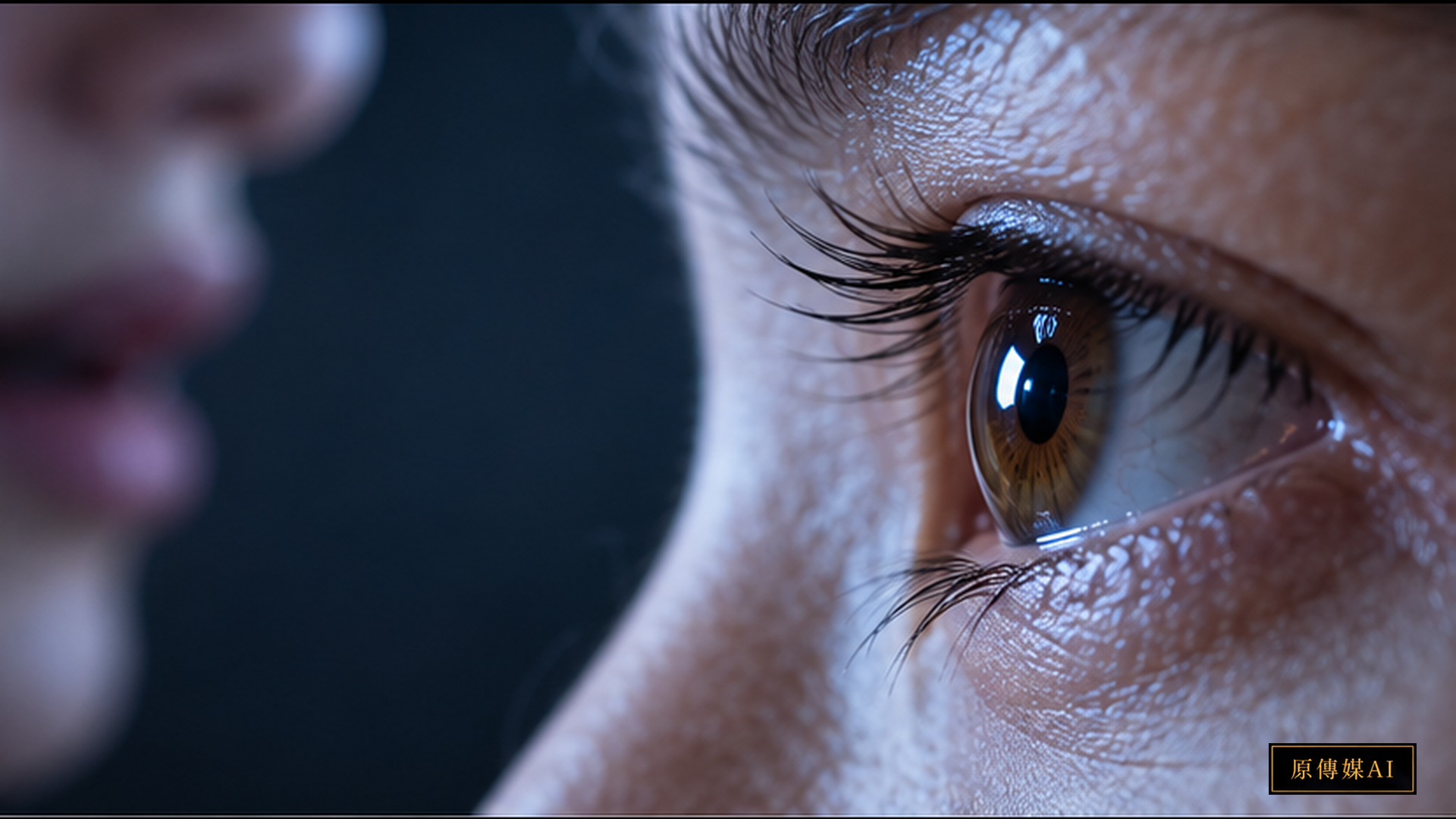
In everyday intuition and popular psychology, people commonly assume that silently counting or engaging in internal monologue within one's mind is inherently calmer, more passive, and psychologically restorative than speaking aloud. Mindfulness educators, stress-reduction seminars, and classroom concentration regimens routinely advise individuals experiencing emotional dysregulation or acute anxiety to count silently to restore physiological equilibrium. However, examined through contemporary cognitive neuroscience and autonomic neurophysiology, does this intuitive equation of behavioral silence with neural tranquility withstand rigorous empirical scrutiny? A groundbreaking study conducted by an interdisciplinary research team from the University of Tsukuba, Ritsumeikan University, and Kyoto University, published in the multidisciplinary journal iScience, deploys high-precision pupillometry to provide definitive empirical evidence that challenges this conventional assumption.
Experimental Design and Core Findings: How Pupillary Dynamics Capture Transient Cognitive Load
According to the comprehensive findings detailed in the University of Tsukuba Cognitive Neuroscience Press Release, the collaborative research team led by Assistant Professor Ryuta Kuwamizu and Assistant Professor Ryoichi Watanabe investigated autonomic nervous system dynamics when humans engage in inner speech (covert verbalization or silent counting) compared to overt speech (speaking aloud). The study conducted three tightly controlled, independent laboratory experiments. Following rigorous data screening and artifact rejection protocols, the finalized statistical cohorts comprised 23, 27, and 30 healthy young adults across Experiments 1, 2, and 3, respectively.
The primary physiological metric was pupillary dynamics recorded using high-speed infrared eye-tracking apparatus. In human neurophysiology, pupil aperture is not merely modulated by luminance via the pupillary light reflex; it is dynamically governed by the locus coeruleus-norepinephrine (LC-NE) neuromodulatory system and brainstem parasympathetic nuclei. When an individual confronts escalating cognitive workload, sustained selective attention, mental arithmetic, or physiological arousal, sympathetic tone intensifies while parasympathetic activity is inhibited, producing subtle yet statistically robust pupil dilation.
The investigators established a rigorous experimental paradigm: participants focused on a central fixation cross against an isoluminant gray background in a darkroom with ambient illumination strictly held constant. Under these controls, subjects performed quiet baseline fixation, overt counting at standardized cadences, and covert counting in their heads at identical paces. As documented in the Ritsumeikan University Cognitive Science Research Report, transitioning from quiet baseline into covert inner speech triggered sustained and statistically significant pupil dilation. This empirical measurement dismantles the naive belief that mental silence equates to neurophysiological calm, proving that internal linguistic articulation consumes substantial cognitive resources and evokes autonomic arousal even in the absence of vocal tract articulation.
Furthermore, direct comparisons between overt and covert speech revealed qualitative divergences in autonomic excitation. While overt speech provoked explosive sympathetic bursts driven by ventilatory coordination, vocal fold vibration, and orofacial articulation, covert speech exhibited distinct pupillary dilation trajectories. To sustain phonological representations within working memory while actively suppressing motor execution, the prefrontal cortex exerts intense top-down inhibitory control, imprinting a distinctive autonomic signature upon pupillary waveforms.
Epistemic Foundations and Qualia Structure: Objective Anchoring of Subjective Experience
This research received strategic funding under the Grant-in-Aid for Transformative Research Areas (A) Qualia Structure initiative from the Japan Society for the Promotion of Science (JSPS). As articulated in the JSPS Qualia Structure Transformative Area Research Bulletin, inner speech constitutes the foundational substrate of self-awareness, metacognitive monitoring, and abstract reasoning. However, because internal monologues lack acoustic emissions or outward physical movement, classical cognitive psychology was historically forced to rely upon retrospective self-report questionnaires, which remain chronically susceptible to recall degradation, social desirability bias, and subjective interpretative discrepancies.
By harnessing pupillometric measurement, the researchers established an objective, non-invasive window into internal cognition boasting millisecond temporal resolution immune to subjective distortion. In their third experiment, the Tsukuba team manipulated counting complexity and temporal cadence, demonstrating that pupillary dilation scaled linearly with mental workload. This finding proves that the subjective effort individuals feel during mental calculation is not an illusory epiphenomenon, but a physiological reality sustained by prefrontal cortical recruitment and autonomic modulation.
From a science education perspective, this investigation exemplifies exemplary experimental design. Authentic scientific inquiry rests upon operationalizing unobservable psychological states into measurable, replicable physical phenomena. By neutralizing optical artifacts, synchronizing eye-tracking with millisecond precision, and deploying repeated-measures analyses to account for baseline variability, the Japanese consortium demonstrates the highest standards of contemporary neuroscientific rigor.
Critical Demarcation: Methodological Limitations and Rebuffing Pseudoscience
Nevertheless, responsible scientific communication requires establishing unambiguous boundaries around these empirical findings to prevent pseudoscientific sensationalism and commercial exaggeration.
First, regarding sample demographics, all three cohorts (23, 27, and 30 subjects) consisted entirely of healthy young adult university students. While statistically robust for detecting within-subject cognitive effects, this limited demographic restricts external validity. Extrapolating these findings to pediatric cohorts whose prefrontal cortices remain developmentally immature, children diagnosed with attention-deficit/hyperactivity disorder (ADHD), clinical populations suffering from chronic anxiety or clinical depression, or geriatric individuals experiencing cognitive decline remains speculative until dedicated longitudinal investigations are completed.
Second, a vital scientific caveat must be underscored: pupillary dilation represents an integrated macro-physiological index of autonomic balance; it is emphatically not mind reading, nor can it decode specific semantic content. One cannot extrapolate from observed pupil dilation that an eye-tracker can reveal the private thoughts in a person's consciousness. Furthermore, pupil diameter is vulnerable to optical distortion, sudden acoustic startle, circadian drowsiness, and mind wandering. Claims by commercial software vendors that webcams can measure student pupil diameter to quantify classroom engagement or assess academic performance represent ungrounded marketing hype devoid of clinical validation.
Comparative Applications for Science Education and Mental Health Practice
Notwithstanding these constraints, this basic neuroscientific discovery offers profound cross-disciplinary insights for science education and school-based mental health counseling in Taiwan.
In secondary school science pedagogy, biology instruction often reduces autonomic neurophysiology to rote memorization: sympathetic accelerates heart rate, parasympathetic promotes digestion. Integrating the Tsukuba experimental model into laboratory exploration curricula—guiding students to construct isoluminant pupillometry assays using mobile cameras, isolate environmental lighting variables, and analyze statistical variance—provides an exceptional vehicle for fostering authentic evidence-based literacy while immunizing students against neuromarketing fallacies.
In mental health counseling, these findings challenge the blanket assumption that silent meditation universally restores calm. Guidance counselors and mental health practitioners must recognize that instructing acutely anxious students to silently repeat relaxation mantras or perform internal countdowns can, for individuals caught in chronic cognitive rumination, sustain elevated sympathetic arousal and cognitive exhaustion. Conversely, encouraging individuals to articulate distress aloud in safe relational spaces, coupled with diaphragmatic respiration that prolongs exhalation, engages vagal parasympathetic braking mechanisms far more effectively, fostering genuine neurophysiological recovery.
Conclusion and Future Trajectory: Deepening Consciousness Studies Within Empirical Boundaries
The pioneering investigation by the University of Tsukuba and partner institutions into inner speech and pupillary dynamics illuminates an exciting frontier in consciousness studies. It demonstrates that the silent mind is not an inert void, but an active landscape of autonomic excitation and computational complexity.
Future cognitive research should integrate functional near-infrared spectroscopy (fNIRS) and electroencephalography (EEG) with pupillometry, observing simultaneous prefrontal cortical hemodynamics and pupil micro-oscillations to untangle inner speech across diverse neurodevelopmental cohorts while respecting participant privacy. By upholding the highest standards of empirical integrity—rejecting unverified commercial claims while honoring human neurodiversity—scientific inquiry will continue to generate robust insights that elevate educational environments and mental health well-being.
References and Further Reading
Role-Driven Inquiry
Yuan Media AI | Guided Questions by Role
Select a role first, then review the complete questions from that perspective; clicking a question will display Yuan Media AI’s response in real time.
Select a role
Research Participants
Examine the article's evidence, governance boundaries, data rights, and actionable steps from the perspective of a Research Participants.
Choose a question
AI use and content-safety disclosure
AI assisted in organizing public research and institutional information for this article and its guided questions. Findings, limitations and practical proposals are distinguished. The cover is an AI-generated concept image.