Indigenous Food Systems Are Not Local Gourmet Delicacies: Why the UN CFS Report Centers Land, Knowledge, and Governance
Original Chinese title: 原住民族食物系統不是地方美食:聯合國新報告為何把土地、知識與治理放回同一張餐桌
The FAO Committee on World Food Security HLPE-FSN presented its landmark report on Indigenous food and knowledge systems at the 54th Plenary Session. This article examines its ten policy proposals, land governance rights, seasonal ecological limits, rejection of monolithic universal recipes, CARE data principles, and Taiwan's disaster food resilience.
雙向知識實驗室
Focuses on the complementary governance of Indigenous traditional knowledge and contemporary science, exploring practical pathways for Two-Eyed Seeing in ecological conservation, resource management, public services, and data sovereignty.
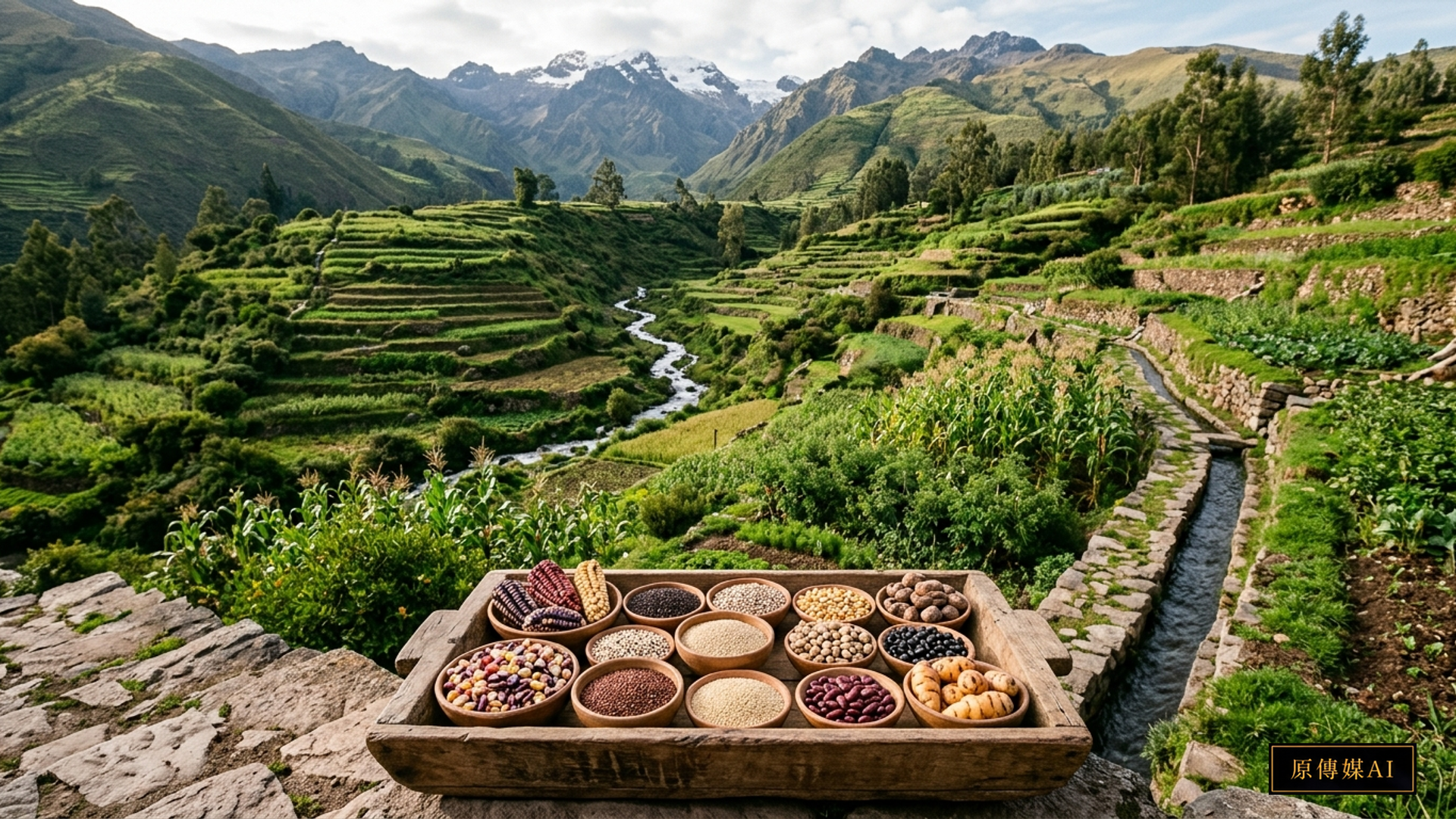
The narrative of indigenous cuisine frequently begins at an exquisitely arranged banquet table: wild vegetables, edible tubers, heirloom millets, highland beans, and river fish are neatly composed before the camera lens under attractive slogans such as "authentic tribal flavors" or "indigenous wild gastronomy." However, the vital historical reality determining whether these culinary practices can endure across centuries has never been the culinary artistry of plating or commercial tourism promotions. Rather, it hinges upon whether indigenous communities retain sovereign land tenure, whether montane water sources remain clean, whether seasonal foraging cycles survive climate turbulence, whether botanical taxonomies in ancestral idioms are transmitted to descendants, and whether tribal peoples retain autonomous governance over who captures and commercializes their traditional knowledge. Stripping away these socio-ecological and legal determinants reduces profound food systems to superficial culinary exhibits.
Reconceptualizing Comprehensive Systems: Expert Recommendations Distinct from Domestic Legislation
On October 21, 2026, the High-Level Panel of Experts on Food Security and Nutrition (HLPE-FSN) of the UN Committee on World Food Security (CFS) officially presented its 21st flagship report during the 54th CFS Plenary Session in Rome. According to the FAO HLPE-FSN 54th Plenary Indigenous Food Systems Report Bulletin, this landmark global study establishes that indigenous peoples' food systems are not rudimentary agricultural supply chains; rather, they constitute complex socio-ecological webs integrating territorial rights, collective resource stewardship, cultural identity, intergenerational ecological science, and communal nutrition. The panel articulated ten policy recommendations urging national administrations to legally recognize indigenous knowledge, enhance nutritional outcomes, secure collective territorial tenure, uphold indigenous self-determination over research agendas, and enforce rigorous data sovereignty across digital archives.
Nevertheless, rigorous journalistic integrity and public policy analysis require maintaining an essential boundary: flagship findings released by international expert panels serve as normative analytical frameworks and recommendations for sovereign member states. They do not constitute automatic domestic legislation, nor do they immediately amend forestry lease statutes, land zoning laws, or tribal agricultural subsidies within Taiwan. Clearly recognizing the structural difference between international policy recommendations and domestic legal enactments preserves analytical clarity, empowering tribal collectives and statutory planners to translate global governance principles into enforceable domestic reforms.
Ecological Stewardship Underpinning Agriculture: Market Pressures Confronting Seasonal Limits
A functional indigenous food system encompasses seed preservation, tilling, rotational agroforestry, wild gathering, traditional smoke preservation, kinship distribution, ceremonial feasts, and communal sharing. Across indigenous cosmologies, securing sustenance represents an ethical pact honoring territorial integrity, river spirits, animal kin, and community matriarchs. Determining the lunar phase for foraging wild herbs, identifying fallow hillsides requiring protection before monsoon rains, or enforcing fishing bans during spawning migrations reflects customary governance harmonized with ecological limits.
However, when conventional capital markets impose commercial demands for uninterrupted annual delivery, standardized cosmetic uniformity, and mass wholesale volume, severe structural conflicts emerge against seasonal ecological cycles. This reality does not demand isolating tribal enterprises from modern commerce; rather, it reminds policymakers that commercial contracts must internalize the ecological and cultural costs of sustainable management. For example, if a montane community develops an indigenous heritage crop enterprise, agricultural administrators must evaluate operational criteria beyond wholesale prices: Has the community codified customary gathering agreements? Do precise geographic coordinates of rare herbs constitute protected cultural secrets? Do youth participating in foraging possess field safety training? If extreme typhoons sever transit arteries, can local seed banks sustain vulnerable households? These operational benchmarks provide a concrete model for food sovereignty.
Ecological and Cultural Diversity: Dismantling Monolithic Pan-Indigenous Assumptions
While honoring common philosophical tenets, analysts must reject the erroneous homogenization of indigenous heritage into a singular "pan-indigenous recipe." Indigenous communities situated across disparate topographies demonstrate extraordinary ecological divergence: the Bunun and Atayal peoples across the central ranges developed agroecological systems centered on drought-resilient millets, montane tubers, and smoked game; the 'Amis along eastern alluvial valleys developed complex wild vegetable taxonomy and riparian gathering protocols; and the Tao of Orchid Island structured societal rhythms around oceanic tidal calendars, flying fish migrations, and customary gifting ceremonies. Even within the same nation, distinct lineages maintain diverse agroecological practices adapted to microclimates.
Consequently, marketing indigenous cuisine under generic commercial branding erases profound cultural nuances. While digital search engines facilitate cross-cultural education, data architects and content curators must never conflate documentation from one community with universal tribal practice, nor infer unverified medicinal efficacies from folklore. Safe digital architectures require strict technical firewalls: public educational interfaces must focus on historical context, botanical traits, and non-sensitive narratives, whereas precise geospatial coordinates, proprietary lineage preparations, and elder identities must remain securely encrypted within community-governed repositories.
Advancing Toward Sovereign Co-Design: Operationalizing CARE Principles in Agritech
On October 21, 2026, the Global-Hub on Indigenous Peoples' Food and Knowledge Systems hosted high-level policy dialogues during the CFS plenary. As highlighted in the FAO Global-Hub on Indigenous Peoples Food and Knowledge Systems Bulletin, international discourse is undergoing a pivotal paradigm shift: indigenous peoples are no longer passive anthropological subjects; they are sovereign rights holders and intellectual custodians. Tribal communities must exercise definitive authority over research priorities, interpretive frameworks, and commercial benefit-sharing arrangements. If technological empowerment merely involves external institutions digitizing ancestral knowledge without conferring rights of revision, revocation, and pricing to local elders, it perpetuates digital extractivism.
Within this historical context, the CARE Principles for Indigenous Data Governance provide an essential operational benchmark for modern agricultural technology. As codified in the GIDA CARE Principles for Indigenous Data Governance, the CARE framework—comprising Collective Benefit, Authority to Control, Responsibility, and Ethics—asserts that standard data interoperability goals must never supersede tribal autonomy. Integrating CARE principles into agricultural AI and linguistic models requires granular access engines: machine outputs must contextualize sources with specific tribal provenance; furthermore, when tribal councils issue requests to correct or retract cultural data, indexing layers and vector caches must immediately cease retrieval.
Intergenerational Custodianship: Centering Emerging Generations in Food Governance
Securing sustainable food futures requires engaging indigenous youth beyond performing digital marketing labor on social platforms. Amid accelerating climate disruption and rural demographic aging, young tribal members must bridge ancestral wisdom and digital technology: accompanying elders into montane forests to monitor hydrological shifts with environmental sensors; recording endangered botanical taxonomies in native languages; designing cold-chain logistics tailored to montane terrain; and actively evaluating whether external research partnerships uphold collective community interests.
At the pedagogical level, academic institutions and indigenous research centers can design educational interfaces that balance transparent public learning with strict privacy boundaries. When students explore indigenous heritage crops, the platform prompts users to select specific educational trajectories—ecological conservation, traditional preservation techniques, or agricultural policy frameworks. System outputs ground responses in verified public datasets, and should inquiries attempt to access confidential foraging routes or unverified medicinal dosages, automated cultural safety protocols redirect inquiries to public ecological literature.
Overcoming Structural Challenges: Cultivating Socio-Ecological Resilience in Taiwan
Confronting global climate disruptions and food supply chain vulnerabilities, Taiwanese society must confront critical self-examinations: When typhoons sever montane road networks and cut power grids for weeks, do local food networks possess sufficient autonomous capacity to sustain tribal households? When state budgets are allocated, do agencies focus exclusively on commercial export metrics while overlooking non-monetary mutual aid and kinship sharing? In agricultural education, do curricula teach students to respect traditional ecological stewardship alongside agronomic metrics?
The UN expert report serves as a timely warning: the sustenance on our plates represents living ecological watersheds, communal relations, and ancestral heritage. Reducing indigenous food systems to commercial commodities accelerates cultural erosion; only by centering land rights, Two-Eyed Seeing knowledge governance, and intergenerational stewardship can indigenous food systems provide the resilient wisdom necessary to guide modern civilization through ecological crises.
Sources and Further Reading
* FAO HLPE-FSN 54th Plenary Indigenous Food Systems Report Bulletin
* FAO Global-Hub on Indigenous Peoples Food and Knowledge Systems Bulletin
Role-Driven Inquiry
Yuan Media AI | Guided Questions by Role
Select a role first, then review the complete questions from that perspective; clicking a question will display Yuan Media AI’s response in real time.
Select a role
Cultural Context and Diversity
Examine the article's evidence, governance boundaries, data rights, and actionable steps from the perspective of a Cultural Context and Diversity.
Choose a question
AI use and content-safety disclosure
AI assisted in organizing public research and institutional information for this article and its guided questions. Findings, limitations and practical proposals are distinguished. The cover is an AI-generated concept image.