Aging Loosens Oocyte Centromere Anchors: Clues to Chromosome Missegregation from Mouse Models
Original Chinese title: 老化讓卵細胞的「著絲點錨」鬆動:從小鼠實驗看染色體錯分的新線索
A landmark study published in the Journal of Cell Biology (JCB) by Yale researchers reveals that age-dependent depletion of centromeric proteins (CENP-A, CENP-C) compromises meiotic chromosome segregation in mouse oocytes. A science educator analyzes experimental design, model limits, and reproductive ethics.
王振庭
Natural science educator, focusing on life sciences, molecular cell biology research translation, and public scientific literacy.
In the fields of life sciences and reproductive medicine, the elevated risk of embryonic aneuploidy associated with advanced maternal age is an extensively established clinical observation. Nevertheless, fundamental biology has long grappled with identifying the precise molecular components within the meiotic machinery that experience primary mechanical failure across reproductive aging. In popular media, public discussions routinely employ ambiguous terminology such as "diminished ovarian reserve" or "oocyte aging," frequently compounded by commercial promotions purporting to reverse reproductive timelines. As a natural science educator, this author considers it an educational responsibility to guide readers past commercial hyperbole, stepping directly beneath the high-resolution microscopes of academic laboratories to inspect the delicate mechanics of chromosome segregation with rigorous scientific literacy.
Landmark Investigations from Yale University: Centromere Weakening in Meiosis
On October 19, 2026, the Journal of Cell Biology (JCB) published an essential mechanistic investigation jointly conducted by research teams at Yale University and Rockefeller University. According to the peer-reviewed treatise in Journal of Cell Biology Declining Centromere Strength Compromises Meiotic Chromosome Segregation, researchers focused analytical attention on the fundamental mechanical tether responsible for chromosome alignment and tension maintenance during oocyte meiosis: the centromere complex. Their findings demonstrate that in naturally aged mammalian oocytes, core centromeric structural integrity undergoes progressive physical decline, directly triggering misalignment and missegregation of homologous chromosomes during Meiosis I.
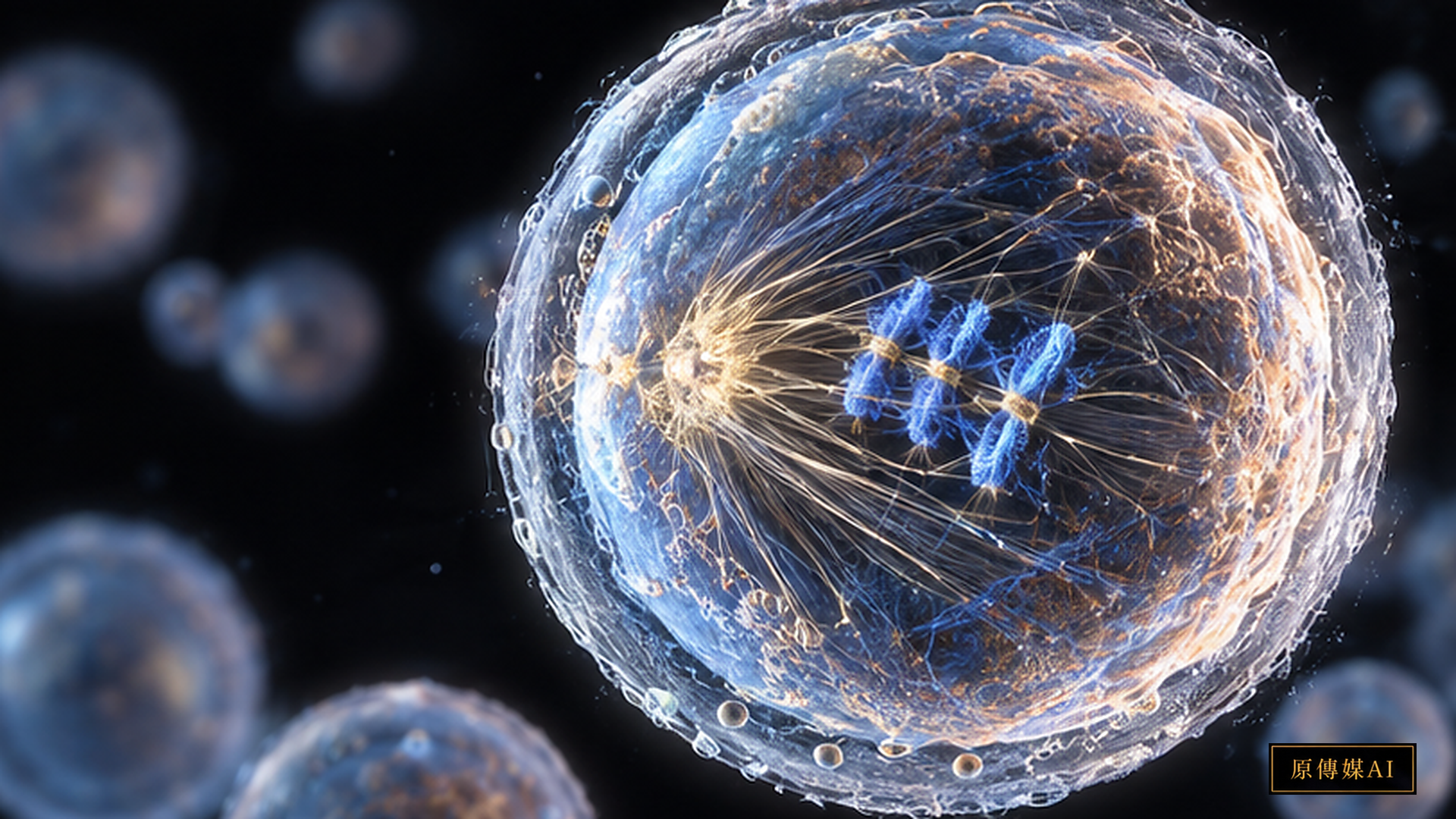
In eukaryotic cell architecture, the centromere functions as a micro-scale mechanical anchor situated at each chromosome's core. When an oocyte resumes meiotic division, delicate microtubule spindle fibers must capture and dock onto kinetochore protein complexes assembled upon centromeric chromatin, establishing symmetric bipolar tension to align paired bivalents along the equatorial plate. Utilizing quantitative super-resolution confocal fluorescence microscopy, the Yale team measured significant signal loss in two critical structural proteins—CENP-A (the epigenetic centromeric histone H3 variant) and CENP-C (the essential blueprint scaffold connecting inner and outer kinetochores). As detailed in the supplementary methods documented by Rockefeller University Press JCB Full Article and Supplementary Methods, this protein depletion loosens centromeric tethering, diminishing the mechanical resilience required to resist spindle pulling forces and precipitating catastrophic aneuploidy.
Methodological Complementarity: Natural Aging Models and Acute Degradation
From an epistemological standpoint, the study's methodological elegance lies in its deployment of complementary experimental models, effectively isolating primary molecular causes from non-specific systemic aging factors. As outlined in Yale News Study on Egg Quality and Reproductive Aging, to rigorously verify whether CENP-C depletion serves as an active driver of chromosomal missegregation rather than an incidental correlate of senescence, researchers contrasted natural oocytes from young mice (6–12 weeks) and aged cohorts (14–18 months) alongside targeted molecular perturbation using the cutting-edge TRIM-Away protein degradation methodology.
By microinjecting specific anti-CENP-C antibodies into healthy young oocytes, researchers recruited endogenous ubiquitin-proteasome machinery to rapidly ablate centromeric CENP-C within hours. The experimental consequences were striking: young oocytes subjected to acute CENP-C deprivation swiftly manifested the hallmark cytological defects characteristic of chronological aging—loosened inter-centromere distances, disorganized metaphase plates, and compromised spindle-microtubule attachments. This acute functional ablation demonstrated a direct causal nexus between centromeric structural deterioration and meiotic chromosome misalignment.
Rigorous Evaluation of Rescue Assays: Alignment Distinct from Live Birth Restoration
Equally instructive were the team's exogenous molecular rescue experiments. Investigators microinjected synthetic CENP-C messenger RNA into aged oocytes, stimulating de novo protein synthesis to reconstitute depleted architectural anchors. Subsequent imaging confirmed that CENP-C restoration significantly ameliorated prometaphase chromosome alignment, realigning bivalents toward configurations reminiscent of young cohorts, a rescue mechanism reliant upon CENP-B activity. However, as an educator grounded in empirical caution, this author must emphasize: public audiences must interpret this laboratory rescue with strict scientific sobriety, rejecting claims that medicine has uncovered a panacea for ovarian aging.
First, as the authors candidly articulate in their discussion, in vitro mRNA microinjection physically reorganized chromosomes along the spindle axis, yet the investigators did not perform in vitro fertilization, embryo transfer, or longitudinal live-birth tracking. In mammalian reproduction, structural alignment during prometaphase does not automatically guarantee successful fertilization, blastocyst implantation, or healthy live offspring. Meiosis is an intricate multi-stage cascade governed by concurrent biological pathways, including age-associated cohesin depletion, mitochondrial metabolic impairment, and spindle assembly checkpoint attenuation. Restoring an isolated structural tether cannot unilaterally resolve systemic cellular senescence.
Essential Limits of Rodent Models: In vitro Findings Distinct from Clinical Trials
In biomedical science communication, the most persistent hazard involves treating rodent experiments as immediate proxies for human clinical medicine. While murine models share foundational meiotic molecular homology with humans, substantial inter-species physiological barriers exist. Mus musculus possesses a lifespan of roughly two years, with oocytes arrested in ovarian primordial follicles for mere months; conversely, human oocytes remain suspended in meiotic arrest for three to four decades, continuously exposed to cumulative oxidative stress, microenvironmental inflammation, and metabolic shifts.
Consequently, whether centromeric decay dynamics observed in murine models replicate precisely across human cohorts remains an open empirical question lacking clinical substantiation. Furthermore, the safety and feasibility of microinjecting synthetic transcripts into human gametes are entirely unproven. Categorizing these laboratory findings as imminent clinical interventions or youth-extending therapeutics represents profound scientific misrepresentation. Lay audiences must maintain a critical perspective: translation from basic cellular mechanisms to certified clinical therapies requires exhaustive translational validation and rigorous bioethical scrutiny.
Scientific Literacy and Reproductive Ethics: Demystifying Aging with Understanding
The ultimate value of this cellular research lies not in offering illusory promises of reversed aging, but in illuminating the awe-inspiring complexity and vulnerability inherent in the genesis of life. Amid contemporary societal trends toward delayed family planning, reproductive challenges are frequently clouded by societal stigma and personal self-reproach. The purpose of natural science education is to illuminate biological realities, dissolving unproductive anxiety through objective comprehension.
Recognizing that meiotic chromosome missegregation represents the physical wear of macromolecular protein complexes operating across decades—a manifestation of molecular thermodynamics rather than personal failure—allows individuals to release self-blame. For families navigating reproductive journeys, rational decision-making relies upon certified evidence-based diagnostics, including comprehensive preconception genetic counseling and validated non-invasive prenatal screening, guided by licensed healthcare professionals. Equipping society with scientific discernment and empathetic understanding represents the most enduring public value of foundational biological discovery.
Sources and Further Reading
* Journal of Cell Biology Declining Centromere Strength Compromises Meiotic Chromosome Segregation
* Rockefeller University Press JCB Full Article and Supplementary Methods
Role-Driven Inquiry
Yuan Media AI | Guided Questions by Role
Select a role first, then review the complete questions from that perspective; clicking a question will display Yuan Media AI’s response in real time.
Select a role
Cell Biology Researcher
Examine the article's evidence, governance boundaries, data rights, and actionable steps from the perspective of a Cell Biology Researcher.
Choose a question
AI use and content-safety disclosure
AI assisted in organizing public research and institutional information for this article and its guided questions. Findings, limitations and practical proposals are distinguished. The cover is an AI-generated concept image.