Cooling Quantum Sensors with Light: Experimental Evidence of 10 K and 27 K Laser Refrigeration in Nanodiamonds
Original Chinese title: 用光替量子感測器散熱:奈米鑽石雷射冷卻實驗中的 10 與 27 K 證據
Solid-state optical refrigeration harnesses anti-Stokes photoluminescence to extract phononic heat from crystal lattices, offering a pathway to free nanoscale quantum sensors from bulky cryogenic compressors. Co-authored through scientific education and tribal environmental governance perspectives, this analysis rigorously calibrates literature timelines: focusing on verified 2020 Pant et al. 10 K and 27 K empirical data, distinguishing a separate 2020 resonator 23.6 K experiment from a 2026 review, strictly excluding unverified figures, and examining materials science, thermal boundaries, and public data stewardship.
王振庭
Co-authors: 全明正, 材料科技, 低碳供應鏈, 產業政策與地方環境治理
Natural science educator, focusing on life sciences, molecular cell biology research translation, and public scientific literacy.
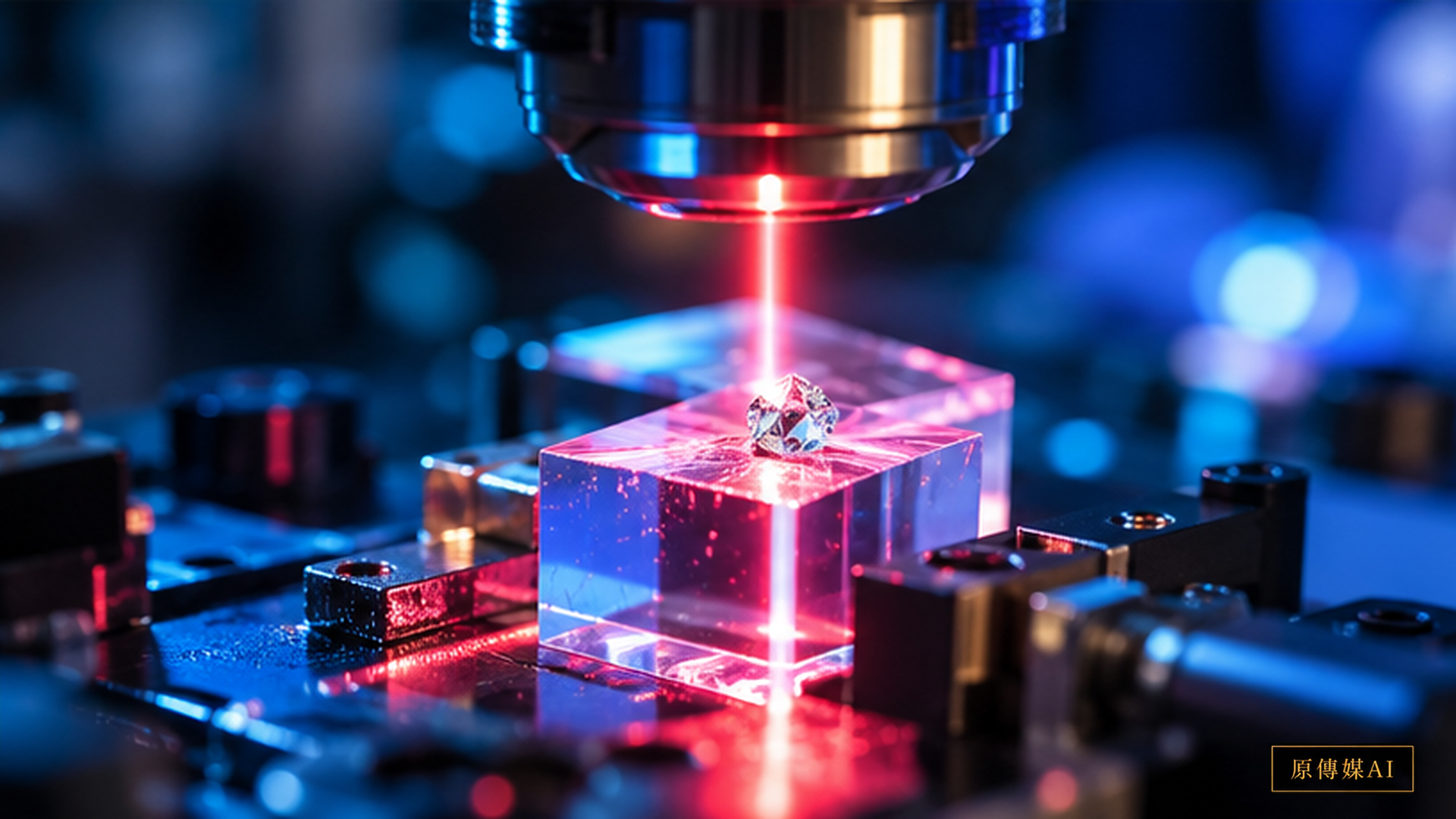
The popular intuition surrounding lasers is that they concentrate radiant energy, heat materials, or even cut through industrial metals. Yet within specific semiconductor and dielectric crystals, if optical photon energy is precisely matched to electronic energy level bandgaps, laser irradiation can fundamentally reverse this thermodynamic expectation—carrying away heat energy from phononic lattice vibrations to achieve solid-state optical refrigeration completely free of mechanical vibrations and bulky cryogenic fluid conduits. In recent years, this technology has attracted immense interest as a potential solution to mitigate thermal drift in micro- and nanoscale quantum sensors such as nanodiamonds.
However, in science communication, empirical numbers are frequently distorted, stripped of experimental context, or conflated across unrelated studies. For example, popular online commentary occasionally surfaces ungrounded claims of a generic 25 K cooling in nanodiamonds, which upon rigorous archival audit reveals zero peer-reviewed citation provenance. As educators in natural sciences and community observers dedicated to low-carbon transitions and local environmental governance, we must ground our understanding in foundational physical mechanisms and primary literature, examining how the 10 K and 27 K figures in Pant et al. Nanodiamond Laser Cooling Preprint were measured, their boundary conditions, and their authentic relevance for future quantum instrumentation and public monitoring.
Can a laser cool instead of heat?
In conventional optical absorption, incident photons possess energy exceeding the material's electronic bandgap. Upon absorbing a photon, an electron transitions to an excited state and subsequently relaxes to the band edge via non-radiative decay, shedding excess energy as lattice phonons (heat). This constitutes the ubiquitous photothermal heating observed when intense light strikes matter.
Under anti-Stokes photoluminescence, however, this energy flow is reversed. If the incident photon's energy is tuned slightly below the material's luminescence bandgap or primary luminescent center peak, an electron can absorb the sub-bandgap photon only by simultaneously absorbing one or more thermal phonons from the host crystal lattice to fulfill the energy deficit. Upon subsequent spontaneous emission, the electron radiates a fluorescence photon possessing greater energy than the absorbed laser photon. When this higher-energy photon escapes the crystal without internal reabsorption, it carries net thermal energy out of the lattice. Provided external quantum efficiency (EQE) is near unity and parasitic background absorption is suppressed, net laser cooling occurs.
Why temperature stability matters for quantum sensing
Nanodiamonds occupy a premier position in quantum information science due to Nitrogen-Vacancy (NV) color centers hosted within their carbon lattices. NV centers maintain optically polarizable, long-coherence ground electronic spin states even at ambient temperatures, enabling ultra-sensitive magnetometry, electrometry, and nanoscale thermometry in microelectronics and biological cells.
Nonetheless, when a nanodiamond sensor is illuminated by excitation lasers or resonant microwave pulses, localized microscale heat generation inevitably induces thermal drift. Thermal expansion perturbs the diamond lattice constant, directly shifting the zero-field splitting parameter (D, approximately -74 kHz/K) of the NV spin ground state and introducing severe measurement noise. Conventional cryogenic chillers and helium compressors generate intense mechanical vibrations and occupy large volumes, completely destroying the high spatial resolution required for nanoscale in-situ metrology. Achieving vibration-free localized cooling via pure optical illumination would unlock unprecedented structural flexibility.
How anti-Stokes cooling works
While the conceptual thermodynamics of anti-Stokes cooling are elegant, practical realization in materials science is exceedingly stringent. Because each up-converted fluorescence cycle removes only a few tens of millielectronvolts (meV) of phononic energy, this cooling gain must outweigh the heat generated by every non-radiative decay event.
Net refrigeration demands satisfying three absolute material thresholds: first, external quantum efficiency must approach 100%, guaranteeing that non-radiative multi-phonon decay paths are negligible; second, the host diamond matrix must possess near-zero parasitic background absorption from trace chemical contaminants or amorphous carbon; third, emitted fluorescence photons must efficiently extract into the surrounding environment, avoiding total internal reflection and parasitic self-absorption. Failing any single condition instantly converts the laser from a refrigerator into a destructive thermal source.
How do we know the sensor really cooled?
At the nanoscale, measuring temperature constitutes an extreme empirical challenge. One cannot attach a conventional macroscopic thermocouple to a sub-micron crystal without altering the local thermal capacity and contact resistance.
In the investigation by Pant and colleagues, the researchers utilized the optically detected magnetic resonance (ODMR) spectrum of the embedded NV centers themselves to perform in-situ thermometry. Because the zero-field splitting frequency shifts deterministically with temperature, tracking the ODMR resonance peak provided a direct readout of the diamond's internal lattice temperature. Under vacuum conditions (approximately 10⁻⁴ Torr), illuminating the sample induced an ODMR spectral shift corresponding to a maximum net cooling of approximately 27 K. In atmospheric ambient pressure, continuous convective and conductive heat loading from surrounding air molecules reduced the net local cooling to approximately 10 K. These figures represent local temperature deltas achieved within specific vacuum chambers and focused optics, not general ratings for commercial devices.
Do not mix devices when comparing temperature changes
In secondary scientific citations, cross-pollinating unrelated experimental data is an ongoing hazard. For instance, Nature Communications Resonator Cooling Experiment reported a major breakthrough in laser refrigeration of semiconductor micro-resonators. In that study, researchers coupled a cadmium sulfide (CdS) nanobelt to a high-Q microdisk resonator, demonstrating cavity-assisted laser cooling of approximately 23.6 K under specific low-temperature baseline conditions.
As contextualized in University of Washington Research News, that investigation examined optical whispering-gallery microcavities and exciton-polariton dynamics—an entirely distinct material system with different fabrication physics, optical losses, and thermal conductivities compared to NV centers in diamond. Conflating the 23.6 K resonator metric with the 10 K and 27 K nanodiamond measurements to synthesize an unsubstantiated 25 K breakthrough violates scientific rigor. Every cooling metric must remain tethered to its specific material composition, sample geometry, and thermodynamic boundary conditions.
From laboratory demonstration to industrial practice
Bridging the gulf between proof-of-concept optics and deployable sensing hardware requires overcoming substantial materials engineering hurdles. As emphasized in the comprehensive review Nature Reviews Methods Primers Solid-State Laser Refrigeration, solid-state laser cooling has progressed through decades of theoretical and experimental refinement, yet its Technology Readiness Level (TRL) remains at the laboratory prototype stage.
Under high-intensity continuous-wave illumination, long-term photostability, color center photobleaching, and surface acoustic scattering present unresolved obstacles. Furthermore, total thermodynamic wall-plug efficiency is low: delivering tens to hundreds of milliwatts of laser power is typically required to extract microwatts of thermal energy. Evaluating practical utility requires accounting for the total electrical consumption of pump lasers, wavelength stabilization hardware, and external heatsinks, rather than focusing solely on core crystal delta-T.
What research should do next
What research must clarify next spans four operational imperatives. First, can laser cooling be sustained over long temporal baselines across repeatable, scalable fabrication batches? Second, can closed-loop optical feedback dynamically compensate for sudden ambient thermal spikes? Third, does the ancillary complexity, electrical consumption, and optical noise introduced by the pump laser offset the sensing advantage gained by cooling? Fourth, do investigators provide comprehensive calibration metrics and uncertainty budgets to enable independent replication? These engineering inquiries matter far more than claiming isolated temperature records.
Cooling matter with coherent light is a striking yet thoroughly grounded physical phenomenon. Its appeal lies not in sensational novelty, but in its testability, measurability, and reproducibility. When we separate 2020 preprints from peer-reviewed micro-resonator studies and 2026 methodological reviews, we perceive authentic scientific evolution without relying on decontextualized numbers.
A six-column table essential for laboratory reporting
To prevent future conflation of distinct experimental findings, science communicators and researchers should categorize temperature telemetry across six standardized parameters: device architecture, host material, atmospheric environment, baseline temperature, maximum delta-T, and thermometric methodology. Nanodiamonds and semiconductor micro-resonators must occupy separate entries; high-vacuum and ambient pressures must be explicitly segregated.
If a published paper omits a specific parameter, the entry should be designated as unreported rather than supplemented with estimated values. While this standardized ledger lacks the sensationalism of breakthrough headlines, it ensures readers understand which data belongs to which experiment, empowering independent researchers to reproduce results.
Calibrating timelines in science journalism
Scientific knowledge emerges through distinct phases: early dissemination on preprint servers, rigorous formal publication following peer review, and eventual synthesis in comprehensive literature reviews years later. Preprints are not devoid of merit, but their unreviewed status must be noted; methodological reviews carry authoritative perspective, yet they must not be misidentified as original experimental trials.
When readers encounter a review published in 2026, they must not assume historical figures cited from 2020 represent new discoveries. Disentangling research completion dates, preprint releases, peer-reviewed appearances, and journalistic coverage forms the ethical bedrock of trustworthy science communication.
Inspirations for science and technology education in Taiwan
In educational curricula, instructors can guide students to analyze why diverse materials absorb light differently, predicting which substrates heat up before reviewing anti-Stokes energy diagrams to understand why rare materials cool under tailored conditions. This does not require expensive quantum infrastructure in classrooms; rather, it utilizes published data to train students in distinguishing hypotheses, controls, and margins of error.
Furthermore, students can consider how advanced environmental sensors might be deployed in local communities—who finances the infrastructure, who stewards the telemetry, and who retains the right to decline surveillance. Connecting science with society does not politicize physics; it ensures technological adoptions undergo thorough democratic and ethical scrutiny.
Why optical and thermal baselines must be documented together
When coherent light enters a crystalline sample, it undergoes absorption, Rayleigh scattering, and interface reflections, creating complex internal spatial intensity gradients. If an experiment records localized temperature drops at a single spatial coordinate while failing to characterize global thermal flux, it risks declaring net cooling while heat accumulates elsewhere in the substrate.
Investigators must systematically document sample geometry, interface thermal boundary resistances, pump laser profiles, ambient pressure, and baseline temperatures, using complementary thermometric techniques where feasible. For sub-micron devices, mounting adhesives, mechanical clamps, and adjacent substrates profoundly alter thermal transport—critical details that dictate whether an experiment can be replicated.
Technology readiness cannot be equated with commercial viability
Progressing from theoretical physics to laboratory demonstration and eventual mass manufacturing demands fundamentally different forms of evidence. A pristine optical spectrum validates physical mechanisms, but it cannot prove that a device withstands ambient vibrations, humidity cycles, or commercial production tolerances.
Industrial feasibility requires verifying supply chain security, field calibration routines, component replacement protocols, and data export standards. If quantum sensors are proposed for tribal or municipal monitoring networks, they must undergo blinded field comparisons against established instruments. Users ultimately require verifiable measurement integrity and sustainable maintenance, rather than marketing slogans.
Collaborative research must account for material and data provenance
Inter-institutional collaborations routinely exchange physical crystal samples, spectroscopic datasets, and proprietary simulation code. Maintaining reproducibility requires archiving raw spectral baselines, sample batch histories, calibration timestamps, and explicit criteria for data exclusion.
When experimental deployments interface with tribal lands or municipal monitoring networks, agreements must establish clear protocols for data ownership, public disclosure, community reciprocity, and consent revocation. Ethical governance does not replace physical experimentation; rather, it ensures technology leaving the laboratory remains transparent and accountable to public welfare.
Sources and Further Reading
* Pant et al. Nanodiamond Laser Cooling Preprint
* Nature Communications Resonator Cooling Experiment
* Nature Reviews Methods Primers Solid-State Laser Refrigeration
Role-Driven Inquiry
Yuan Media AI | Guided Questions by Role
Select a role first, then review the complete questions from that perspective; clicking a question will display Yuan Media AI’s response in real time.
Select a role
Materials Scientist
Examine the article's evidence, governance boundaries, data rights, and actionable steps from the perspective of a Materials Scientist.
Choose a question
AI use and content-safety disclosure
AI assisted in organizing public research and institutional information for this article and its guided questions. Findings, limitations and practical proposals are distinguished. The cover is an AI-generated concept image.