Spiders Are Not Merely Motionless: Five Behavioral Lines of Evidence Supporting Two-Stage Sleep
Original Chinese title: 蜘蛛真的不只是「不動」:五項行為證據支持兩階段睡眠
A comparative biology study published in PNAS established five rigorous behavioral lines of evidence supporting two-stage sleep in the jumping spider Portia fimbriata: circadian rhythmicity, specific quiescent posture, elevated arousal thresholds, compensatory rebound after deprivation, and periodic REM-like limb twitches and retinal movements. Curated from an ecological database perspective, this article distinguishes the 2026 species from 2022 juvenile spider findings, clarifies the boundary between REM-like motor patterns and subjective dreaming, and discusses automated tracking ethics and non-invasive education.
山海資料庫
Open database initiative focusing on global and Taiwanese biodiversity monitoring, multilateral convention compliance, and local ecological governance telemetry.
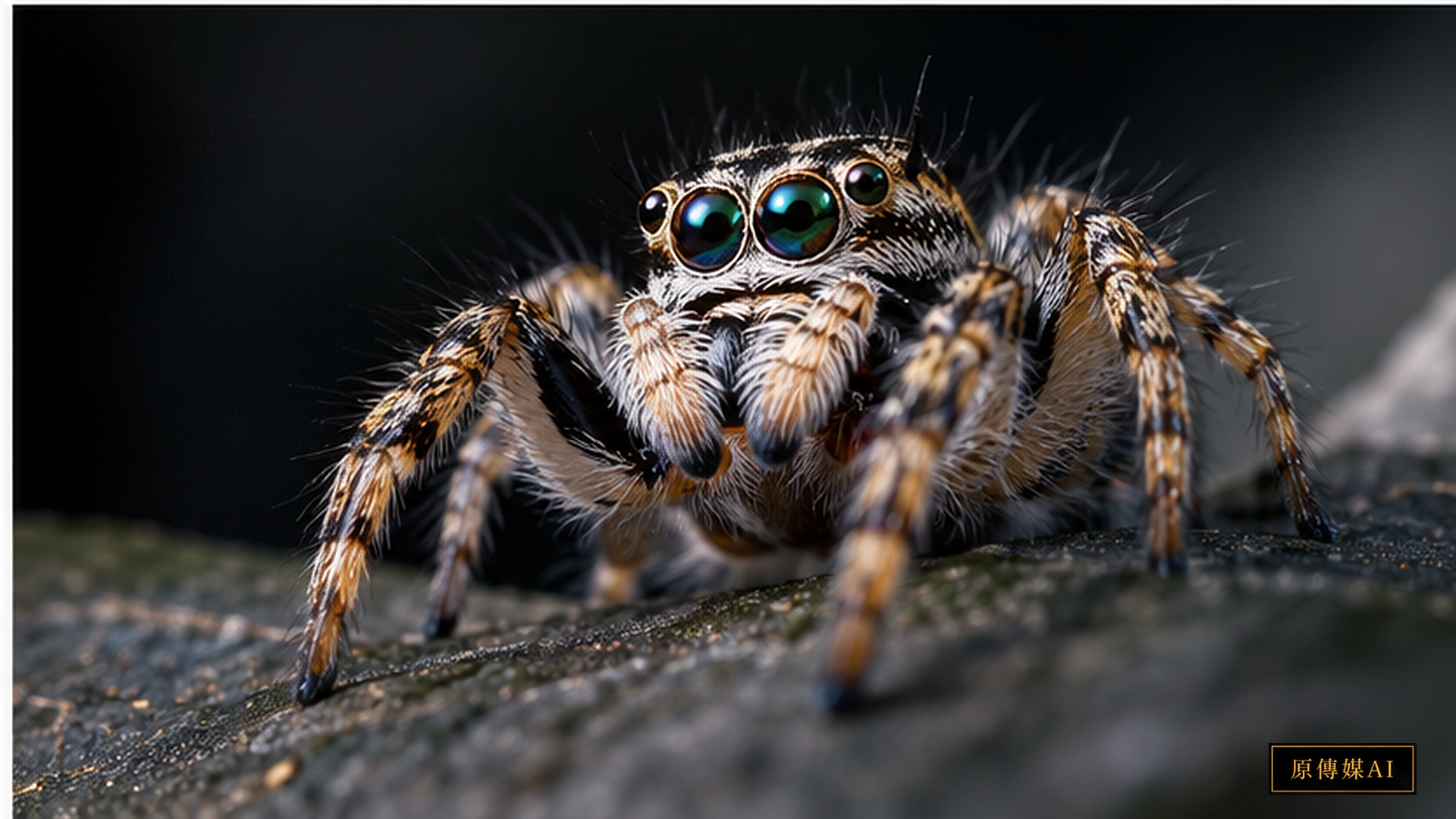
Venturing into a nocturnal forest or domestic garden, encountering a jumping spider hanging motionlessly from a dragline silk thread or poised beneath a leaf typically triggers a simple assumption: the creature is lying in ambush for passing prey, or resting in a state of passive exhaustion. In traditional comparative physiology, quiescence in non-vertebrates was often dismissed as mere torpor or metabolic conservation. Because an arthropod's rigid exoskeleton and divergent neuroanatomy prevent non-invasive electroencephalography (EEG) recordings typical in mammal studies, whether invertebrates experience genuine physiological sleep has remained a protracted scientific debate.
However, a rigorous investigation published in PNAS Behavioral Evidence for Two-Stage Sleep in Spiders investigating the jumping spider *Portia fimbriata* provides five distinct lines of empirical evidence satisfying behavioral criteria for sleep. As reported by University of Bonn Research Release on Phys.org, the researchers demonstrated that these spiders undergo homeostatically regulated sleep characterized by two distinct physiological phases. This discovery offers vital evolutionary perspectives regarding sleep across disparate phyla. Yet scientific integrity demands maintaining clear analytical boundaries: demonstrating REM-like behavioral states does not prove subjective dreaming. From an open database perspective, we examine the empirical design and broader evolutionary significance of these findings.
Does an unmoving spider actually sleep?
In behavioral biology, establishing that an organism is truly asleep rather than merely pausing, resting, or ambushing requires satisfying standardized behavioral criteria. Quiescence cannot be declared sleep merely because an animal closes its eyes—particularly given that jumping spiders lack mobile eyelids and their corneal lenses remain permanently open to the environment.
Researchers must establish that an unmoving state simultaneously meets five universal benchmarks: first, a consolidated circadian rhythm synchronized with daily cycles; second, a species-specific quiescent posture; third, an elevated arousal threshold requiring stronger stimuli to elicit response; fourth, homeostatic rebound where deprivation forces compensatory rest; and fifth, rapid reversibility distinguishing sleep from coma or paralysis. Only when all five conditions converge can science substantiate genuine sleep.
First line of evidence: an internal daily rhythm
The first foundational clue is a robust circadian distribution of activity. Jumping spiders are diurnal visual predators possessing the highest spatial acuity among arthropods, exploring actively under sunlight.
Continuous infrared video tracking over dozens of hours demonstrated that *Portia fimbriata* exhibits pronounced circadian compartmentalization. During photophase, spiders explore and track objects; upon scotophase, locomotion drops to near zero. This predictable temporal consolidation confirms that their nocturnal stillness is not an arbitrary pause from exhaustion, but a regulated behavioral program controlled by internal biological clocks.
Second line of evidence: posture and arousal thresholds
The second line of evidence combines a stereotyped resting posture with a significantly elevated arousal threshold. During nocturnal inactivity, jumping spiders adopt a characteristic posture: legs tucked inward, carapace pulled close to the substrate, or suspended by a secure silk lifeline in a relaxed yet structurally stable orientation.
More crucially, the researchers administered calibrated sensory challenges using gentle vibration pulses and controlled airflow. While active diurnal spiders react instantly to minimal tactile disturbances, spiders in nocturnal rest require substantially higher stimulus intensities to trigger defensive or evasive movements. This heightened sensory threshold—reflecting central sensory gating—marks the vital distinction between active predatory camouflage and authentic physiological sleep.
Third line of evidence: rebound after disruption
The third line of evidence provides proof of homeostatic regulation: sleep rebound. If an organism's stillness were merely idle waiting during darkness, interrupting it would produce no subsequent compensation.
The investigators subjected spiders to targeted mechanical disturbances whenever they entered prolonged nocturnal stillness, systematically depriving them of rest. Following deprivation, during subsequent recovery phases, the spiders exhibited significantly prolonged quiescent bouts, entered deeper rest more rapidly, and displayed even higher arousal thresholds. This homeostatic rebound demonstrates that sleep is a non-negotiable physiological imperative for the spider, not passive inactivity.
Fourth and fifth lines: periodic REM-like activity and distinct states
The most groundbreaking insight lies in the fourth and fifth clues establishing a two-stage architecture. In avian and mammalian species, sleep alternates between non-rapid eye movement (NREM) and rapid eye movement (REM) phases, the latter accompanied by limb twitches, muscular atonia, and saccadic movements.
In *Portia fimbriata*, the researchers observed that protracted quiet resting bouts were periodically punctuated by brief, coordinated motor bursts. During these episodes, the spiders' legs twitched, spinnerets flexed, and optical tracking revealed coordinated movements of the internal retinal tubes at the base of their principal eyes. Building on earlier observations in PNAS PMC 2022 Jumping Spider Retinal Movements regarding juvenile *Evarcha arcuata*, this recurring cycle of stillness interrupted by REM-like movements demonstrates that jumping spiders experience two distinct phases of sleep.
REM-like does not establish dreaming
Yet encountering this remarkable behavioral parallel requires rigorous philosophical and scientific restraint: observing REM-like activity in an arthropod does not prove that spiders dream.
Human dreaming represents a subjective conscious experience characterized by narrative sequences and emotional integration, verifiable because human subjects awaken and deliver verbal self-reports. Spiders cannot communicate subjective narratives, and their cephalothoracic ganglia differ fundamentally from mammalian neocortical architecture. Retinal movements may represent automatic visual circuitry maintenance, memory consolidation, or photoreceptor calibration. As noted in coverage by University of Bonn Research Coverage on Mirage News, sensational headlines proclaiming that spiders dream of catching flies reflect unscientific anthropomorphism. The rigor of comparative biology lies in documenting observed motor patterns without projecting human cognitive experiences onto arthropods.
Why studying one spider species matters
Is two-stage sleep an ancient evolutionary adaptation shared broadly across the animal kingdom? Did distinct nervous systems evolve convergent mechanisms to maintain neural homeostasis? These inquiries cannot be answered by studying humans and rodents alone. Uncovering sleep architecture in jumping spiders broadens our evolutionary horizon, prompting science to re-examine whether definitions of sleep have been excessively vertebrate-centric.
This does not imply that every arachnid species shares two-stage sleep. Across diverse arachnid lineages, visual acuity, web-building tactics, and ecological niches vary widely. Subsequent research must pair laboratory trials with field observations, assessing how ambient temperature, artificial light pollution, and nutritional states influence sleep. These remain open research frontiers rather than finalized conclusions.
Digital observation, AI, and wildlife data ethics
High-speed infrared recording and computer vision algorithms empower scientists to analyze subtle movements across hundreds of recording hours, yet automated models require human validation. Micro-vibrations, environmental flickers, and video compression artifacts can mislead classifiers. If research repositories store binary sleep/wake tags without archiving raw recording parameters, independent re-analysis becomes impossible.
Best practice demands preserving synchronized timestamps, stimulus calibrations, annotation ontologies, and model uncertainty scores. In public education, spiders need not be sensationalized as terrifying monsters nor trivialized through cartoonish human traits. Students can learn to observe without harming, testing hypotheses with patience. Science teaches us not to invent dreams for a resting spider, but to respect the profound diversity of living organisms through rigorous evidence.
Designing an observation class that does no harm to spiders
Educators can design impactful classroom modules without capturing or disturbing wild organisms, drawing directly upon open research datasets and video footage. First, students operationalize measurable behavioral states—defining quiescence, leg tucking, twitches, and active locomotion without premature sleep labels. Second, student groups annotate identical footage independently to measure inter-rater reliability.
Third, students integrate temporal and environmental variables, evaluating which evidentiary thresholds rule out competing explanations. Fourth, students analyze the experimental design of arousal thresholds and sleep rebound. Through this inquiry, learners discover that scientific consensus emerges not from a single striking photograph, but from the convergence of complementary empirical tests.
Decentering humans from the web of life
Human perception frequently interprets the natural world through anthropocentric metaphors, casually labeling animals as lazy, dreaming, or nervous. Comparative biology reminds us that while metaphors can kindle curiosity, they cannot substitute for objective measurement.
A jumping spider's sensory apparatus and decentralized nervous system perceive vibration, polarized light, and chemical cues in ways fundamentally foreign to human experience. Denying sleep because a creature lacks a mammalian neocortex, or asserting dreams because its legs twitch, commits the identical error of imposing human metrics onto other species. Acknowledging the exact boundaries of evidence honors the true significance of the discovery.
How five lines of evidence reinforce rather than contradict each other
Circadian consolidation establishes that stillness aligns with internal biological timing; stereotypical posture identifies candidate resting states; elevated arousal thresholds confirm diminished sensory responsiveness; rebound establishes homeostatic regulation; and periodic REM-like bouts reveal multi-phase architecture.
Evaluated in isolation, each metric might admit alternative explanations; observed together, they build an overwhelming empirical case for regulated sleep. This exemplifies the scientific principle of consilience—not merely summing isolated observations, but integrating distinct methodologies to eliminate competing hypotheses.
How research footage should be archived and shared
Longitudinal ethological studies must archive camera configurations, ambient lighting spectra, specimen identifiers, stimulus timestamps, and annotation version controls alongside raw video files. Disseminating research telemetry requires adherence to institutional data governance, research ethics, and ecological data sensitivity protocols.
If automated computer-vision algorithms risk missing subtle micromovements under low-light conditions, publications must disclose error margins and human auditing frequencies. Without raw contextual metadata, external researchers cannot verify whether algorithmic models conflated lens shake or occlusions with retinal activity.
Returning to human humility through spider observation
We do not need to imagine spiders as miniature humans to appreciate their evolutionary sophistication. The true value of comparative ethology lies in exposing how our established definitions are shaped by a limited sample of terrestrial vertebrates.
When researchers construct experiments grounded in an organism's unique sensory ecology, they uncover previously invisible biological regularities. When media platforms preserve scientific nuances such as "REM-like" and "unconfirmed," they prevent discovery from degenerating into trivial curiosity. Respecting other life forms means avoiding harm while acknowledging the vast frontiers of what remains to be discovered.
Sources and Further Reading
* PNAS Behavioral Evidence for Two-Stage Sleep in Spiders
* University of Bonn Research Release on Phys.org
Role-Driven Inquiry
Yuan Media AI | Guided Questions by Role
Select a role first, then review the complete questions from that perspective; clicking a question will display Yuan Media AI’s response in real time.
Select a role
Behavioral Ecologist
Examine the article's evidence, governance boundaries, data rights, and actionable steps from the perspective of a Behavioral Ecologist.
Choose a question
AI use and content-safety disclosure
AI assisted in organizing public research and institutional information for this article and its guided questions. Findings, limitations and practical proposals are distinguished. The cover is an AI-generated concept image.