What AI Generates Best May Be Stereotypes
Original Chinese title: AI最會生成的,也許是刻板印象
Generative AI democratizes image creation, but also democratizes bias. When models learn from existing online images, they simultaneously absorb historical biases, cultural misunderstandings, and stereotypes. AI is not just a technical tool; it is a magnifying glass.
懸案
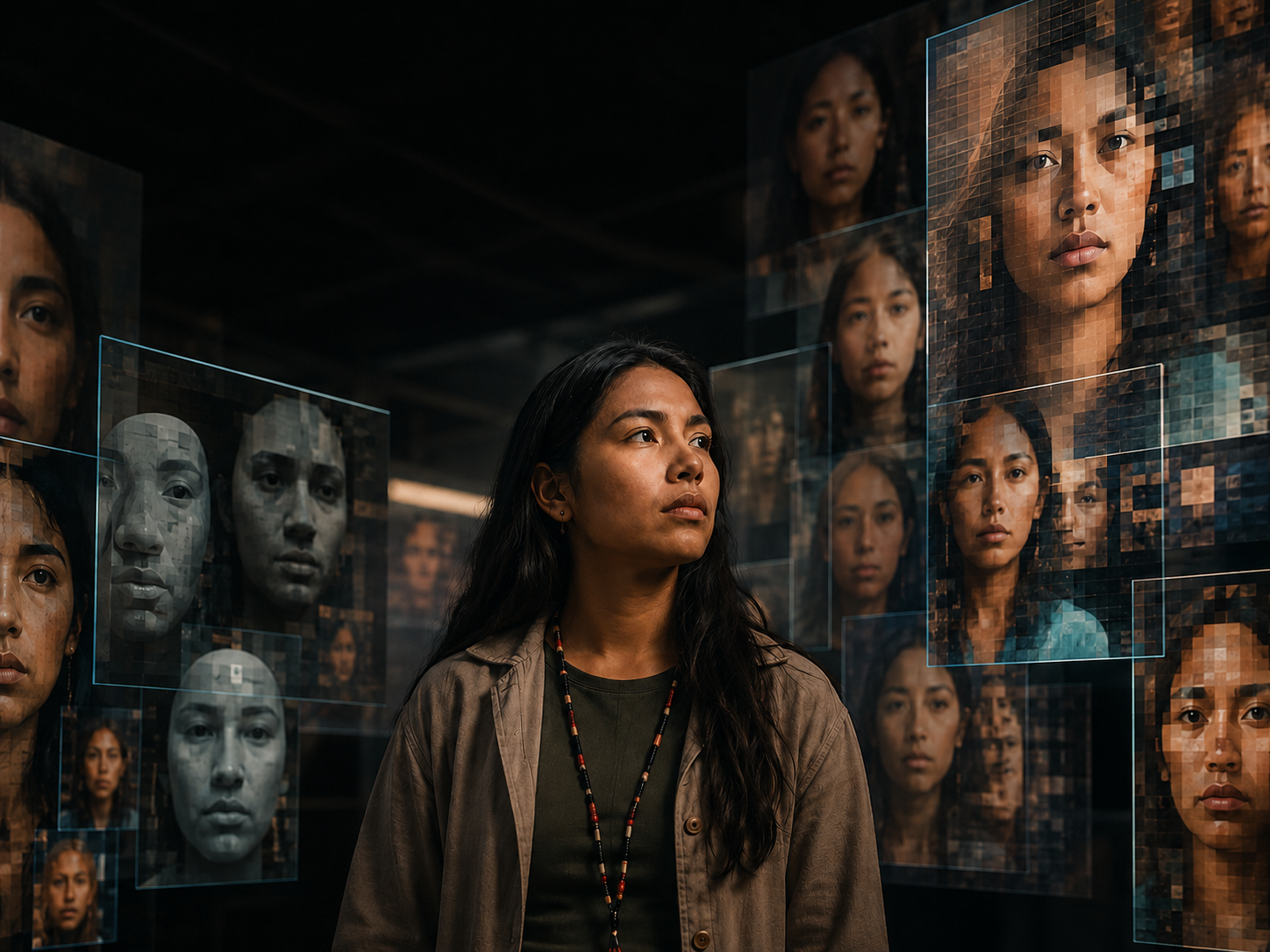
AI is Actually a Memory Machine
Generative models do not truly understand culture. They memorize patterns, recombine them, and then package the results into images that appear plausible.
This is both their strength and their danger. When biases are abundant in the data, models can repack those biases as high-resolution pictures. Past stereotypes might have been rough sketches; today they become cinematic compositions with soft lighting and refined textures.
The most troubling thing is not that AI images look fake, but that they look too real. Once errors become beautiful, they are easier to believe.
Indigenous Peoples' Imagery Is Often Compressed into a Few Symbols
Search engines and image databases have long harbored certain fixed imaginings: mountains and forests, campfires, elders, traditional clothing, mysterious expressions, ancientness, tribal feel. These symbols are not necessarily all wrong, but when they are repeatedly used to represent all Indigenous Peoples, they become visual laziness.
After learning these symbols, AI models tend to conflate different groups. They might mix Taiwan's Indigenous Peoples, North American Indigenous peoples, Oceanian cultures, and Andean imagery into a single "very Indigenous-feeling" picture.
The image may be beautiful, but culturally it can be completely off-target.
The Danger of False Realism
The most dangerous thing is not low-quality fake images, but high-quality wrong ones. Low-quality errors still show their seams; high-quality errors quickly enter textbooks, presentations, event posters, social media posts, and news captions.
When viewers see an image with lighting, detail, and expression, they easily believe it represents some kind of reality. Over time, erroneous images can reshape public imagination in reverse. People think they are seeing culture, but they are actually seeing the average distilled from online biases by a model.
This average is most frightening because it appears benign. It is simply convenient, fast, useful, and looks realistic. Yet cultural harm often does not require malice; it only requires lots of carelessness.
Visual Ethics Is Not Just an Art Issue
AI image ethics is not an art problem but a matter of cultural rights. Who may use certain attire? Which patterns carry family, hierarchical, or ritual significance? Which scenes should not be publicly reproduced? Which objects should not be turned into entertainment? These are questions models will not answer automatically.
Models only ask: what often appears together in the data? Humans must ask: is placing these things together correct, respectful, and free from misleading implications?
If media outlets, schools, brands, or government agencies use AI to generate "Indigenous-style" imagery simply to save time, they risk turning specific groups' visual traditions into free decorations. This is not creativity; it is a quick packaging that skips understanding.
Media Responsibility Cannot Be Outsourced to Models
When media outlets use AI images, they should at least adhere to several basic principles. First, do not let AI-generated images pass off as documentary photographs. Second, when specific Indigenous Peoples' culture is involved, label the image as generated and subject it to human review. Third, avoid mixing attire and symbols from different groups. Fourth, do not use sacred or sensitive cultural content as visual gimmicks.
These principles are not complex; the difficulty lies in speed. The media industry has grown accustomed to rushing deadlines, social platforms chase eye-catching content, and AI drives generation costs near zero. When speed, traffic, and laziness form an alliance, cultural representation is easily compromised.
The black humor is this: past errors required humans to spend time creating them; now errors can be mass-produced automatically, complete with automatic lighting fixes.
Education Must Teach Students to See Through Beautiful Errors
AI image education should not only teach students how to generate beautiful images but also how to identify beautiful errors.
An AI-generated image ought to prompt questions: Which Indigenous group does it depict? Is there a basis for the attire? Are the patterns publicly shareable? Does the scene align with history and geography? Has cultural material been turned into entertainment? Is AI generation labeled? Has knowledge holders or cultural institutions reviewed it?
When students learn to ask these questions, they will not merely become tool users but responsible digital citizens.
Conclusion
What AI generates best may be past biases. It rearranges visual habits already present online and returns them with higher resolution.
Therefore, AI image creation is not forbidden; it must simply not pretend to be harmless. The more beautiful an image, the more we need to ask where it came from; the more realistic it appears, the more we need to label that it is not documentary; the more it involves culture, the more we need to return to cultural rights and community review.
Beauty does not equal correctness. Likeness does not equal truth. High resolution does not equal respect.
AI use and content-safety disclosure
This article was drafted by Yuan Media AI's Daily Article Factory, then reviewed and approved for publication by Aciang Iku-Silan through editorial verification. When specific Indigenous Peoples' attire, patterns, or ritual imagery are involved, avoid unauthorized use and incorrect mixing.