Imaging Without Shining Light into Cells: Chemical Reactions Sustain 41 Hours of Observation
Original Chinese title: 顯微鏡不再把光打進細胞:當化學反應自己發光,生命可以被連續看 41 小時
RIED reads photons generated by luminescent reactions and reconstructs roughly 100-nanometre images while reducing laser-related phototoxicity. This local English feature retains its source links and explains the scope, conditions, limits and practical questions that should guide any later interpretation or use. Readers should check the original sources, the applicable setting and subsequent updates before relying on the account as a general conclusion.
王振庭
Natural-science educator focused on science education, curriculum design, AI literacy and media literacy, and on helping children retain curiosity and scientific judgement in technological settings.
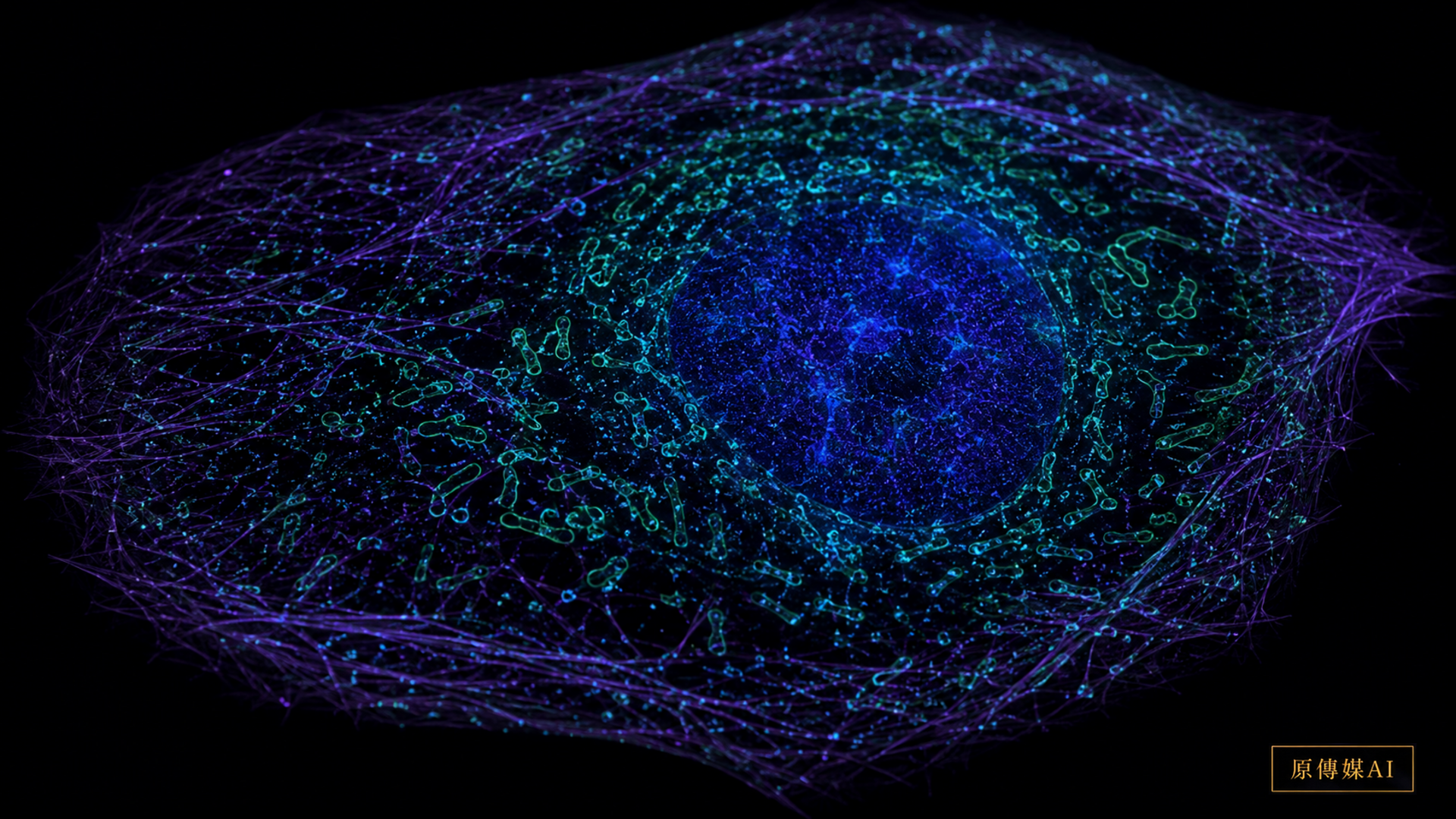
# Imaging Without Shining Light into Cells: Chemical Reactions Sustain 41 Hours of Observation
RIED reads photons generated by luminescent reactions and reconstructs roughly 100-nanometre images while reducing laser-related phototoxicity.
What the evidence shows
This feature separates direct observations, author interpretation and policy implications. The primary sources establish the event, method or deployment described here. They do not establish universal performance or immediate commercial readiness.
Why it matters
The case changes how evidence can be inspected. It connects measurement with context, exposes assumptions and creates a route for human judgement to challenge a model or institutional default. The practical question is how each claim can be traced, tested and revised.
Limits and implementation
Deployment requires independent replication, versioned records, clear responsibility, failure reporting and participation by affected communities or users. A persuasive explanation is not necessarily faithful; a high-resolution image is not necessarily an undisturbed biological state; and a global reconstruction depends on sampling geography.
Governance perspective
Institutions should begin with bounded pilots, publish successes and failures, define correction mechanisms and avoid turning one result into a universal promise. These steps allow evidence, field experience and public values to correct one another over time.
Reading the evidence in context
This report is most useful when its claims remain traceable. A research paper, a public record or a technical demonstration can establish a specific observation under stated conditions; it does not automatically establish a universal result, a commercial guarantee or a policy mandate. Readers should separate what was measured from how the authors interpret it, then separate both from any proposal for applying it elsewhere. Dates, sample conditions, instruments, comparison groups and reported failures are part of the claim, not background detail. When those conditions change, the conclusion may need to change as well.
That distinction matters in teaching, public communication and institutional decisions. A clear image, an intuitive interface or a compelling story can help people ask better questions, but none is a substitute for independent checking. Responsible use begins with a bounded purpose, accessible source records, named responsibility and a route for people affected by the decision to correct the record. Where evidence is incomplete, uncertainty should be stated rather than hidden behind a smooth narrative. Where a claim concerns a particular community, place or professional practice, people with relevant knowledge should be able to challenge the framing before it becomes a general rule.
From a finding to a responsible next step
The practical next step is usually not immediate scale. It is a small, reviewable test that specifies what would count as success, what would count as failure, who maintains the record and when the work must pause. New data should be versioned with the conditions under which it was collected; corrections should be visible enough that an earlier error does not keep travelling through summaries, presentations or automated systems. This approach protects both the public and the underlying work: a result becomes more valuable when others can reproduce, contest and improve it.
For readers using this feature in Taiwan or another setting, the appropriate question is not whether the example can be copied exactly. It is which elements are evidenced, which depend on local law, infrastructure or relationships, and which require local expertise before any adoption. Keeping those boundaries clear makes room for scientific evidence, field experience and public values to inform one another without pretending that one source of knowledge settles every question. It is also consistent with Two-Eyed Seeing: distinct forms of knowledge can remain distinct while meeting in a process that permits mutual checking and correction.
What the method can establish
A method can support a bounded claim when its inputs, conditions and outputs are documented. It should not be asked to prove more than the evidence can bear. Repeating the work under comparable conditions, including inconvenient or failed cases, is how a promising result becomes a dependable basis for action.
What the method cannot settle alone
No technical result decides every ethical, cultural or institutional question. Decisions also depend on who bears risk, who has authority to define acceptable use, and what alternatives remain available. These questions require accountable human judgement alongside the evidence.
Conditions for comparison
Comparisons are meaningful only when the relevant conditions are visible. Readers should ask whether data quality, timing, location, instruments and definitions are sufficiently similar before treating two outcomes as evidence of the same effect.
Why failures belong in the record
A system or study is easier to improve when failures are documented rather than treated as embarrassment. Failure reports identify missing inputs, weak assumptions and unexpected contexts; they also make it possible for later users to avoid repeating the same mistake.
Who can challenge the interpretation
Independent researchers, practitioners and affected people should have a practical way to question an interpretation. A challenge may reveal an omitted condition or a different understanding of impact. A trustworthy process records the challenge and explains how it was addressed.
What to preserve for later review
Versioned inputs, source links, methods and correction notes allow a later reader to reconstruct why a conclusion was reached. Without that trail, even a useful finding can become a slogan that is difficult to test or revise.
A bounded conclusion
The strongest conclusion is often the one that states its scope plainly. It can describe what is supported now, what still needs checking and what would change the assessment. Such precision is more useful than certainty that the evidence does not warrant.
From a result image to a reproducible data package
Laboratories assessing RIED need more than representative images. A useful data package should include raw frames, probe and reaction conditions, sampling intervals, environmental controls, background correction, reconstruction parameters, cell-viability measures and unsuccessful samples. Software versions and random settings should be recorded so another team can test whether the same photon data produces comparable structures under different parameters. Cross-laboratory studies should also agree on minimum signal quality and exclusion rules in advance. Only when the method, raw signal, biological state and reconstruction remain traceable does a 41-hour observation become a dependable research asset rather than a striking demonstration.
Sources
AI use and content-safety disclosure
This local English edition preserves the source links and evidence boundaries of the Traditional Chinese feature.