How Traditional Medicine Databases Can Prevent Cultural Knowledge from Becoming Flat Indexes
Original Chinese title: 傳統醫療資料庫如何避免把文化知識變成平面索引
This article proposes a four-layer design for traditional medicine databases: cultural context, purpose classification, care settings, and data boundaries, to avoid misrepresenting Indigenous traditional medical knowledge as simplified efficacy indexes.
Aciang Iku-Silan | University Professor
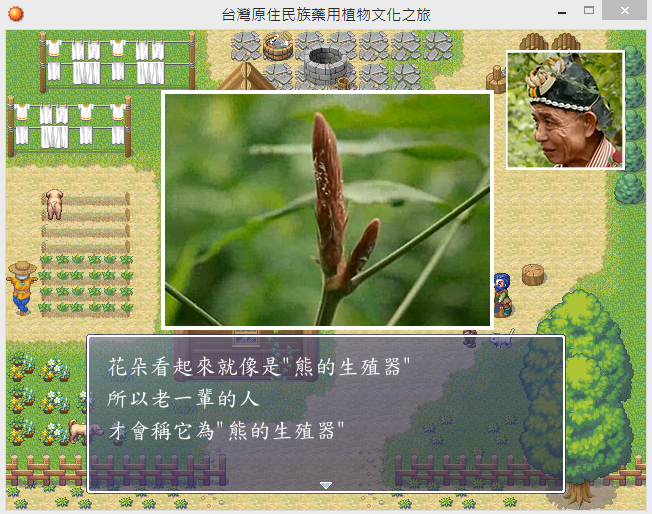
A true traditional medicine database should not only answer "what plant is this" but also remind users how the knowledge is used, limited, and protected.
I. The danger is not too little data, but overly coarse classification
The most common mistake in traditional medicine databases is to reduce everything to a three-column format of "name—efficacy—usage." This approach seems intuitive but is actually very dangerous because it rewrites traditional knowledge that exists within ethnic groups, landscapes, seasons, care relationships, and ritual ethics into content resembling health supplement catalogs. Readers assume finding a certain plant equals finding a therapy; platforms with search functions are assumed to have completed preservation.
But traditional medicine is not an efficacy list. It often contains holistic understandings of the body, disease, family, land, spirituality, and care responsibilities. Whether a certain plant can be used does not depend solely on the plant itself but also on harvest timing, user identity, symptom context, ethnic norms, taboos, and care purposes. If a database flattens all these dimensions it is not preserving culture—it is chopping up cultural knowledge and repackaging it.
Therefore, the first principle in building a traditional medicine database should not be "more data is better" but rather whether classifications are sufficiently detailed, warnings clearly presented, and usage categories avoid misleading implications. A database should not lead users to believe they are obtaining clinical information; instead it must remind them that what is presented is cultural, educational, and knowledge-preservation context—not a medical prescription.
II. Plants are not ingredient lists but relational networks
Mainstream science typically asks "what components does this plant contain?" Indigenous knowledge often asks "in what relationships is it used?" These questions do not conflict, but if only the former remains, traditional medicine loses its soul.
A single plant may simultaneously be part of childhood memories, women's caregiving, pre-hunting taboos, postpartum care, elder experience, landscape identification, and Indigenous language classification. Its precise meaning is not merely "what it can cure" but how it is recognized, narrated, taught, limited, and corrected within the community. If a database retains only efficacy data, it effectively disassembles an entire cultural network into isolated parts.
A better design should connect each record to at least four dimensions: ethnic context, plant or material identification, purpose classification, and care/limitation notes. Users see not a single answer but a set of relationships: Indigenous language name, who uses it, when, why, how it is taught, where it cannot be misused. Such a database can pull traditional knowledge back from flat indexes into three-dimensional cultural understanding.
III. Purpose classification must educate, never imply treatment
Traditional medicine databases may discuss usage but must do so very carefully. The purpose of classification is to assist education, organization, and research—not to encourage readers to self-treat. Especially when the platform serves a public audience, any language resembling "treats a certain disease," "effectively improves," or "can replace medical care" risks misunderstanding.
A safer approach divides usage into categories such as cultural caregiving, daily health memory, ritual and psychosocial well-being, plant identification and Indigenous language narrative education, long-term care and community support. These categories help people understand the social functions of traditional medicine while avoiding reduction to a single medical efficacy.
This balance is crucial. Indigenous traditional medicine certainly holds valuable experience, but public platforms should not lead general readers to treat it as an alternative clinical guide. The correct approach does not diminish traditional medicine; rather it protects it from misuse, commercial exploitation, and casual incorporation into mainstream medical systems.
IV. Databases must explain limits and refuse overreach
A mature traditional medicine database cannot offer only "search" functionality—it must also have a "boundary" function. It must remind users that certain knowledge is for educational purposes only; some materials should not be harvested independently; some content requires community authorization; some information is unsuitable for public release; some questions should be referred to professional medical, long-term care, or community resources.
This is also where AI intervention demands special attention. If an AI merely generates answers based on the database, it may expand conservative explanations into seemingly complete recommendations. Such expansion is dangerous because readers assume the platform provides deeper knowledge when in fact the model is filling gaps.
Therefore, traditional medicine AI must incorporate buffering mechanisms. For example, whenever usage amounts, efficacy claims, diagnoses, emergencies, pregnancy, children, elderly care, or specific diseases are involved, the system should prompt users to seek professional assistance. Not answering directly does not disrespect Indigenous knowledge; it prevents that knowledge from bearing responsibilities in inappropriate contexts.
V. Conclusion: Let databases become cultural caregiving, not cultural slicing
The true goal of a traditional medicine database is not to stuff every plant, animal, insect, or mineral into fields but to build a system that cares for the cultural context of Indigenous knowledge. It must help young people understand how their communities perceive bodies and nature, while also making public society aware that traditional medicine is neither superstition nor free material nor an arbitrary commercial recipe repository.
A good database should function like a thresholded "norms and taboos house." It welcomes learners but reminds them to remove shoes, slow down, and recognize where they must not tread. It does not lock culture away; it allows culture to be seen while preserving its dignity.
The traditional medicine database center should proceed from these directions: not pursuing the most data but the clearest cultural narratives and boundaries; not providing answers that look like clinical prescriptions but offering responsible knowledge pathways.
AI use and content-safety disclosure
This article was compiled and edited by the Yuan Media AI editorial process; content involving traditional knowledge, medical, psychological or cultural matters is provided solely for education and public discussion and does not replace professional diagnosis, treatment, counseling, emergency assistance, or Indigenous community authorization.