The Greatest Misunderstanding of Two-Eyed Seeing: Not Compromise, but Coexistence
Original Chinese title: Two-Eyed Seeing最大的誤解:不是折衷,而是共存
Many people understand Two-Eyed Seeing as traditional knowledge plus science. This sounds understandable, yet it misses its true spirit. Two-Eyed Seeing is not a compromise; it is a practice that acknowledges the coexistence of multiple knowledge systems.
Two-Eyed Seeing Lab
Two Eyes Are Not One Bigger
Many cross-disciplinary collaborations claim equality on the surface, yet a single knowledge system still dominates. Traditional knowledge is treated as case studies; scientific knowledge is treated as the standard. As a result, so-called collaboration often merely places culture at the opening and leaves decision-making to the original institutions.
The most easily misunderstood aspect of Two-Eyed Seeing is that it gets translated into a pretty compromise: left eye looks at tradition, right eye looks at science, then take an intermediate value. This sounds harmonious, but it's too simplified.
True two-way knowledge does not blend two kinds of knowledge into one mass, nor does it require one side to submit to the other. It is more like a coexistence capability: allowing different knowledge systems to retain their own problem consciousnesses, forms of evidence, ethical responsibilities, and boundaries of use.
Traditional Knowledge Is Not an Appendix to Science
In many education and research projects, traditional knowledge is often placed in the position of "cultural supplement." Courses first teach scientific principles, then add a segment of tribal stories; research first defines problems, then invites elders to provide examples; activities first arrange procedures, then ask community members to give opening remarks.
This arrangement appears respectful, yet it still leaves power in the hands of mainstream knowledge institutions. Traditional knowledge becomes decoration; science remains the judge.
Two-Eyed Seeing reminds us: traditional knowledge does not wait for scientific verification before becoming valid. It has its own formation methods, and also its own limitations and responsibilities. Seasons, locations, bodily experience, family memory, ritual order, and long-term observation can all be part of knowledge.
Science Is Not the Enemy Either
On the other hand, two-way knowledge is not anti-science. It does not need to push science into opposition. Scientific methods provide capabilities for measurement, comparison, experimentation, and repeatable verification, which are very important for medicine, environmental monitoring, disaster governance, and education.
The real problem is not science itself, but whether other knowledge systems get downgraded to materials, beliefs, or local stories after science becomes institutionalized.
The focus of two-way knowledge is to let science retain its strengths while acknowledging it is not the only way to understand the world. When science encounters land relations, ancestral spirits' ethics, collective memory, and lived practice, it needs to learn humility rather than just bringing instruments into the field.
AI Education Needs Two-Way Knowledge Even More
After AI enters education, many courses start teaching students how to prompt, generate images, organize reports, make presentations. These skills are useful, but not enough.
True AI literacy is not merely knowing how to use tools; it is understanding how tools change knowledge relations. Where do models get their data? How is that data labeled? Whose languages are fully trained? Whose knowledge gets incorrectly generated? Which content should the model not answer? These questions are more fundamental than "how to write prompts prettier."
Two-Eyed Seeing can become an important method for AI education. One eye looks at models, data, evidence, and technical limitations; the other eye looks at land, relations, ethics, and cultural permissions. Both eyes looking together means students will not treat AI as a talking answer machine.
Black Humor Moment
Now many project proposals like to write "combining traditional knowledge with modern technology." This phrase itself is not wrong, but if every combination is still planned, reported, classified, and published by the same side, then it's not combination; it's culture being invited to help technology put on makeup.
Even more awkwardly, some activities place elders at the center of posters while decision-making power sits in a corner of meeting rooms. The photos are touching, but governance is quiet.
Two-Eyed Seeing is not a group photo technique. It is about power configuration.
Starting from Co-creation, Not from Taking
True two-way knowledge practice should start with jointly defining problems. Researchers cannot decide the topic first and then ask communities to provide data. Educators cannot design courses first and then ask cultural workers to supplement content. AI engineers cannot build models first and then ask tribes to help accept them.
Jointly defining problems, jointly designing methods, jointly reviewing outcomes, jointly deciding openness levels—these steps look slower, yet they form the foundation of trust.
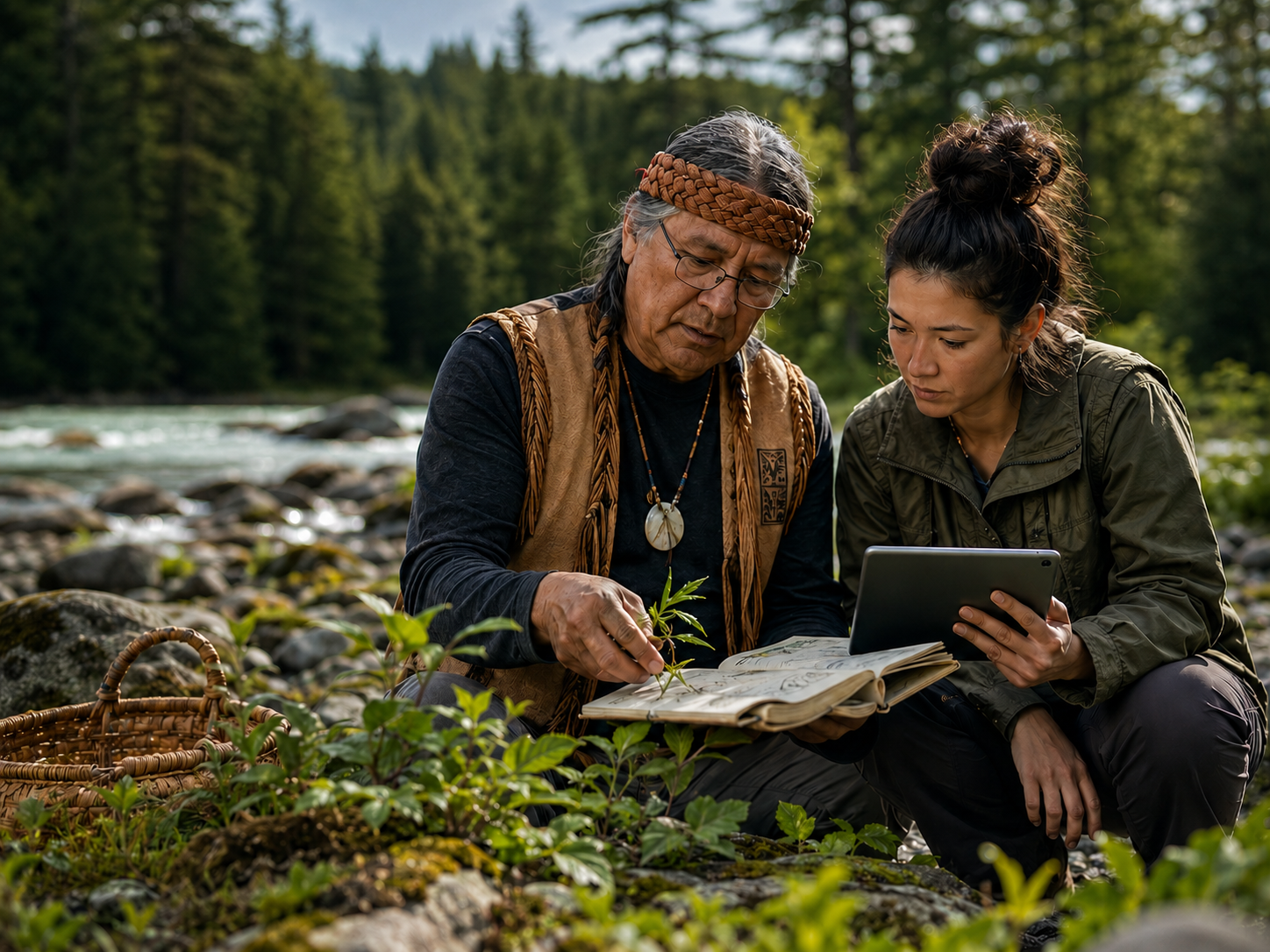
In traditional medicine and herbal knowledge fields, this is especially important. Labs can analyze components; elders can explain seasons, collection sites, bodily experience, and usage taboos. Neither side eliminates the other; together they build a more complete understanding.
Conclusion
The greatest misunderstanding of Two-Eyed Seeing is viewing it as compromise. It does not blend two sets of knowledge into an intermediate value; instead, different knowledge systems coexist in mutual respect.
In the AI era, this method matters even more. Because AI will quickly organize the world and may also quickly flatten it. Without reminders from two-way knowledge, models easily turn cultural differences into data differences, transform knowledge limitations into engineering obstacles, and convert community governance into authorization forms.
Two-Eyed Seeing is not a pretty slogan; it is a harder, slower, yet more dignified practice of knowledge.
AI use and content-safety disclosure
This article was drafted by Yuan Media AI's daily article factory, then reviewed and approved by Aciang Iku-Silan through editorial verification. When discussing Two-Eyed Seeing and Indigenous Peoples education cases, please supplement with specific ethnic groups and teaching contexts.