Can One Bottle of Water Tell Who Has Been There? When eDNA Enters Indigenous Ranger Monitoring, the Sensitive Question Is Where to Sample and Who May Interpret
Original Chinese title: 一瓶水就能知道誰來過?當 eDNA 走進原住民族巡護,真正敏感的是「在哪裡採、誰能解讀」
Environmental DNA can reveal species traces from water, soil, or air, but in Indigenous cultural waters the most important question is not only whether the test is accurate. It is who decides where sampling happens, who can interpret the results, and who controls the resulting data.
Aciang Iku-Silan
A university professor focused on Indigenous traditional knowledge, Two-Eyed Seeing, cultural data governance, and knowledge interpretation in the age of AI.
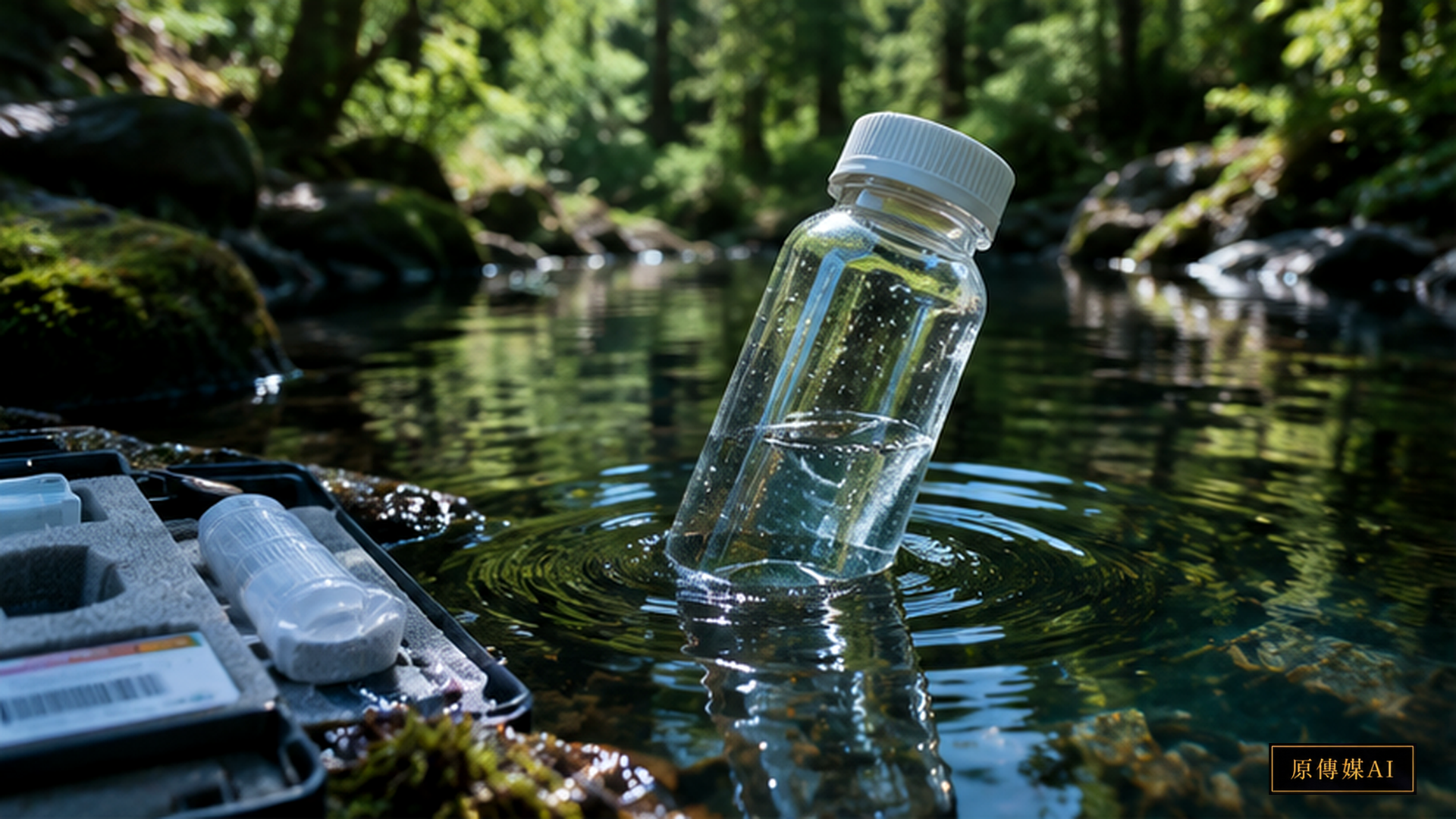
A bottle of water looks ordinary. In a molecular laboratory, however, it can become an invisible species list. Fish, amphibians, mammals, insects, and even traces of human activity can leave tiny fragments of DNA in streams, pools, wetlands, and coastal waters. Environmental DNA, or eDNA, allows conservation monitoring to infer what species may have passed through a place without necessarily catching fish, seeing tracks, or installing large camera networks. The method appears neutral, precise, and efficient, yet once it enters Indigenous ranger work and cultural waters, the most sensitive issue is not only whether the test is accurate. It is who decides where to sample, who may interpret the results, who may publish them, and who may reuse the data.
The case of the Tjaltjraak Rangers in Australia is highly relevant for Taiwan's Indigenous townships. This is not a model in which researchers first finish collecting samples and then ask Indigenous people to add a cultural explanation afterward. Its significance lies in the fact that sampling design itself is shaped by Country, cultural waters, Elders, and ranger knowledge. Senior Cultural Advisors guide which locations may be entered, which require specific protocols, and which ecological signals should not simply be turned into public GIS layers. In this setting, eDNA is no longer an external scientific tool added to community work. It becomes part of a Two-Eyed Seeing field: molecular methods provide new forms of observation, while local knowledge determines where that observation should be directed, when it should happen, and what forms of visibility should remain restricted. Australian government reporting describes this approach as Indigenous rangers leading scientific data collection rather than community participation added to an outside research project. See Australian Government Indigenous.gov.au | Two-way Cultural Knowledge Systems and new eDNA techniques a success.
In Taiwan, discussion of eDNA often focuses on rare fish, invasive species, protected wildlife, or general water-health assessment. For Indigenous Peoples, however, the question has an added layer: a species list is not merely natural data. It can expose hunting, gathering, ritual practice, prohibitions, migration routes, and family memory. If a particular fish or amphibian is detected in a culturally important pool, publishing coordinates may draw outside collectors, tourists, researchers, or commercial platforms. If an important cultural species is not detected, that result also cannot immediately be read as proof that the species has disappeared or was never present, because local knowledge may know that it appears only in certain seasons, after rain, at night, or when water levels change. A negative scientific result cannot automatically invalidate local experience, and local experience should not need laboratory confirmation before it is treated as meaningful.
Parks Canada also describes eDNA as a non-invasive tool that can help detect species across large environments, while emphasizing that sampling, preservation, contamination control, and interpretation still matter. This is crucial for Indigenous ranger work. Rangers should not be treated as people who merely carry bottles for outside scientists. They can co-define the sampling frame, establish long-term monitoring rhythms, identify environmental anomalies, and report landscape change as knowledge co-authors. When Dehcho First Nations and Canadian public agencies use eDNA to help protect important fish habitat, the lesson is not only the technology itself, but how monitoring authority can be placed back within local governance. See Parks Canada | Environmental DNA at Parks Canada.
The key argument here is that eDNA should not be framed as a tool that simply makes traditional knowledge more scientific. A better framing is that it forces science to recognize its own governance boundaries. Who has the authority to turn a cultural water site into a sampling point? Who decides which laboratory receives the sample? Can raw sequences be deposited in international databases? If future AI models use these data to predict species distributions, will the Indigenous community still control derivative data? These questions cannot be handled by a generic research-consent form alone. The CARE Principles for Indigenous Data Governance emphasize collective benefit, authority to control, responsibility, and ethics. Those principles should be placed across the entire eDNA data life cycle: before sampling, during sampling, in the laboratory, in databases, in public map layers, in policy use, and in commercial reuse. See Nature Ecology & Evolution | CARE Principles for Indigenous Data Governance in ecology and biodiversity research.
For Taiwan's 55 Indigenous townships, the best use of eDNA may not be immediate full-scale monitoring. A more grounded first step is to select a small number of questions that genuinely matter for local governance. Are invasive species entering community water sources? Did important fish species disappear after engineering work? Have pesticides, tourism, or river-channel projects changed species composition? Is a stream recovering after a disaster? Each question should be defined jointly by the community, township office, patrol teams, schools, research partners, and responsible agencies. If outside projects only arrive in the mountains with sampling bottles, the final product may simply be more papers. If local governance defines the question, eDNA can become a tool for Indigenous environmental authority.
The future, then, is not that one bottle of water can tell everything. It is that one bottle of water can force a better discussion about who has the right to know. The precision of eDNA does not automatically create justice. The more precise the data become, the less crude governance can be. When molecular monitoring enters cultural waters, the task is not to place Indigenous knowledge in a footnote to science. It is to let Indigenous knowledge change the scientific question itself.
Main reference sources
AI use and content-safety disclosure
This English version is an AI-assisted translation of a Yuan Media AI editorial feature and should be read together with the Chinese source article and cited public references.