Cargo Ships Are Bringing Sails Back, but This Is Not Nostalgia: FuelEU Has Put Wind-Assisted Savings into Compliance Calculations
Original Chinese title: 貨輪把風帆裝回來了,但不是復古:FuelEU 已把「借風省油」寫進合規計算,下一關是安全與疲勞
Wind-assisted cargo ships are not a nostalgic return to the past. They are becoming part of compliance calculation, energy strategy, safety regulation, and crew workload management.
鄭淑禎
Full-time Assistant Professor at Shih Chien University; a feature writer focused on industrial transformation, agricultural value chains, local economies, and technology applications.
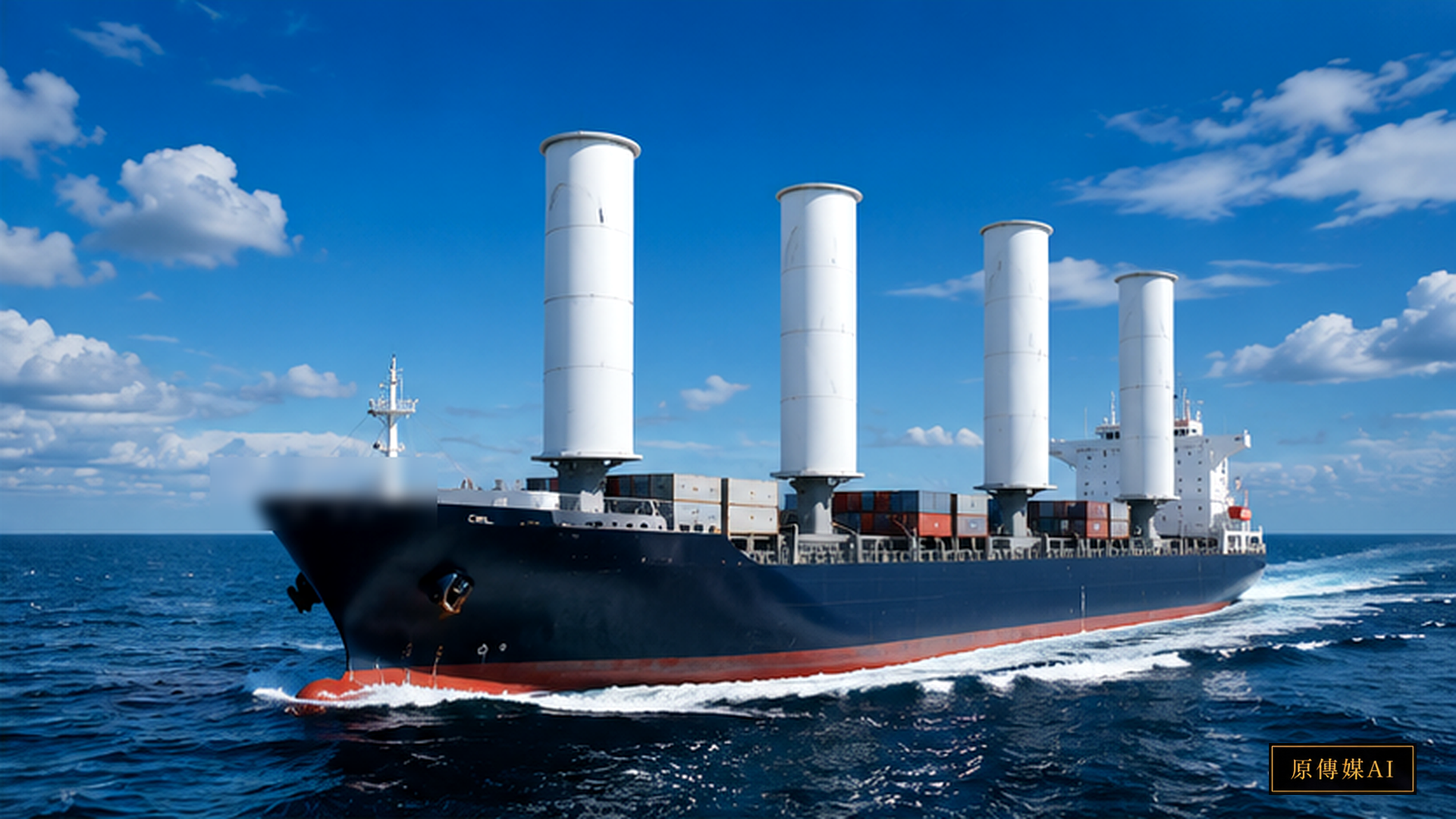
When a large cargo ship installs sails again, the first reaction can easily be nostalgia. It may seem as if shipping has gone in a circle and returned to the age of sail. But today's wind-assisted propulsion is not a romantic revival. It is an engineering transition driven by energy compliance, route optimization, ship structure, crew safety, and fuel costs. Rotor sails, rigid wing sails, suction wings, kite systems, and other wind-assist devices are not designed to remove diesel engines entirely. They are intended to reduce main-engine load under specific wind, route, speed, loading, and draft conditions, thereby lowering fuel use and improving the vessel's greenhouse-gas intensity.
The reason this matters in 2026 is that the issue has moved beyond technology demonstration. The European Union's FuelEU Maritime regulation has already placed wind-assisted propulsion within compliance language. The European Commission explains that FuelEU Maritime is a technology-neutral, performance-based regulation, and that ships fitted with technologies such as kites, rigid sails, suction systems, or rotor sails can benefit from a reward factor in the annual calculation of greenhouse-gas intensity for onboard energy use. See European Commission | FuelEU Maritime Q&A.
This means that using wind to save fuel is no longer only a public-relations image for a shipping company. It can enter verification, calculation, reporting, auditing, and competitiveness. Shipping firms now have to ask whether an installed system can reduce compliance pressure. Verifiers have to ask how fuel-saving effects are documented. The same ship may show different performance on different routes and in different seasonal winds, payload conditions, drafts, and port-waiting patterns. Fuel cost, carbon intensity, carbon pricing, and port regulation together turn the sail from attractive equipment into a financial and regulatory instrument.
The next stage, however, is not simple. The International Maritime Organization has placed wind propulsion and wind-assisted power within its safety-regulation work planning. That signal matters because large movable wind devices affect far more than fuel consumption. They may change vessel stability, visibility, radar shadowing, deck work, berthing, crosswind manoeuvring, heavy-weather operations, maintenance at height, firefighting, and emergency evacuation. Crew members are not operating ideal angles inside a laboratory. They make decisions amid wind, waves, schedule pressure, port congestion, and limited manpower. See IMO | Draft workplan on safety rules for wind-powered ships.
The most important question, then, is not how many sails are installed. It is who judges when to deploy them, when to reduce them, and when an algorithm should step back. Engineering models can calculate wind direction, wind speed, vessel speed, drag, and propulsive efficiency. Masters and crew know traffic density, night-navigation risk, fatigue, maintenance accessibility, and changing weather. If an optimization system recommends deployment to save energy but the master judges that deck conditions and sea state create unacceptable risk, the final authority must be clear. Green shipping cannot be built by transferring risk onto crew members, because otherwise efficiency becomes a new form of work pressure.
European projects such as WHISPER are also looking at wind-energy harvesting, propulsion assistance, onboard power, system integration, and verification as one connected problem. These projects remind us that wind assistance is not a single device. It is an operating system that links hull design, sail control, weather routing, speed strategy, main-engine management, structural-fatigue sensing, maintenance cycles, and training. See CORDIS | WHISPER wind energy harvesting for ship propulsion assistance and power.
Taiwan is not the regulator that wrote FuelEU, but it is deeply affected by global shipping decarbonization. Ports, cargo owners, shipping companies, ship managers, crew training, shipbuilding, and repair industries will all be pulled into this transition. If more vessels adopt wind-assist systems, Taiwan should not merely watch. It can build three capabilities: understanding how FuelEU, IMO processes, and port rules change shipping costs; training marine engineers who can handle wind devices, structural fatigue, and smart monitoring; and placing seafarer experience inside safety standards and education rather than listening only to equipment vendors' fuel-saving curves.
Cargo ships bringing sails back may look like a return to the past, but the real direction is toward a more complex future. Wind is not free energy if the industry must convert it into a verified, reportable, and safely operated decarbonization effect. That requires institutional, engineering, and human costs. Mature green shipping is not about making ships look more environmentally friendly. It is about finding a durable balance among compliance, efficiency, and safety on every voyage.
Main reference sources
AI use and content-safety disclosure
This English version is an AI-assisted translation of a Yuan Media AI editorial feature and should be read together with the Chinese source article and cited public references.