Life Creation Lab | Psychotherapy has always asked 'What happened to you?'; Indigenous psychology first asks 'Who have you lost connection with?'
Original Chinese title: 生命展現實驗室|心理治療一直在問「你怎麼了」;原住民族心理學卻先問「你和誰失去了連結?」
Drawing on Western attachment theory, family systems, and supportive psychotherapy, and contrasting them with Aboriginal kinship, Māori whānau, and Rongoā Māori, this article rethinks whether the smallest unit of mental health is an individual, a relationship, or an entire relational ecology.
王莉如
Liru Wang | Counseling Psychologist Supervisor | Long-term focus on trauma recovery, couple and family relationships, helping-profession ethics, and socio-emotional support
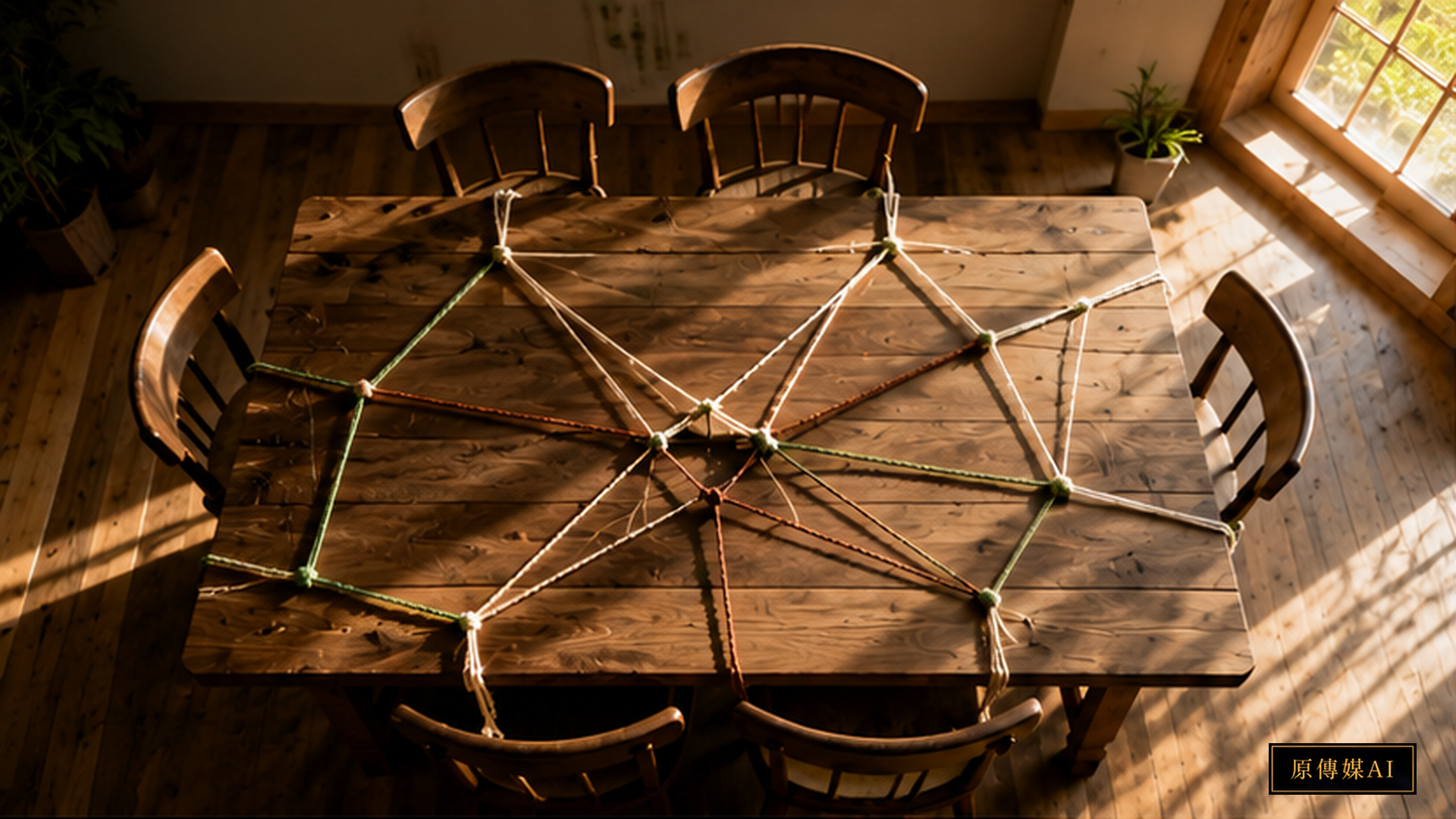
Western psychotherapy most often begins with "one person": their symptoms, emotions, memories, attachment experiences, thinking patterns, and behavioral choices. This approach has considerable clinical value, because it allows therapists to carefully identify how anxiety, depression, trauma, insecure attachment, emotion regulation, and family interaction work together. Yet when we treat "one person" as the most basic unit of psychology, we may inadvertently shrink the relationships that truly support or harm that person.
A 2026 Aboriginal-led scoping review published in *Clinical Child and Family Psychology Review* offers a powerful counter-question. The study began by screening 5,141 records and ultimately included 31 studies led by Australian Aboriginal researchers, synthesizing Aboriginal early relational health knowledge systems. The review found that children's and adolescents' relational security does not exist only between one primary caregiver and the child, but simultaneously within extended kin, family, community, Country, and the layered relationships between human and non-human worlds. Clinical Child and Family Psychology Review|A Scoping Review of Australian Aboriginal Early Relational Health Knowledge Systems
This finding does not negate Bowlby's or Ainsworth's attachment theory. Rather, it enlarges the core question of attachment theory: if the function of a secure base is to help a child find a dependable relationship under stress, explore the world when safe, and re-stabilize after setbacks, must that secure base be provided by only one or two core caregivers? In many Indigenous kinship systems, caregiving responsibilities may be distributed among grandparents, aunts and uncles, siblings, elders, community, and cultural practices. This is not "looser" care, but may represent another highly organized relational ecology.
Therefore, the most valuable aspect of Two-Eyed Seeing is not that Western psychology is too individualistic while Indigenous psychology is more complete, but that the two bodies of knowledge complement each other's blind spots. Western attachment research provides fine-grained mechanisms such as emotion regulation, caregiver responsiveness, secure base, and attachment insecurity. Aboriginal relational knowledge, in turn, reminds us: if assessment tools ask only parents, they may miss the people who truly carry caregiving, guidance, companionship, and cultural transmission. If a therapist draws only a traditional genogram without asking "Who do you turn to first? Who steadies you? Who represents responsibility? Which place do you miss most when you leave?" they may fail to map the client's actual relational landscape.
Māori psychotherapy pushes this intersection further. A 2026 theoretical article in *Frontiers in Psychiatry* proposes placing Specialist Supportive Clinical Management alongside Rongoā Māori within a single clinical framework. SSCM emphasizes patient-led dialogue, support, and improvements in symptoms and functioning; Rongoā Māori brings the balance of hinengaro (mind), tinana (body), wairua (spirit), and whānau (family/support network) into therapeutic understanding. The article specifically notes that SSCM's dialogue orientation and puku kōrero can form a substantive intersection, rather than treating Māori elements as decoration outside therapy. Frontiers in Psychiatry|Shifting the Overton Window: integrating traditional Māori and Western healing systems
What is most noteworthy about this integration is that it does not require therapists to abandon clinical judgment, nor does it require cultural practitioners to accept a single Western diagnostic framework. It is more like redrawing the case formulation: symptoms still need to be observed, crisis risks still need to be assessed, diet, sleep, functioning, and trauma responses still matter; but at the same time, we must also ask whether whānau is supportive, whether cultural identity is out of balance, whether important relationships have ruptured, and how the person understands their own state. What the two knowledge systems share is the belief that human stability is not an isolated product but is formed within relationships.
Family systems therapy has long approached this intersection. It tells us that one person's symptoms may relate to partners, parents, children, triangulation, boundaries, intergenerational transmission, and family rules. Narrative therapy also returns problems to stories and social contexts rather than saying "the person is the problem." Indigenous relational frameworks push one layer further outward: beyond family members, they include extended kin, community, Country, intergenerational responsibilities, and cultural relationships. This is not infinite expansion, but a re-identification within different cultures of "which relationships truly change a person's sense of safety."
For counseling practice, this brings very practical changes. When a teenager says "no one in my family understands me," the therapist can ask not only about parental relationships but also about who actually supports them. When an adult who left their Indigenous community for work experiences anxiety and insomnia, beyond assessing work stress, the therapist can ask which daily relationships were lost before the discomfort began. When a couple is in conflict, if behind it lie elder caregiving, family responsibilities, and community expectations, it is not appropriate to reduce the problem to just two people's communication skills.
But "more relationships are always better" is equally not the right conclusion. Extended kin may be supportive, but may also bring control, responsibility conflicts, and pressure. Community may provide belonging, but may also make a client fear being judged. Truly professional Two-Eyed psychological work does not assume that any particular cultural relationship is necessarily beneficial, but uses a broader relational map to identify: which relationships provide safety, which create burden, which need boundaries, and which are therapeutic resources.
The research itself also reminds us to maintain evidential proportion. The importance of the Aboriginal scoping review lies in its synthesis of highly consistent relational knowledge and lived experience, but much of the research is qualitative in design, and there remains a lack of sufficient culturally valid and reliable measures. The Māori SSCM + Rongoā Māori article is theory and hypothesis integration, not a large-scale randomized trial. Therefore, the most reasonable conclusion is not that "some Indigenous therapy has been proven superior to Western psychotherapy," but that we already have sufficient reason to re-examine whether clinical assessments have drawn the relational world too narrowly.
What the Life Creation Lab truly wants to leave behind is this: the smallest unit of psychology need not always be one person. Western psychology shows us how attachment, emotion regulation, and family interaction affect the individual; Indigenous psychological knowledge invites us to rethink just how far a person's "relationships" extend. The truly interesting thing about Two-Eyed Seeing is that it lets the two psychologies fill in each other's blind spots, rather than rushing to decide which one is more correct.
From "Primary Caregiver" to "Care Network": Assessment Tools Also Need to Change
If this perspective is truly brought into psychological counseling, what needs to change first may not be therapeutic technique but assessment questions. Traditional intake often asks about parents, siblings, partners, and cohabiting members, but for some clients, the most important people may be grandparents, aunts, uncles, cousins, church partners, Indigenous community elders, foster family members, or even a place they regularly return to. These relationships may not all fit into a conventional family tree, so therapists need tools more like a "relational ecology map" that draws out support, responsibility, conflict, distance, cultural connection, and sense of safety together.
This expansion can also help Western clinical theory become more precise. For example, attachment theory often discusses internal working models—how a person forms expectations of self and others based on past caregiving experiences. If caregiving sources are inherently multiple, then internal working models may also arise from multiple sets of relationships, not just a one-to-one dyad. This does not mean all relational effects are the same, but it reminds researchers to re-examine whether different caregivers play different secure-base functions in different contexts.
Why Couple and Family Counseling Need This Two-Eyed Perspective Even More
In couple therapy, many conflicts appear on the surface to be "between two people," but in reality they are connected to both families' caregiving obligations, economic responsibilities, living arrangements, and cultural expectations. Western family systems are already familiar with concepts such as triangulation, boundary, and intergenerational transmission. An Indigenous kinship worldview can help therapists more sensitively recognize that elders or relatives who seem like "third-party interference" are sometimes part of the relational system itself, not external noise that can simply be cut away.
Conversely, cultural understanding must not become a reason to overlook harm. If a kinship relationship involves violence, oppression, excessive control, or places unreasonable burdens on the client, the therapist still needs to help establish boundaries and a safety plan. Truly culturally safe therapy is not "culture always comes first," but rather, after understanding cultural structures, working with the client to judge which relationships are worth repairing, which need distance, and which responsibilities need to be renegotiated.
From Research to Service Design: Do Not Measure Only "Symptom Reduction"
If relational wellbeing is truly part of mental health, outcome evaluation should also be more comprehensive. Beyond anxiety, depression, eating symptoms, or trauma scores, we can also track whether support networks have become more stable, whether family communication has improved, whether the person has re-found someone to turn to, whether important cultural relationships have been restored, and whether more reliable co-regulation resources are available when stress occurs. These indicators cannot replace clinical scales, but they can fill the blind spot of "symptoms improved, but life remains isolated."
For the psychological professions, this is where Two-Eyed Seeing is most powerful: it does not ask clinicians to abandon their expertise, but to ask their professional questions more completely. When a therapist moves from "What happened to you?" to "Who have you lost connection with, and who have you reconnected with?" therapy is no longer just repairing one person's inner world—it also begins to address the relational environment that truly holds that person.
Further reading: PubMed: Aboriginal early relational health knowledge systems
Sources retained from the Chinese original
AI use and content-safety disclosure
This article was organized and reviewed through the Yuan Media AI editorial process.