Moving People Away from the Coast Is Not Resilience: How Sama Bajau Put Stilt Houses, Solar Power, and City Planning into One Public-Service Blueprint
Original Chinese title: 不是把人搬離海邊就叫韌性:Sama Bajau 如何把高腳屋、太陽能與城市計畫放進同一張公共服務藍圖
Sama Bajau families in Surigao City, Philippines, turned housing, education, livelihood, and basic-service needs into data that local government could use. Twenty-four permanent stilt homes added sanitation and solar power, and the work moved further into city development and land-use planning.
鄭淑禎
鄭淑禎 | Full-time Assistant Professor, Shih Chien University | Feature writer focused on industrial transformation, agricultural value chains, local economies, and technology applications.
The Easiest Mistake in Post-Disaster Reconstruction Is Treating “Having a House” as the End of the Problem
For coastal and sea-oriented communities, housing has never been a separate object. It is connected to work, boats, tides, kinship networks, children's schooling, water, sanitation, roads, fishing, and everyday movement. When a typhoon or flood destroys homes, a government that answers only by “moving people to a safer place” may solve structural safety while cutting off livelihoods and social relationships.
On August 7, 2026, the United Nations Development Coordination Office documented a Sama Bajau case in Surigao City, Philippines. Sama Bajau are an Indigenous people whose lives have long been closely connected to the sea. Some families faced multiple pressures from typhoons, flooding, inadequate housing, prices, education, and basic services. The project did not begin with “what should we build?” It first allowed families to organize the housing, education, livelihood, and service gaps they faced, then turned that information into a basis for action by government and partner organizations. United Nations DCO | How an Indigenous Community in the Philippines Shaped Housing, Education and City Planning
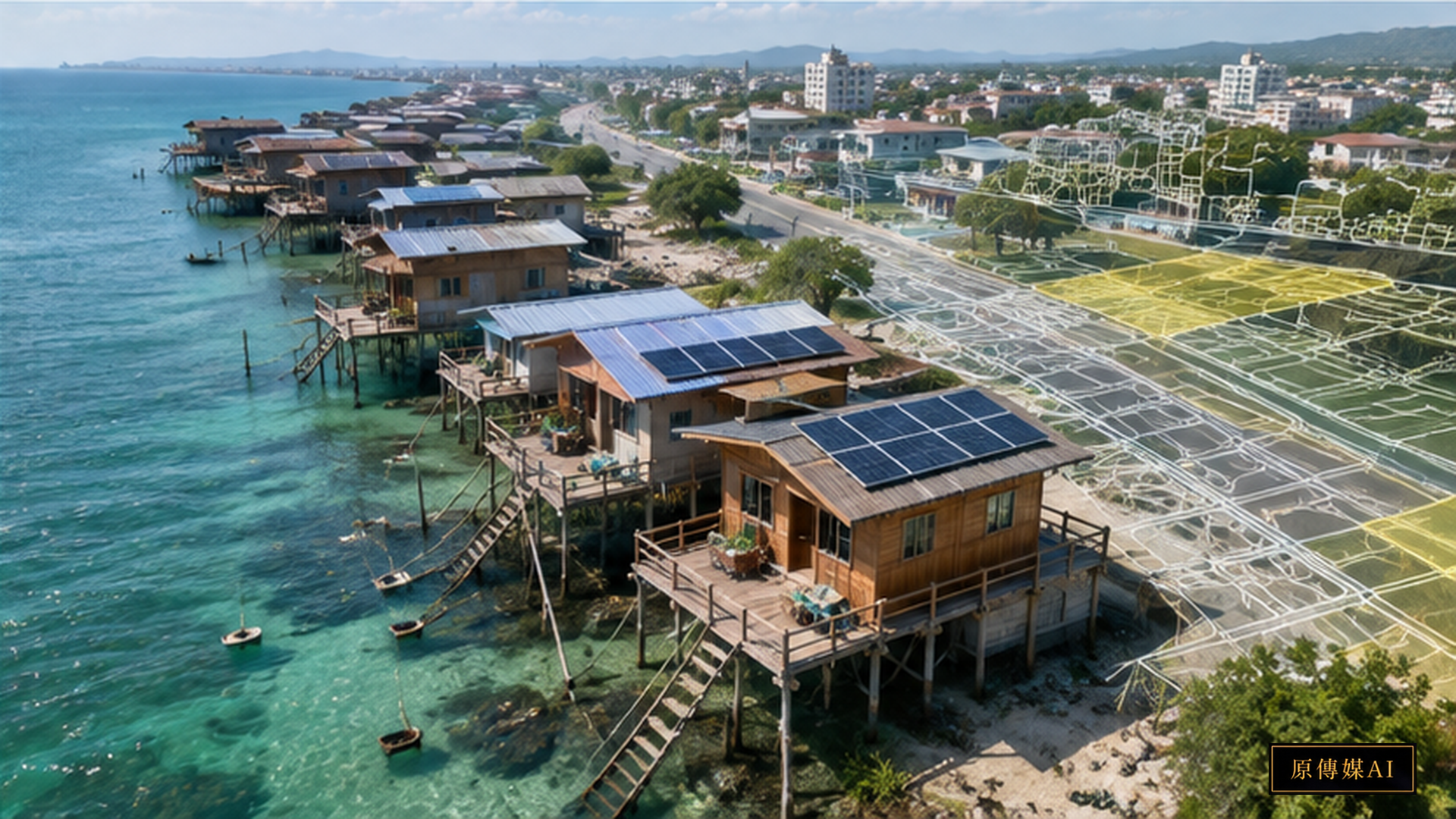
The most direct result was that 24 Sama Bajau households, 143 people in total, moved from disaster-vulnerable shelters into permanent stilt homes. The housing form responded to their traditional stilt-house way of life while adding water, sanitation, personal hygiene facilities, and solar power. The UN Philippines 2025 results report also records that the project established a children's learning and youth-transition center, a livelihood center, and recycling facilities, while developing alternative livelihoods such as fish farming and mangrove restoration. UN Philippines | Annual Results Report 2025
Cultural Appropriateness Is Not Putting a Traditional Exterior on a Modern House
Stilt houses are easily photographed as attractive cultural symbols. What deserves analysis, however, is not whether a house looks traditional, but whether the space continues to support life. How does the stilt structure respond to flooding? How should the distance between homes, the shore, boats, and roads be arranged? Can family members and relatives maintain mutual support? Is school more accessible for children? Are water and wastewater systems stable? Who is responsible for maintaining the solar power system?
If only the appearance is retained while residents are placed far from work, lack transportation, and have no maintenance resources, the result is merely “culturally styled housing.” Truly culturally appropriate housing designs community use, infrastructure, and risk together. This is also where Two-Eyed Seeing becomes concrete: the community knows how space is used, engineers know how to improve structural safety, and public-service units know regulations, roads, sanitation, and energy systems. Reconstruction fails when any one of the three is missing.
Solar Power Is Not Sustainable Simply Because It Is Installed
Adding solar power to housing is appealing, but resilience design has to ask more detailed questions. Coastal salt spray can corrode metal and electrical equipment. Typhoons impose wind-load requirements on mounting structures. Batteries and inverters also have finite lives. If a project pays for installation but provides no spare parts, maintenance, budget, or operating training, solar power may become a symbol of failure on a roof a few years later.
Energy resilience should therefore be designed together with local maintenance capacity. Which equipment can be sourced locally? Who performs daily checks? Which loads take priority during an outage? Do the public learning center and communications have backup power? These may look like small engineering questions, but they determine whether a community can maintain basic services after a disaster. Resilience is not the number of devices; it is the ability to keep operating under pressure.
The More Important Result Was Household Data Entering City Planning
The most important part of this case for Yuan Media AI is not only the 24 homes. It is that the needs data organized by families later entered a local Voluntary Local Review and an updated development and land-use plan. Community experience did not remain in interview records; it was converted into evidence that government planning could use. United Nations DCO | How an Indigenous Community in the Philippines Shaped Housing, Education and City Planning
That is an important difference. Many participatory projects conduct workshops, take photographs, and hold interviews, then leave behind a thick report while budgets and land use remain unchanged. Participation with real influence must answer which community question entered which government plan, which department is responsible, when funding exists, and whether roads, education, housing, or service arrangements changed. Without that chain, participation can become nothing more than “being heard.”
The Joint SDG Fund also presents the case as one in which local priorities became practical change, emphasizing how Indigenous cultures, livelihoods, and priorities entered data and planning. Joint SDG Fund | How an Indigenous Community in the Philippines Shaped Housing, Education and City Planning
Housing, Education, and Livelihoods Are Actually One System
For Sama Bajau families, being housed safely while losing income is not complete reconstruction. Children having a school while facing transport barriers is not complete public service. That is why the case addresses learning space, livelihoods, mangroves, fish farming, waste, and housing at the same time. It reflects a fact that departmental systems often fragment: families do not live according to government organizational charts.
A local government may assign housing to one office, roads to public works, education to schools, fishing to agriculture and fisheries, livelihoods to social development, and mangroves to the environment office. Residents experience only one question: can life continue? Real public resilience therefore requires departments to reconnect services on one map. Which road reaches the school, which pier supports livelihoods, which shelter has energy, and which water point remains usable after a disaster should be checked together.
Stilt Houses Are Not Automatically Safe Forever; Traditional Knowledge Must Be Updated with New Risk Data
Including a traditional housing form in reconstruction does not mean that the form automatically resists every modern climate risk. Storm intensity, sea level, land subsidence, population density, and material supply may all differ from the past. Engineers still need to assess wind loads, flood height, structural connections, evacuation, and material durability. Two-Eyed Seeing does not exempt “tradition” from testing; it lets engineering begin from real ways of living.
Conversely, engineering models cannot rely only on standardized housing assumptions. Residents have long known how tides move in and out, which direction has the strongest waves, which routes remain passable during flooding, and how families move boats and supplies. This local knowledge can help engineers decide on sites, elevation, circulation, and service placement. Adaptation happens when new risk data and long-term lived experience are placed together.
What Taiwan's Indigenous Townships and Islands Can Learn Is Not to Copy a Row of Stilt Houses
Taiwan does not need to import the Sama Bajau building form. The lesson worth borrowing is the governance process. First, structure household needs into records before reconstruction instead of holding only one briefing. Second, make sure needs data can enter land, road, housing, and public-service plans. Third, make cultural appropriateness about spatial use, life functions, and maintenance capacity rather than architectural appearance. Fourth, track results for years to confirm that residents are genuinely safer and can access services more easily rather than evaluating only at the completion ceremony.
This method is especially important for Indigenous townships, islands, and coastal settlements, where public works face transportation, terrain, population, cultural, and climate risks at the same time. Standardized engineering can improve efficiency, but if residents' most basic ways of using space do not enter the design, the result may still be “hardware completed, life made inconvenient.”
Resilience Is Not Moving Away; It Is Rebuilding a Place Where Life Can Continue
The strength of the Sama Bajau case is that it expands safety from one housing structure to public services. Homes must be safe, but children must be able to attend school, families must maintain livelihoods, energy and sanitation must continue, and the community must participate in government decisions. When these conditions hold together, the result comes closer to real resilience.
The question is not whether Indigenous Peoples should leave the coast, nor whether traditional stilt houses are the single best answer. The more important question is who gets to define what life still needs when climate risk forces ways of living to change. If a community can only choose among houses that have already been designed, there is no Two-Eyed Seeing. If community experience can change public decisions about housing, roads, education, livelihoods, and land use, then it is.
Reconstruction is not merely moving people away from danger. It is allowing them, under new risk conditions, to retain relationships, sustain work, reach services, and participate in governance. That is what deserves to be seen in the Sama Bajau public-service blueprint.
The Final Question Is: Who Will Maintain It Five Years Later?
A reconstruction project can look successful in the year it is completed. The real test often comes years later. Stilt-home timber and connectors need maintenance; solar panels, inverters, and batteries age; water and sanitation equipment may clog; public learning and livelihood facilities need people and budgets. If all maintenance depends on external project funding, the plan may gradually fail after the project ends. Assigning long-term maintenance responsibilities among local government, community organizations, and service providers is as important as building the homes in the first place.
This again shows why participation cannot happen only at the design stage. After several years of use, residents will know which spaces are most convenient, which equipment is hardest to maintain, and which services still have gaps. That experience should return to city and land-use planning for the next round of improvement. A resilient public service keeps learning and correcting itself through use; it does not treat completion as the full stop of the story.
AI use and content-safety disclosure
This article was organized and reviewed through the Yuan Media AI editorial process.