Transforming Connectivity into Cultural Safety: How Australian First Nations Build Digital Public Services with Indigenous Languages, Storytelling, and Local Support
Original Chinese title: 讓網路連結也成為文化安全:澳洲第一民族如何用族語、故事與在地支援共築數位公共服務?
Australian First Nations digital safety initiatives integrate Indigenous language resources, cultural safety, remote services, reporting mechanisms, and frontline support; Taiwan can draw from service design without duplicating institutions or presuming Indigenous linguistic corpora are free for AI training.
雙向知識實驗室
Two-Way Knowledge Lab; Advisory Consultant: focusing on Indigenous knowledge, environmental monitoring, data sovereignty, cultural governance, and artificial intelligence applications, advocating the juxtaposition of digital tools with community knowledge rooted in reciprocity, auditability, and shared decision-making.
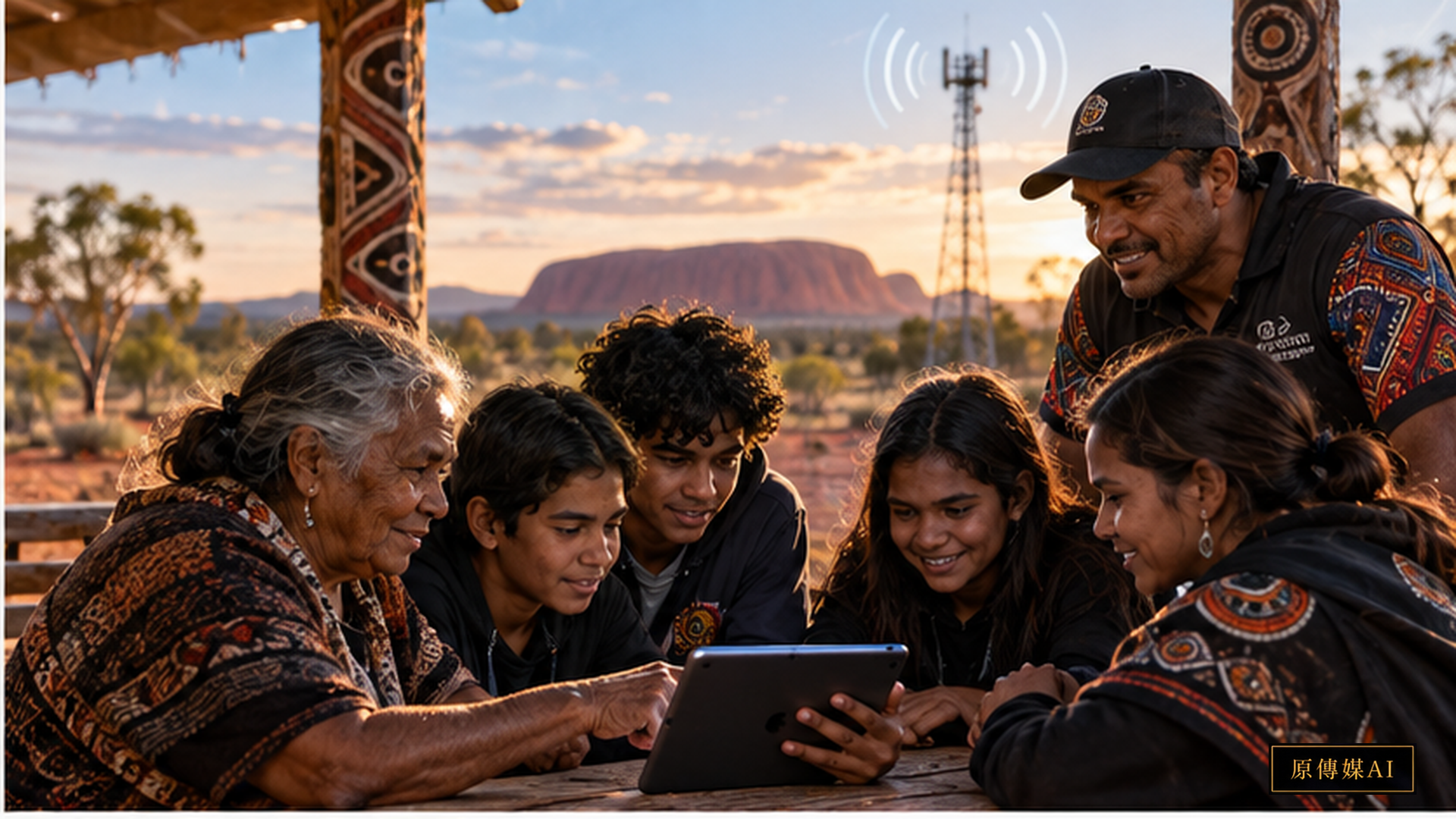
# Transforming Connectivity into Cultural Safety: How Australian First Nations Build Digital Public Services with Indigenous Languages, Storytelling, and Local Support
Connecting remote communities to telecommunications networks is universally hailed as an essential milestone for digital inclusion. Yet the true challenge of public service delivery begins after connectivity is established: How do families navigate online financial scams? Who supports a teenager targeted by cyberbullying? When elders receive deceptive messages, is assistance available in their native language? When someone is confronted with image-based abuse, hate speech, or account impersonation, are reporting mechanisms comprehensible, accessible, and answered by trusted human caseworkers? Initiatives spearheaded by the Australian Government and eSafety Commissioner for Aboriginal and Torres Strait Islander communities are shifting digital safety from abstract technical literacy toward cultural safety and frontline public service design.
First Nations resources published by the Australian Government and eSafety encompass device security baselines, scam detection, cyberbullying mitigation, non-consensual image sharing prevention, online hate and harassment responses, and dialogue guides for parents and caregivers. The paramount achievement is not the gross volume of pamphlets produced, but how the materials empower communities to discuss digital risks through familiar mother tongues, cultural storytelling, and the practice of yarning. Digital safety education is no longer delivered as top-down bureaucratic mandates; it is embedded within kinship networks, communal trust, and localized communicative norms.
In remote Indigenous communities, online risks are deeply entwined with offline social relationships. Scams frequently propagate through compromised accounts of trusted relatives; online harassment often originates from within the same tight-knit settlement; when compromising imagery is disseminated, victims endure simultaneous online defamation and intense offline community scrutiny. Consequently, advising users simply to "block the account" or "refrain from clicking links" proves utterly inadequate. Effective interventions demand knowing whom the victim trusts, whether lodging a formal complaint risks escalating family feuds, and whether local community liaisons are available to accompany the victim through reporting.
This represents the heart of cultural safety. Cultural safety is not slapping an Indigenous motif onto a website header, nor is it merely translating English policy text into another tongue. It requires that the service pathway itself is transparent, trusted, and structured so that reaching out for help does not expose the seeker to renewed shame or systemic reprisal. For First Nations youth, seeking assistance requires navigating personal privacy, kinship relationships, peer dynamics, and community visibility; for elders, it requires patient human guidance to navigate app interfaces, preserve evidentiary screenshots, or complete formal dispute filings.
Research published by eSafety demonstrates that the digital experiences of children, parents, and caregivers cannot be evaluated solely by screen time metrics. The pivotal variables are the nature of encountered content, exposure to harassment, parental confidence in providing guidance, youth awareness of support channels, and platform remediation response times. Presenting these metrics only as aggregate national averages conceals stark disparities across remote geography, linguistic diversity, and cultural context. Digital inclusion encompasses far more than broadband coverage; it hinges on safety, accessibility, and institutional responsiveness.
These international developments provide rich insights for Taiwan's Indigenous townships, though Australian statutory structures cannot be duplicated wholesale. Taiwan possesses distinct Indigenous linguistic ecosystems, social welfare infrastructures, school systems, municipal administrations, and social media habits. The transferrable value lies in core design principles: Can digital safety curricula be embedded within Indigenous language immersion classrooms? Can tribal Community Care Stations (Wenjian Stations), tribal youth associations, or community clinics serve as trusted digital support entry points? Do frontline caseworkers know how to preserve digital evidence, execute agency referrals, and safeguard minor privacy?
Integrating digital safety into Indigenous public services rather than treating it merely as an elective computer class unlocks transformative collaborations. Indigenous language educators can translate complex scam typologies into culturally resonant case studies; social workers and counselors can address the emotional and familial strain generated by digital harms; police officers and platform safety desks can clarify legal reporting procedures; while grassroots digital facilitators can provide hands-on coaching in multi-factor authentication, account recovery, and device encryption. Disconnecting these stakeholders forces vulnerable community members to navigate bureaucratic silos alone.
Two-Eyed Seeing is vital across this entire domain. Central regulatory bodies and platform operators possess comprehensive scam typologies, telemetry data, account anomaly metrics, and platform community standards; Indigenous communities understand which linguistic pretexts deceive local elders, which imagery inflicts severe cultural harm, and what reporting avenues preserve community dignity. The former provides operational scale and statutory authority; the latter supplies lived context, relational trust, and ethical accountability. When both sides co-design educational resources and reporting pathways, public services bridge the gap between statutory existence and practical accessibility.
Artificial intelligence can assist in this space by translating complex legal notices into plain language, identifying phishing heuristics, structuring incident timelines, and directing citizens toward verified reporting channels. However, AI must never supplant the discretion of law enforcement, mental health professionals, or community leaders, nor should Indigenous linguistic corpora be harvested for model training without sovereign consent. Utilizing Indigenous language or cultural datasets demands prior agreements governing provenance, permissible scopes of use, secure storage, and clear mechanisms for consent revocation.
The First Nations Digital Inclusion Roadmap unifies connectivity infrastructure, digital capabilities, and public service design into a single policy framework, offering an urgent reminder for Taiwan. True digital progress is not achieved when a cellular tower is erected on a mountain ridgeline; it is achieved when a resident encountering online harm receives timely, competent assistance. When an elder is targeted by financial fraud, a youth endures digital harassment, or a family struggles with cyberbullying, whether public services respond in a language they understand and through pathways they trust is the ultimate test of digital infrastructure.
Transforming connectivity into cultural safety does not dilute technological standards; it elevates the benchmark for public administration: networks must be fast and resilient, but they must be matched by people who can teach, listen, and walk alongside communities when harm occurs. For remote and Indigenous communities, mature digital inclusion is not measured by ubiquitous connectivity alone, but by ensuring that whenever risk emerges, every citizen knows where to turn, what language to speak, and who will stand with them to resolve the crisis.
To operationalize these principles within Taiwan's Indigenous townships, initiatives can take root across established community hubs. Experimental schools can integrate digital bullying, impersonation, and non-consensual image dissemination into language and civic courses; Community Care Stations can assist elders in configuring device privacy and verifying suspicious communications; youth cultural centers can host workshops on creator rights and digital footprints; and local township offices can publish clear referral flowcharts directing residents to appropriate agencies. Rather than inventing redundant infrastructure, policy should interconnect existing institutions.
Social media platforms must shoulder greater operational responsibility. In close-knit rural communities, digital abuse spills immediately into physical reality; automated moderation forms that offer zero human explanation erode community trust. Platforms must provide transparent ticket tracking, accessible evidence-logging tools, multilingual support, and expedited escalation pathways for severe image-based abuse or impersonation. Confining safety tools to English or convoluted technical settings ensures they never reach the citizens who need them most.
Data governance is an essential prerequisite. When community members engage digital safety services, they often upload chat logs, private imagery, audio notes, or identity documents—materials containing deeply sensitive personal context. Public services must articulate data retention schedules, authorized personnel access, explicit prohibitions against commercial AI training, and unambiguous protocols for permanent data deletion. If seeking help triggers new privacy vulnerabilities, cultural safety is compromised. Digital platforms serving public safety must uphold data minimization, purpose limitation, and dynamic consent.
Two-Eyed Seeing ensures educational curricula remain responsive to frontline realities. Central agencies can contribute real-time fraud alerts and legal updates, while local facilitators supply current community dialects, relational dynamics, and communicative nuances. Periodically cross-calibrating these two streams keeps materials continually refreshed, superseding static annual brochures. This adaptive capacity embodies institutional resilience: not expecting a manual to remain perpetually valid, but sustaining an ongoing capacity to learn and evolve.
Ultimately, digital inclusion indicators must be redesigned. Beyond signal coverage and bandwidth, audits must measure: Are native-language safety resources accessible? Do fraud victims know how to seek redress? Can online abuse complaints be resolved? Are local liaisons adequately trained? Do minors have trusted adult advocates? When these qualitative metrics guide public policy, digital connectivity matures from a physical engineering triumph into an authentic public service guarantee.
Reliable Sources
Role-Driven Inquiry
Yuan Media AI | Guided Questions by Role
Select a role first, then review the complete questions from that perspective; clicking a question will display Yuan Media AI’s response in real time.
Select a role
First Nations youth and kinship caregiver
Examine the article's evidence, governance boundaries, data rights, and actionable steps from the perspective of a First Nations youth and kinship caregiver.
Choose a question
AI use and content-safety disclosure
This article was compiled from official and research sources; established facts, research limitations, cultural contexts, and extended analyses are presented separately. The cover is an AI-assisted concept illustration.