Does an Indigenous Aged Care Commissioner Guarantee Cultural Safety on the Ground?
Original Chinese title: 有了原住民族高齡照護專員,就等於文化安全落地了嗎?
The Australian Parliament has passed landmark legislation establishing a permanent Aboriginal and Torres Strait Islander Aged Care Commissioner within the Aged Care Quality and Safety Commission. While responding directly to long-standing Royal Commission recommendations to provide Elders with an independent statutory voice, fundamental questions remain regarding whether administrative representation translates into genuine cultural safety on the ground. This feature examines the transition from the interim commissioner office, structural resource inequities confronting community-controlled care providers, tensions between standardized clinical compliance and holistic community wellbeing, and comparative lessons for Indigenous elder care in Taiwan.
雙向知識實驗室
Dedicated to complementary governance between Indigenous traditional knowledge and contemporary science, exploring practical pathways for Two-Eyed Seeing in ecological conservation, resource management, public services, and data sovereignty.
# Does an Indigenous Aged Care Commissioner Guarantee Cultural Safety on the Ground?
Amid demographic aging and rapid institutional restructuring across global long-term care systems, the dignity, rights, and holistic care afforded to Indigenous elders serve as an unsparing mirror reflecting the inclusivity and justice of public healthcare governance. The Australian Federal Parliament recently passed the landmark Aged Care Legislation Amendment (Aboriginal and Torres Strait Islander Aged Care Commissioner and Other Measures) Bill 2026 with broad bipartisan support. This legislation establishes a permanent, statutory, and independent Aboriginal and Torres Strait Islander Aged Care Commissioner situated directly within the Aged Care Quality and Safety Commission. Championed by federal ministers as a generational reform, the new statutory office is designed to provide First Nations Elders and their communities with an elevated, institutionalized voice across policy development and regulatory oversight.
Yet, as this high-profile statutory architecture takes shape in Canberra, an essential question arises from remote communities and regional homelands: Does establishing a commissioner within centralized bureaucracies guarantee that genuine cultural safety will take root in everyday care delivery? Or does it merely redecorate bureaucratic facades while colonial disparities and standardizing clinical mandates continue to govern grassroots services?
Royal Commission Mandates and the Interim Commissioner Trajectory
Evaluating the historical weight of this statutory office requires examining Australia's systemic aged care inquiries. In 2021, the Royal Commission into Aged Care Quality and Safety delivered its exhaustive final report, documenting widespread neglect, discrimination, and regulatory failure across the sector. Recommendation 49 explicitly called for the establishment of an independent Aboriginal and Torres Strait Islander Aged Care Commissioner to redress institutional neglect of First Nations cultures, languages, and historical traumas.
As documented by the Australian Department of Health: About the Interim First Nations Aged Care Commissioner, the federal government initiated this reform through an interim commissioner office. Under inaugural interim commissioner Andrea Kelly and successor Jodi Cassar PSM, who assumed leadership in July 2026, the interim office spearheaded extensive nationwide co-design consultations. Their primary mandate was ensuring the permanent statutory commissioner would enter office fortified by clear operational priorities, trusted relationships, and community consensus.
By autumn 2026, preparatory architecture accelerated significantly. According to the Australian Department of Health Interim Commissioner Update September 2026, the Interim First Nations Aged Care Commissioner Advisory Working Group convened its inaugural meeting in mid-September. Drawing leaders from community-controlled health organizations, research bodies, frontline care sectors, and government, members endorsed operational roadmaps, success metrics, and risk registers. This governance framework affirmed that appointment processes must embody legal rigor, administrative competence, lived cultural authority, and direct community endorsement ahead of the permanent office's commencement on July 1, 2027.
Furthermore, as articulated in the Australian Ministers for Health and Ageing Media Release: Strengthening Aged Care for Every Older Australian, situating the permanent Commissioner inside the regulatory commission establishes direct links to compliance mechanisms, directly informing changes to the Aged Care Act 2024 and Aged Care Rules 2025.
Defining Cultural Safety: Clinical Metrics Versus Indigenous Lifeworlds
However, legislative formalization frequently diverges from community realities. Originating from Māori nursing theorist Irihapeti Ramsden, cultural safety dictates that service safety cannot be declared by healthcare institutions or practitioners; it is defined subjectively by individuals and communities receiving care. Conventional biomedical care systems prioritize standardized, decontextualized compliance—quantified medication routines, caloric tracking, and fall-prevention alarms organized around institutional risk mitigation.
For Indigenous Elders, physical aging cannot be cleaved from spiritual health, ancestral lands, kinship networks, and cultural memory. When an Elder from remote homelands is transferred to a metropolitan facility hundreds of kilometers away, clinical perfection cannot prevent profound disorientation. Mainstream institutions routinely prohibit traditional food preparation, restrict communal family presence, and classify cultural desires for land connection and native language as extraneous non-clinical preferences.
Critically, many older Indigenous Australians belong to the Stolen Generations or carry collective memories of forced state separation. Institutionalization and regimented clinical routines often trigger deep historical trauma. If regulatory assessments remain confined to Western clinical parameters, appointing an administrative commissioner will fail to dismantle the systemic alienation experienced on the ground.
Dual Pressures on Community-Controlled Providers: Compliance and Resource Deficits
At the frontline of authentic cultural care stand Aboriginal Community Controlled Health and Aged Care Organisations (ACCHOs). Governed directly by community members, ACCHOs employ local caregivers who share language, kinship, and cultural protocols, offering dignified home and residential support.
Nevertheless, community-controlled organizations face acute structural distress: escalating compliance burdens coupled with chronic operational underfunding. Recent regulatory reforms targeting profit-driven operators impose uniform auditing, reporting, and digital accreditation standards. For small, remote providers, these requirements generate severe administrative diversions, siphoning limited operational budgets from frontline caregiving toward costly software systems and regulatory consulting.
Staffing shortages exacerbate this crisis. While urban centers attract labor through higher salaries and international recruitment, remote communities face severe infrastructure deficits, extreme climates, and isolation, rendering retention extraordinarily difficult. Rigid activity-based funding models fail to account for vast geographic distances and substantial logistics overheads. Without structural funding overhauls, vital community care services face operational retrenchment.
Independence Paradox and Substantive Regulatory Powers
Housing the permanent commissioner within the Aged Care Quality and Safety Commission presents an inherent institutional paradox. Proponents emphasize direct access to inspection, sanction, and accreditation levers; conversely, critical legal scholars caution that integrating an Indigenous advocate within the executive apparatus risks bureaucratic assimilation.
Preventing symbolic co-optation requires endowing the Commissioner with concrete statutory prerogatives: mandatory concurrence powers over cultural accreditation standards; direct, confidential investigative authority into Elder abuse complaints with mandatory public reporting to Parliament; and independent accountability to community assemblies rather than ministerial discretion.
The Commissioner's legitimacy derives not from administrative credentials, but from steadfast defense of community sovereignty. The capacity to formally challenge non-compliant institutional models is the acid test of this office.
Comparative Reflections for Taiwan's Indigenous Elder Care
Australia's legislative milestone offers illuminating comparative reflections for Taiwan. Facing rapid demographic aging, cooperation between the Council of Indigenous Peoples, Taiwan and the Ministry of Health and Welfare has established approximately 500 Tribal Cultural Health Stations (Wenjian Stations). Operating as community hubs, these stations deliver day care, health promotion, and cultural transmission.
Wenjian Stations demonstrate exceptional cultural resonance: local caregivers deliver services in Indigenous languages, integrate traditional agricultural practices, and maintain community solidarity. Yet, structural parallels to Australia's dilemmas persist:
First, a deep systemic divide separates Wenjian Stations from specialized long-term care facilities. Classified primarily as light preventive care, worsening functional impairment frequently forces Elders into urban, non-Indigenous nursing homes, severing kinship and cultural connections during their most vulnerable life stages.
Second, institutional accreditation devalues traditional care knowledge. Standardized nursing and social work credentials dominate reimbursement criteria, marginalizing traditional herbal remedies, spiritual comfort, and community eldercare methods.
Third, despite enacting the Indigenous Peoples Health Act, Taiwan lacks an independent statutory commissioner empowered to audit inter-ministerial policies, resulting in administrative fragmentation between healthcare ministries and cultural affairs bodies.
Toward Dignified Two-Eyed Seeing Governance
Decolonizing elder care requires embracing Two-Eyed Seeing—an integrative framework honoring Western clinical expertise for acute physiology alongside Indigenous knowledge systems for holistic communal dignity. Neither paradigm holds supremacy; both must collaborate as equal partners.
Australia's statutory commissioner is a necessary institutional step, yet administrative appointments cannot substitute for substantive community resource redistribution. Real transformation occurs only when systems surrender top-down control, resource community-controlled infrastructures, and uphold the sovereign dignity of Indigenous Elders.
Sources and Further Reading
Role-Driven Inquiry
Yuan Media AI | Guided Questions by Role
Select a role first, then review the complete questions from that perspective; clicking a question will display Yuan Media AI’s response in real time.
Select a role
First Nations Elders
Examine the article's evidence, governance boundaries, data rights, and actionable steps from the perspective of a First Nations Elders.
Choose a question
AI use and content-safety disclosure
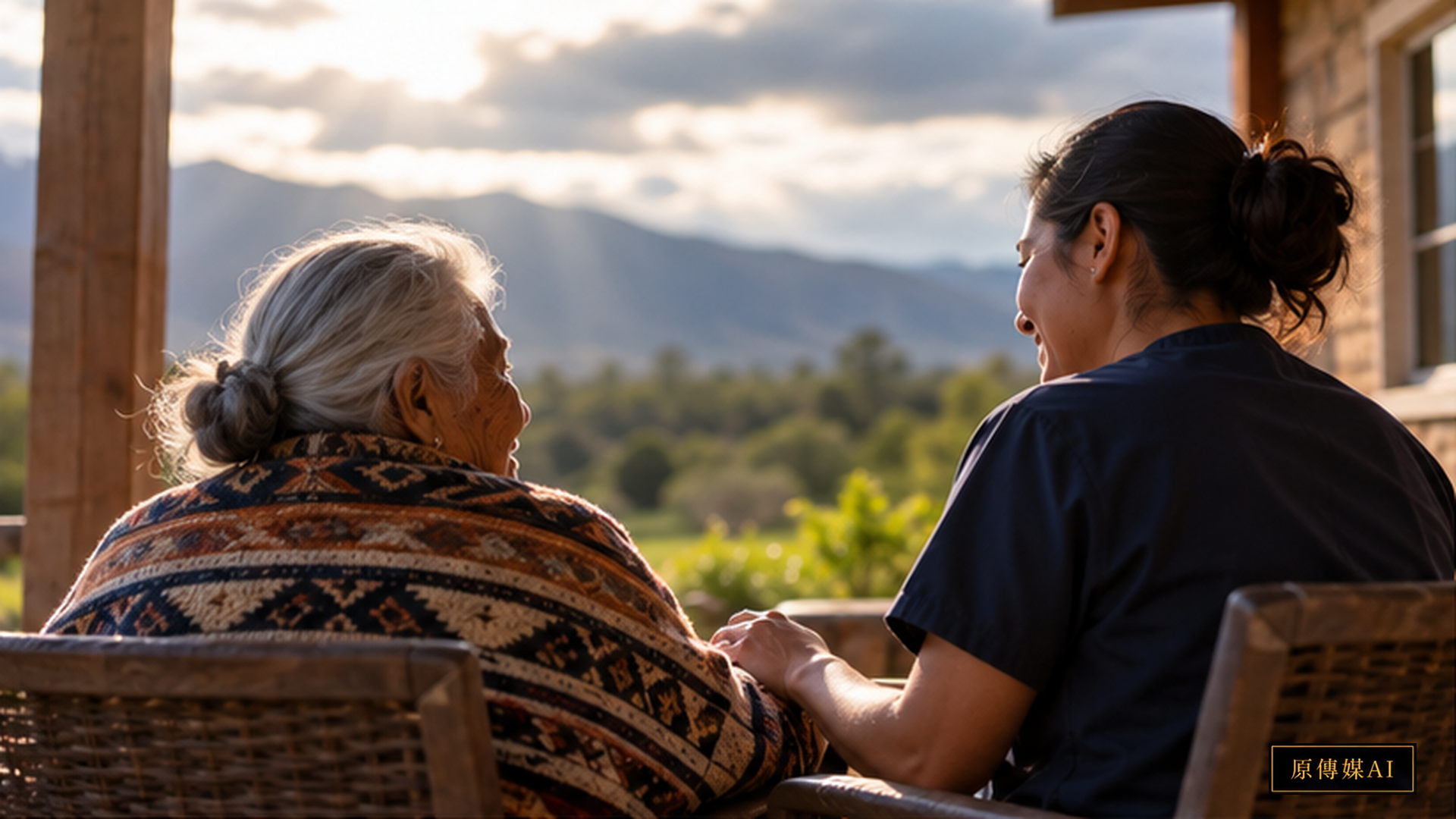
AI assisted in organizing public research and institutional information for this article and its guided questions. Findings, limitations and practical proposals are distinguished. The cover is an AI-generated concept image.