The 77th Signatory to Lunar Cooperation: What Transparency Really Requires After Uzbekistan Joins the Artemis Accords
Original Chinese title: 第 77 國加入月球合作原則:烏茲別克簽署 Artemis Accords 後,真正要公開的是什麼?
The Republic of Uzbekistan has formally signed the Artemis Accords in Samarkand, becoming the 77th nation to commit to principles guiding safe, transparent, and peaceful civil space exploration. While representing a historic reassertion of Central Asian astronomical heritage alongside modern aerospace capacity building—including its inaugural 2028 CubeSat mission—Uzbekistan's accession brings critical governance questions to the forefront. Key challenges include reconciling mandated public releases of scientific data with proprietary intellectual property protections, the ambiguous operational contours of lunar safety zones under the 1967 Outer Space Treaty, and geopolitical multipolar tensions. This analysis evaluates the genuine requirements of space transparency beyond diplomatic ceremonialism.
Lawrence Lee
Scholar at the University of Leeds and science and technology policy observer.
# The 77th Signatory to Lunar Cooperation: What Transparency Really Requires After Uzbekistan Joins the Artemis Accords
In the twenty-first-century geopolitical and technological contest to establish permanent human presence on the Moon and venture deeper into the solar system, multilateral diplomacy and technical norm-setting have emerged as the primary arbiters of celestial order. In the historic Silk Road city of Samarkand, the Republic of Uzbekistan formally signed the Artemis Accords led by the National Aeronautics and Space Administration (NASA), becoming the 77th nation to commit to principles guiding safe, transparent, and peaceful civil space exploration. This diplomatic ceremony commanded widespread international attention, not only because an ancient center of astronomical calculation reentered the modern aerospace arena, but because it illustrates how emerging non-traditional space nations are being drawn into lunar governance architectures delineated by major powers.
Yet, beyond celebratory ministerial handshakes, an essential question demanding rigorous scrutiny concerns the operational reality of international space governance: Under the banner of transparency and public scientific data release championed by the Artemis Accords, what are signatory nations genuinely required—and practically willing—to disclose to the global public? Does this framework represent an authentic charter for sharing lunar exploration dividends with humanity, or is it a regulatory instrument designed to consolidate technical and commercial hegemony under the guise of openness?
Historical Convergence in Samarkand: From Ulugh Beg's Observatory to Signatory 77
Uzbekistan's selection of Samarkand for the signing ceremony carries profound historical symbolism. In the fifteenth century, Timurid ruler and astronomer Ulugh Beg erected one of the ancient world's largest observatories, utilizing monumental sextants to compile star catalogues of unprecedented accuracy. Centuries later, this cultural seat of astronomical observation has anchored its position within modern space policy.
As recorded by NASA Releases: NASA Welcomes Uzbekistan as Newest Artemis Accords Signatory, the ceremony in Samarkand was signed by Minister of Foreign Affairs Bakhtiyor Saidov. NASA Deputy Administrator Matt Anderson underscored the timing of Uzbekistan's accession, emphasizing that as NASA advances plans for enduring lunar infrastructure, the Accords expand opportunities for like-minded nations to contribute meaningfully to lunar exploration.
This accession reflects a calculated geopolitical trajectory. According to the Ministry of Foreign Affairs of Uzbekistan: President Receives US Secretary of State Marco Rubio, President Shavkat Mirziyoyev met with senior American diplomatic delegations to deepen bilateral technological and economic cooperation. Uzbekistan has revitalized its national space agency, Uzcosmos, supporting university students and young engineers in developing the country's inaugural CubeSat demonstration scheduled for launch by 2028. Having secured the hosting rights for the 2028 International Astronautical Congress (IAC), signing the Artemis Accords serves as a pivotal demonstration of technical and diplomatic integration.
Ten Principles: Multilateral Reassurance or Normative Reconstruction?
Assessing Uzbekistan's accession requires scrutinizing the core text of the Accords. Guided by the NASA Official Framework: The Artemis Accords Principles for Civil Space Exploration, the agreement grounds its legitimacy in the 1967 United Nations Outer Space Treaty (OST), articulating ten practical operational principles: peaceful purposes, transparency, interoperability, emergency assistance, registration of space objects, release of scientific data, preservation of space heritage, space resource extraction, orbital debris mitigation, and deconfliction through safety zones.
On paper, these tenets outline a collaborative vision for space exploration, mandating open scientific publication and cooperative communication to prevent orbital and surface collisions. However, critical international space lawyers recognize that the Accords strategically bypass multilateral gridlock within the United Nations. The 1979 Moon Agreement, which designated lunar resources as the common heritage of mankind and mandated international redistributive mechanisms, was rejected by all major spacefaring nations. In contrast, the Artemis Accords establish that extracting and utilizing lunar resources—such as water ice and regolith—does not constitute national appropriation under Article II of the OST, clearing the legal path for private commercial extraction.
The Paradox of Transparency: Proprietary Enclosures and Safety Zones
Within this public-private exploration architecture, the Accords' emphasis on transparency faces acute institutional tensions:
First, an inherent conflict separates scientific data release from proprietary corporate intellectual property. While the Accords mandate scientific openness, contemporary lunar missions rely extensively on private contractors (e.g., SpaceX, Blue Origin, lunar lander developers). High-resolution hyperspectral resource maps, geotechnical drill telemetries, and in-situ resource utilization (ISRU) processing algorithms represent proprietary assets developed at immense private cost. Distinguishing open science from commercially protected data remains ambiguous, risking scenarios where the public receives only curated imagery while vital resource metrics remain confidential.
Second, operational safety zones introduce risks of de facto resource monopolization. Principle 11 permits operators to establish localized zones to prevent harmful interference. However, on the lunar south pole, optimal landing zones and permanently shadowed craters containing accessible water ice (such as Shackleton Crater) are severely limited. If early arriving actors establish extensive safety perimeters around extraction sites, they effectively exclude latecomers, testing the boundaries of Article II's prohibition on sovereign appropriation. The Accords currently lack independent arbitral mechanisms to adjudicate contested perimeters.
Third, structural asymmetries characterize technical exchange between established spacefaring states and emerging partners like Uzbekistan. Signatories commit to open domestic regulatory registries; yet emerging nations face stringent export controls, such as the International Traffic in Arms Regulations (ITAR), restricting access to core guidance algorithms and sensor architectures. Without robust bilateral technology transfer and capacity building, transparency remains largely unidirectional.
Fourth, space exploration increasingly mirrors terrestrial geopolitical polarization. Positioned in Central Asia, Uzbekistan maintains historical ties with Russia's Roscosmos and the Baikonur Cosmodrome, while neighboring China advances the International Lunar Research Station (ILRS) coalition. Uzbekistan's accession represents diplomatic multi-alignment; yet, as lunar architecture bifurcates into competing blocs, scientific interoperability risks subordination to ideological containment.
Civic Accountability: From Diplomatic Ceremonialism to Genuine Openness
Global civil society and independent science policy observers must look beyond ceremonial proclamations. Space exploration cannot become an unregulated frontier for technological enclosure or geopolitical posturing.
Ensuring that Uzbekistan's accession advances authentic public goods requires concrete oversight mechanisms:
First, signatories should maintain accessible public registries of bilateral implementation pacts. Commercial extraction licenses, payload allocations, and resource-sharing arrangements must be subject to legislative review and civic scrutiny.
Second, scientific bodies should establish an open-access global lunar environmental repository under the UN Committee on the Peaceful Uses of Outer Space (COPUOS). Raw topography, radiation, regolith composition, and hydrological datasets must be deposited in standardized formats accessible to global researchers without proprietary restrictions.
Third, mandatory environmental impact assessments must precede large-scale lunar surface operations. Protecting vulnerable lunar exospheres, volatile ice reserves, and historical landing sites requires independent scientific review panels empowered to mitigate irreparable ecological degradation.
Uzbekistan's accession demonstrates that human lunar exploration is expanding beyond traditional actors. True progress, however, is not measured by the arithmetic of signatories, but by whether the resulting governance models embody genuine transparency, equity, and peace.
Sources and Further Reading
Role-Driven Inquiry
Yuan Media AI | Guided Questions by Role
Select a role first, then review the complete questions from that perspective; clicking a question will display Yuan Media AI’s response in real time.
Select a role
Space Law Scholars
Examine the article's evidence, governance boundaries, data rights, and actionable steps from the perspective of a Space Law Scholars.
Choose a question
AI use and content-safety disclosure
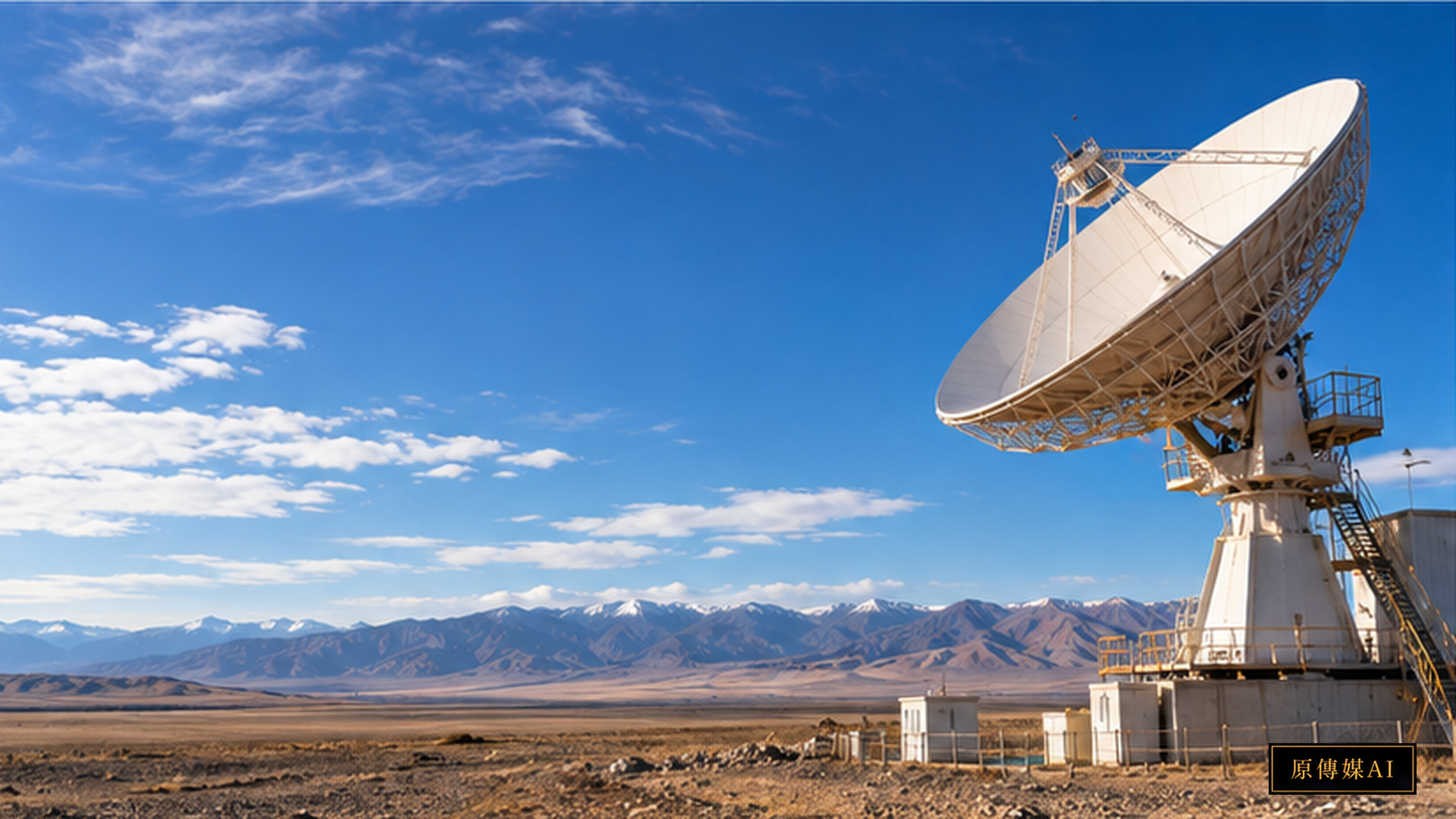
AI assisted in organizing public research and institutional information for this article and its guided questions. Findings, limitations and practical proposals are distinguished. The cover is an AI-generated concept image.