Why Was a Medieval Monk Buried in a Roman Sarcophagus? How a Reused Tomb Teaches Archaeology to Avoid Matching Surnames to Skeletons
Original Chinese title: 羅馬石棺裡為何是中世紀修士?一具被重複使用的墓葬,如何讓考古學避免「有名字就對號入座」
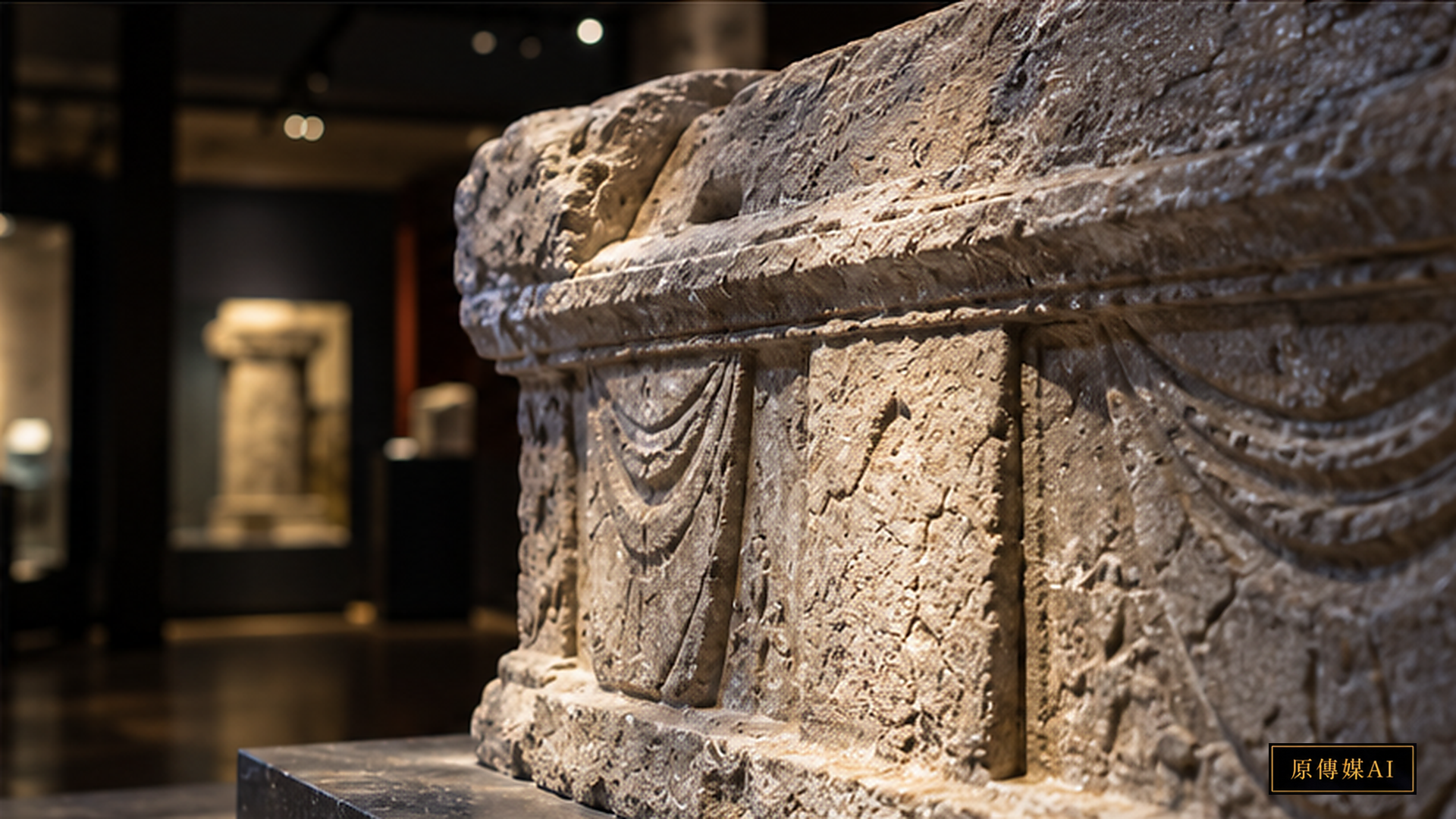
Unearthed in 1869 just outside the north entrance of Westminster Abbey, an ornate Roman limestone sarcophagus bore a fourth-century dedicatory inscription to a Roman citizen named Valerius Amandinus, juxtaposed against a prominent late Anglo-Saxon Latin cross carved across its modified lid. For over 150 years, this striking contradictory artifact puzzled historians until a comprehensive multidisciplinary investigation published in the Journal of the British Archaeological Association recovered the original skeleton and performed osteological analysis alongside AMS radiocarbon dating. The results definitively dated the male skeleton to c. AD 987–1052, dismantling the simplistic assumption equating inscribed names with physical remains and documenting an extraordinary case of high-status medieval funerary reuse honoring a monastic leader such as Abbot AElfwig. Authored by cultural scholar Natasha Gavrilenko, this study reflects on the complex afterlife of monuments, stratigraphy, and the museum ethics of curating historical uncertainty.
娜塔莎・加夫雷連科(Наташа Гавреленко,筆名)
Retired professor from Saint Petersburg State University who studied in Taiwan in her early years, specializing in literature, comparative literature, and humanistic arts, with continuous research focus on paleontology, evolutionary biology, and natural history interpretations. (Pen name; bio adheres to editorial verified records).
# Why Was a Medieval Monk Buried in a Roman Sarcophagus? How a Reused Tomb Teaches Archaeology to Avoid Matching Surnames to Skeletons
Within historical archaeology and the study of material culture, few phenomena are as intellectually captivating—yet as vulnerable to interpretive misdirection—as the survival, physical alteration, and functional repurposing of funerary monuments across civilizational epochs. In 1869, while excavating drainage trenches just outside the north entrance of Westminster Abbey, workmen unearthed a remarkably preserved Roman limestone sarcophagus. On its south face, a pristine classical Latin inscription dedicated the tomb to a fourth-century Roman citizen named Valerius Amandinus. Paradoxically, carved boldly across the entire surface of its coped stone lid was a prominent Latin cross exhibiting unmistakable late Anglo-Saxon artistic sensibilities.
For over a century and a half following its discovery, this enigmatic juxtaposition of pagan Roman craftsmanship and early medieval Christian symbolism deeply puzzled British antiquarians and ecclesiastical historians. According to the groundbreaking multidisciplinary study highlighted in the Westminster Abbey Official Research Release, abbey curators collaborating with renowned archaeologist Professor Warwick Rodwell re-examined the monument prior to its relocation into the Queen's Diamond Jubilee Galleries. In doing so, they recovered the original human skeletal remains—erroneously thought lost in Victorian-era misplacement—and deployed advanced osteological and chronological technologies to reconstruct an extraordinary saga of high-status medieval funerary recycling.
Reopening a Century-and-a-Half Archaeological Mystery
This research trajectory exemplifies critical material culture studies by demonstrating how rigorous scientific empiricism can dismantle long-standing historiographical dogmas. In initial nineteenth-century Victorian reports, antiquarians observed the Latin inscription bearing the name Valerius Amandinus and instinctively assumed the articulated skeleton within belonged to that fourth-century Romano-British citizen. This triggered romantic speculations envisioning an opulent pagan Roman villa estate spanning the marshy sands of Thorney Island long prior to monastic consecration.
Subsequently, as original excavation records fragmented and the skeleton was presumed lost, generations of scholars were reduced to examining the sarcophagus through museum glass, evaluating its carved surfaces via stylistic art-historical comparison alone. Only around 2018, when conservation teams undertook high-resolution photogrammetry and micro-cleaning, did specialists discover the complete human skeleton preserved within deep sediment beneath the stone lid. Reclaiming this physical evidence provided a crucial opportunity for transformative osteoarchaeological analysis.
The Contradictory Juxtaposition of Roman Inscription and Anglo-Saxon Cross
Comprehending the cultural resonance of this artifact requires directly confronting its structural and physical contradictions. The trough was masterfully carved from high-quality oolitic limestone quarried near Bath, displaying the refined epigraphic script of late fourth-century imperial Roman stonecarvers. Its corners feature classical acroteria, peltate roundels, and stylized foliate swags. Conversely, the lid was heavily re-tooled centuries later, its ridged profile sheared down and incised with a massive Anglo-Saxon Christian cross.
Published in the prestigious Journal of the British Archaeological Association DOI, the comprehensive investigation argues that this juxtaposition illustrates the concept of the 'afterlife of objects.' Had researchers focused exclusively on the fourth-century epigraphy, they would have remained blind to the historical process explaining why a monument crafted for a pagan patrician came to rest alongside an Anglo-Saxon monastery, inscribed with an evangelical cross miles west of Londinium's defensive walls. The physical tooling confirms a total sacred and social metamorphosis.
Osteological Profiling and Precision Radiocarbon Chronology
To definitively resolve the antiquity of the occupant, skeletal biologist James Young Langthorne conducted extensive morphological and paleopathological examinations across more than two hundred skeletal elements. The analysis established that the remains belonged to a robust adult male aged approximately 35 to 49 years at death, standing approximately five feet nine inches tall. His bones demonstrated excellent mineral density and an absence of degenerative occupational stress, reflecting a lifestyle insulated from grueling physical labor and indicative of elevated social standing.
The definitive scientific breakthrough arrived via high-precision Accelerator Mass Spectrometry (AMS) radiocarbon dating. Multiple bone collagen samples converged on a calibrated chronological bracket between c. AD 987 and 1052—more than six centuries after the Roman sarcophagus was quarried and inscribed. Furthermore, micro-chemical soil analyses confirmed that the deceased had first been placed inside a lidded wooden inner coffin covered in slaked lime for preservation and spiritual purification, before being interred within the massive stone receptacle. This physical evidence completely shattered the romantic assumption equating inscribed Roman names with skeletal occupants.
Contextualizing the Monastic Candidates: Abbot AElfwig and Late Saxon Leadership
Given that the skeleton represents a high-status Anglo-Saxon male interred around the turn of the eleventh century, who was he? Drawing upon the monastic architectural chronicles documented in Westminster Abbey Architectural History, prior to King Edward the Confessor's monumental Romanesque abbey dedicated in 1065, Westminster was home to a modest yet politically influential late Saxon Benedictine monastery. During this turbulent period, interment within a recycled classical Roman sarcophagus weighing several tons was a supreme ecclesiastical privilege reserved exclusively for towering institutional figures.
Evaluating monastic cartularies and contemporaneous Saxon charters narrowed the historical candidates to the small cohort of abbots governing the community during that radiocarbon bracket. Preeminent among them is Abbot AElfwig, who assumed monastic leadership around AD 993 and steered Westminster through twenty-seven years of Danish Viking invasions and dynastic upheavals until his death around AD 1020. Highly revered by Anglo-Saxon royalty, AElfwig was the spiritual architect of early monastic consolidation. A secondary candidate is his successor, Abbot Wulfnoth, who died around AD 1049. While bioarchaeology cannot provide modern identity cards, attributing the burial to Abbot AElfwig represents the most rigorous synthesis of radiocarbon probabilities and historical documentation.
Sacred Reuse: The Material Culture and Semiotics of Medieval Funerary Recycling
In modern eyes, utilizing another individual's tomb might be mistakenly dismissed as opportunistic resource scarcity or grave desecration. Yet through the lens of early medieval theology and material semiotics, the practice of *spolia* and funerary recycling represented an act of supreme honor, spiritual appropriation, and institutional legitimation.
To eleventh-century Anglo-Saxon monastic elites, Roman antiquities were invested with immense prestige as the physical remnants of Christian Rome and the universal Church. Transporting and carving an unblemished classical stone sarcophagus represented an exorbitant expenditure. Placing a beloved abbot inside a cleansed Roman container, surmounted by a triumphant Latin cross, visually articulated Christ's victory over paganism while physically linking the fledgling Saxon abbey to the timeless authority of imperial Roman Christendom. This was not humble economy, but a deliberate political and theological consecration.
Curating Uncertainty: Museum Ethics and Multilayered Historical Narratives
The forensic resolution of Westminster Abbey's Roman sarcophagus offers critical professional lessons for contemporary museology and heritage curation. Sensational media culture frequently demands simplistic headlines proclaiming 'Ancient Mystery Solved' or 'Identity Proven.' Such pressures entice public institutions to suppress interpretive nuance in favor of monolithic, definitive conclusions.
Responsible curation requires transparently exposing interpretive boundaries and evidentiary limitations. Within the Queen's Diamond Jubilee Galleries, pedagogical signage should delineate three distinct historical layers: the fourth-century Roman quarrying and aristocratic inscription; the eleventh-century Saxon tooling of the cross and liturgical re-interment; and modern osteological radiocarbon science identifying Abbot AElfwig as the leading historical candidate. Educating the public on how archaeology evaluates probabilities, acknowledges evidentiary gaps, and revises prior orthodoxies holds far greater civic and intellectual value than manufacturing premature certainties.
Conclusion
The century-and-a-half investigative arc of Westminster Abbey's Roman sarcophagus stands as an inspiring testament to the patience, humility, and interdisciplinary rigor required when interrogating the archaeological record.
A stone monument may bear a single engraved name, yet hold the remains of an entirely different era. This discovery warns us against falling victim to superficial epigraphic assumptions. The physical life of monuments is frequently longer, more volatile, and more culturally layered than the words chiseled upon their surfaces. Only by listening attentively to the marks of the chisel, the isotopes within ancient bone, and the silent archives of monastic history can we genuinely touch the authentic complexity and profound dignity of the human past.
Sources and Further Reading
Role-Driven Inquiry
Yuan Media AI | Guided Questions by Role
Select a role first, then review the complete questions from that perspective; clicking a question will display Yuan Media AI’s response in real time.
Select a role
Bioarchaeologists
Examine the article's evidence, governance boundaries, data rights, and actionable steps from the perspective of a Bioarchaeologists.
Choose a question
AI use and content-safety disclosure
AI assisted in organizing public research and institutional information for this article and its guided questions. Findings, limitations and practical proposals are distinguished. The cover is an AI-generated concept image.