90% Set Targets, Less than Half on Track: How COP17's First Global Stocktake Exposes Biodiversity Delivery Gaps
Original Chinese title: 九成國家有目標、不到一半在軌:COP17首次全球盤點如何拆穿生物多樣性承諾落差
The CBD's first global stocktake reveals that nearly 90% of parties have set national biodiversity targets, yet fewer than half of assessed targets are on track. Spatial intelligence desk examines statistical denominators, financing deficits, harmful subsidies, and botanical stewardship.
山海資料庫
Consultant: 莊溪
Open database initiative focusing on global and Taiwanese biodiversity monitoring, multilateral convention compliance, and local ecological governance telemetry.
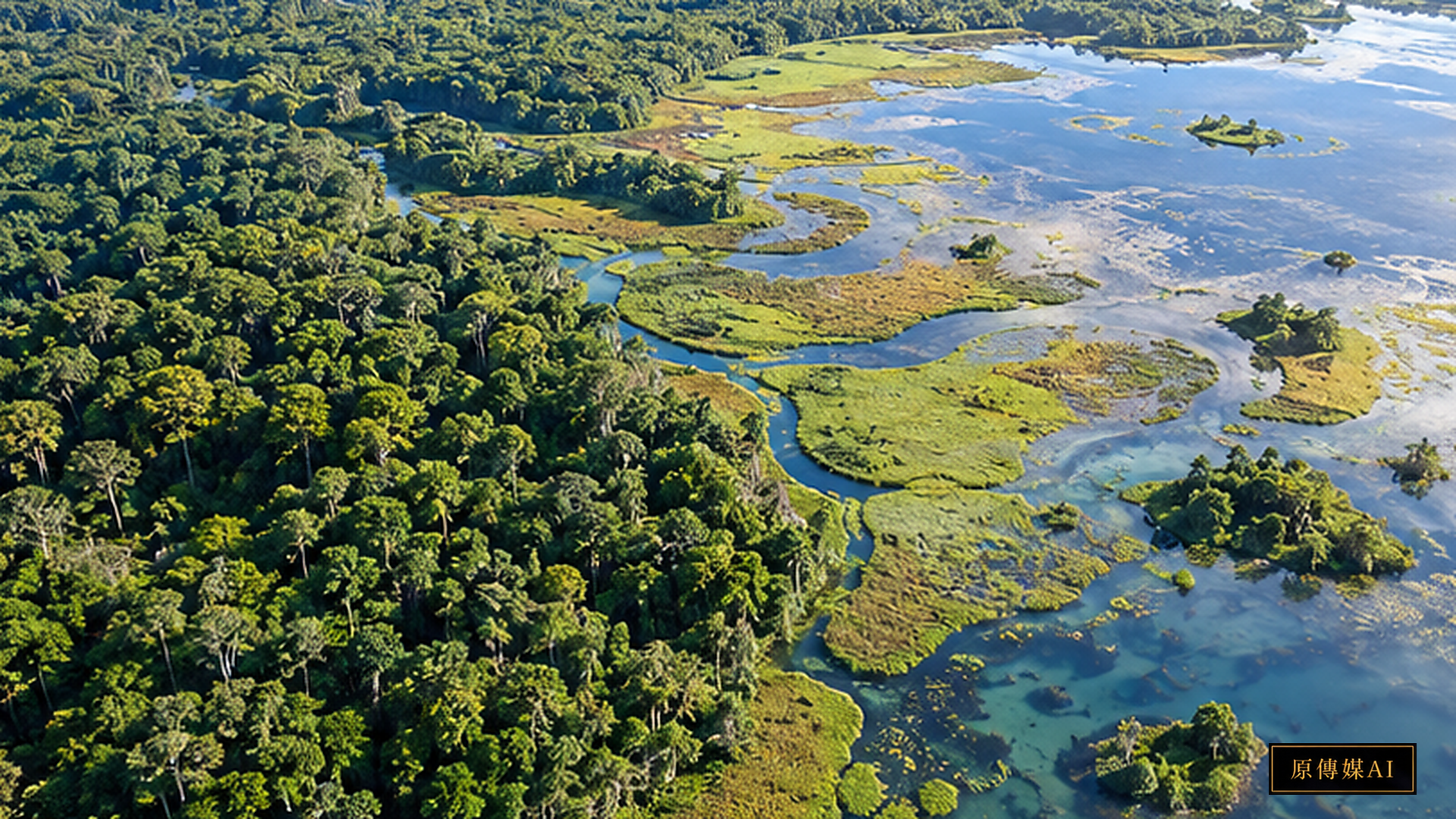
Whenever major international environmental summits conclude, heads of state and diplomatic delegations invariably step before cameras to proclaim historic multilateral accords, painting an inspiring vision of global ecological harmony. Yet behind diplomatic rhetoric and aspirational declarations, the physical deterioration of the biosphere continues unabated. Tropical deforestations persist across primary basins, vulnerable coral reefs undergo catastrophic bleaching episodes, invasive species relentlessly dismantle island ecosystems, and over one million species stand threatened with extinction. When environmental protection degenerates into diplomatic public relations, the international community requires objective empirical accounting rather than empty promises.
The First Global Test for the Kunming-Montreal Framework: COP17 Stocktake
On October 18, 2026, the Secretariat of the Convention on Biological Diversity (CBD) officially released its landmark assessment, the State of Biodiversity Action. According to the official bulletin documented by CBD State of Biodiversity Action First Global Assessment Press Release, this report represents the first comprehensive, institutionalized midterm stocktake since nations adopted the Kunming-Montreal Global Biodiversity Framework (KMGBF) in 2022. The landmark treaty established 23 quantitative targets for 2030, including the acclaimed "30x30" initiative (conserving at least 30% of global terrestrial, inland water, and marine systems), halving the introduction rate of invasive alien species, phasing out at least $500 billion annually in nature-harming subsidies, and mobilizing at least $200 billion annually in biodiversity financing.
This global evaluation reveals a stark structural divergence: measured by formal bureaucratic compliance, global participation appears unprecedented—nearly 90% of CBD Parties have officially submitted national biodiversity targets, approximately 60% have updated their National Biodiversity Strategies and Action Plans (NBSAPs), and over 70% submitted national progress reports on schedule. However, once analytical scrutiny penetrates formal documentation to evaluate tangible conservation implementation, severe delivery gaps emerge.
Methodological Rigor on Statistical Denominators: Deciphering "Off-Track" Realities
In public policy analysis, rigorous verification of statistical denominators is vital to maintaining institutional accountability. When interpreting core findings of the State of Biodiversity Action report, public media frequently mischaracterizes the findings by claiming that "less than half of all nations are protecting nature." In truth, as substantiated in the official global repository published by CBD Global Review Official Report and Evidence, the calculation denominator for the metric "less than half on track" is strictly defined as the total sum of discrete national targets submitted by governments and formally assessed by expert panels, rather than the total tally of member states.
Across thousands of individually evaluated national targets, fewer than 45% were determined to be functionally on track to achieve their 2030 objectives. Over 55% of assessed targets remain severely delayed, lack baseline empirical data, or exist purely on paper without legislative appropriations or spatial enforcement. This empirical distinction highlights a systemic policy pathology: while national governments enthusiastically endorse global treaties, domestic administrations consistently fail to translate multilateral pledges into binding zoning regulations, cross-sectoral budgets, or longitudinal ecological monitoring networks. This disparity between nominal target adoption and actual on-track delivery constitutes the central vulnerability of contemporary environmental governance.
Systemic Drivers of Implementation Gaps: Funding Deficits, Harmful Subsidies, and Data Voids
What structural impediments prevent national biodiversity commitments from achieving operational traction? According to the comprehensive diagnostic published by the United Nations DESA COP17 Global Nature Plan Assessment, international environmental governance is constrained by three institutional obstacles. Foremost is an immense financial chasm: while the KMGBF mandated developed countries to provide at least $20 billion annually to developing nations by 2025, scaling to $30 billion by 2030, actual multilateral disbursements remain at less than a third of pledged volumes. Debtor states endowed with mega-diverse tropical forests cannot sustain park ranger patrols, monitoring, and legal enforcement amidst fiscal austerity.
A second contradictory barrier involves government subsidization of ecological destruction: sovereign states continue directing trillions of dollars annually toward fossil fuel exploration, industrial fisheries, and chemical-intensive agriculture—expenditures dwarfing global conservation funding by orders of magnitude. Public authorities allocate modest sums for habitat restoration while simultaneously channeling massive fiscal subsidies toward ecosystem destruction. The third impediment involves severe ecological data deficits: many jurisdictions lack basic botanical inventories, species catalogs remain decades out of date, and field monitoring relies on sporadic project grants, leaving policymakers navigating blind amidst biodiversity collapse.
Grassroots Stewardship and Data Sovereignty: Botanical Literacy and Indigenous Guardians
Amidst systemic multilateral shortcomings, authentic resilience emerges from grassroots fieldwork and biological taxonomy. As demonstrated through the lifelong educational practice of botanist Chuang Hsi—recipient of Taiwan's Educational Dedication Award—biodiversity protection cannot remain an abstraction of international acronyms; it must be anchored in the rigorous taxonomic documentation and protection of every indigenous botanical species, riparian corridor, and micro-habitat. When a society loses the capacity to identify native flora and detect biological invasions, global conservation pledges collapse into empty rhetoric.
Crucially, modern conservation biology affirms that lands traditionally cared for by Indigenous peoples and local communities encompass over 80% of Earth's remaining biodiversity. Nevertheless, as the CBD stocktake emphasizes, expanding protected areas toward 30x30 targets must avoid repeating the historic violence of "Fortress Conservation"—expelling tribal custodians behind barbed-wire fences. Effective governance must formally guarantee Indigenous territorial sovereignty and strictly implement Indigenous Data Sovereignty (CARE Principles). Traditional ecological knowledge, sacred botanical sanctuaries, and gathering corridors must remain protected against extractive biopiracy and non-consensual disclosure.
Strategic Pathways for Island Ecosystems: Grounding Accountability in Civic Science
The institutional revelations of COP17 provide profound governance lessons for island ecosystems like Taiwan, which possess extraordinary topographic diversity and high rates of endemism. While excluded from official United Nations treaties due to geopolitical complexity, Taiwan has consistently aligned with international conservation frameworks. Collaborative initiatives by the Forestry and Nature Conservation Agency—including the Taiwan Ecological Network, Key Biodiversity Areas (KBAs), and wildlife roadkill monitoring networks—demonstrate the vibrant capacity of island civil society.
Nevertheless, the COP17 stocktake compels candid institutional reflection: does Taiwan's environmental policy exhibit similar delivery gaps, where ambitious targets lack binding cross-ministerial authority over urban zoning, industrial sprawl, and infrastructure development? Do invasive species management strategies remain hindered by fragmented administrative jurisdictions?
To bridge the gulf between declaration and reality, Taiwan must strengthen foundational citizen science: systematically supporting botanical taxonomy and longitudinal ecological observation while strengthening ties with the Taiwan Biodiversity Information Facility (TaiBIF) and empowering younger generations with field natural history competencies. Simultaneously, ecological health indicators must be granted binding authority across spatial planning, formally integrating tribal community stewardship compacts and co-management frameworks into national governance. Only by coupling empirical precision with localized knowledge can modern society safeguard a living ecological heritage for generations to come.
Sources and Further Reading
* CBD State of Biodiversity Action First Global Assessment Press Release
Role-Driven Inquiry
Yuan Media AI | Guided Questions by Role
Select a role first, then review the complete questions from that perspective; clicking a question will display Yuan Media AI’s response in real time.
Select a role
Indigenous Land Defender
Examine the article's evidence, governance boundaries, data rights, and actionable steps from the perspective of a Indigenous Land Defender.
Choose a question
AI use and content-safety disclosure
AI assisted in organizing public research and institutional information for this article and its guided questions. Findings, limitations and practical proposals are distinguished. The cover is an AI-generated concept image.