Language Is Not Binary: Why NILS4 Returns the Definition of Vitality to Communities
Original Chinese title: 語言不是「有或沒有」:NILS4 為何把「語言是否強健」的定義交回社群
Australia's Fourth National Indigenous Languages Survey (NILS4) transcends binary statistical models, returning the definition of linguistic vitality to community leadership. This analysis explores community governance, data sovereignty, Target 16 progress gaps, and insights for Taiwan.
雙向知識實驗室
Consultant: 林秀妹
Composed of certified teachers, Indigenous language researchers, cultural practitioners, and interdisciplinary scholars, dedicated to Indigenous language revitalization, gamified immersion curriculum design, and contemporary cultural knowledge transmission.
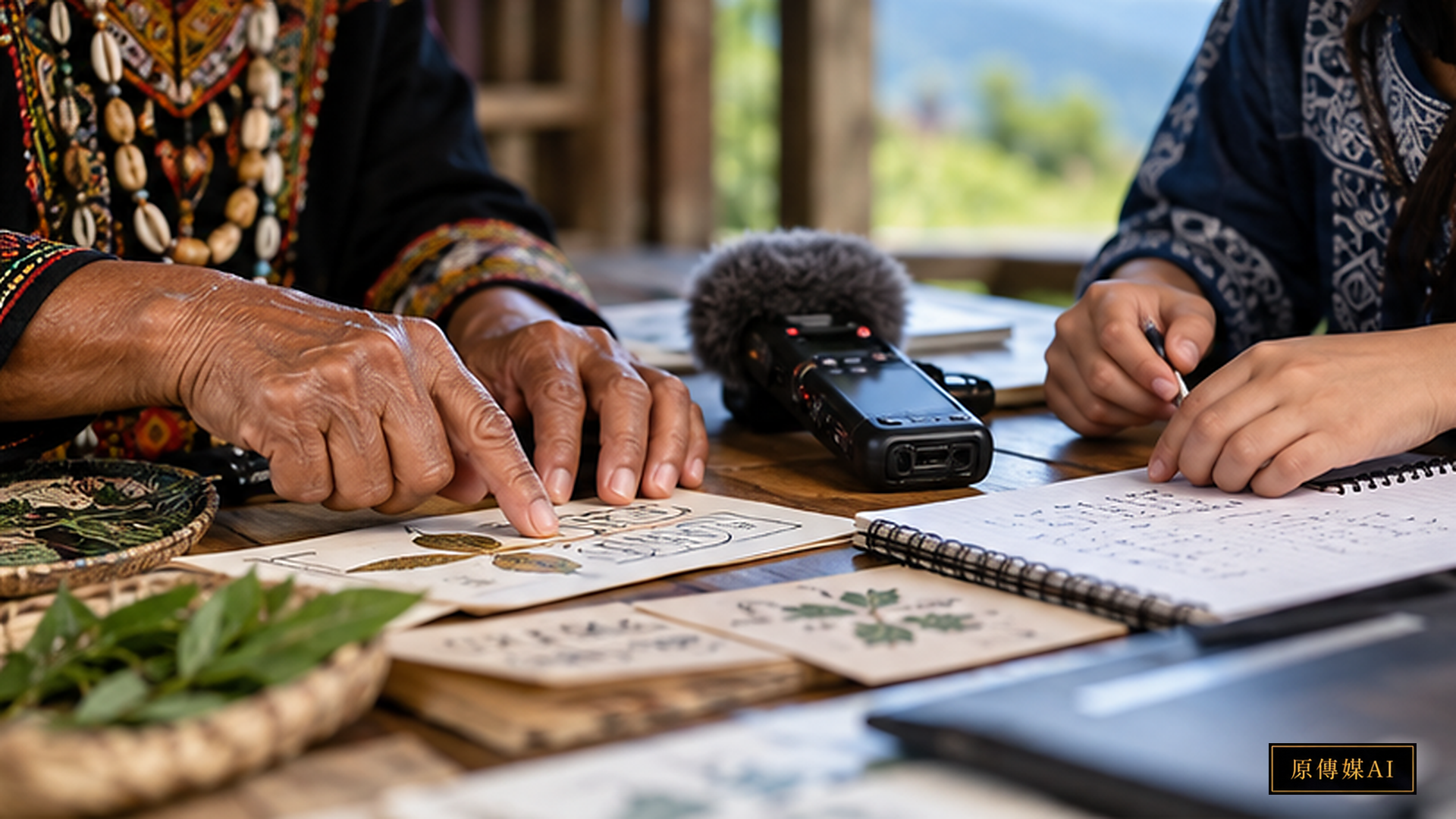
For decades, state demographic surveys assessing Indigenous languages have succumbed to an oversimplified binary classification: is a language officially registered as "living" or "extinct"? On national census questionnaires, does an individual report fluency or non-fluency? While such stark categorization facilitates bureaucratic budget allocations and administrative dashboards, it fundamentally obscures the vibrant, multifaceted reality of ancestral tongues within daily tribal life. Language vitality is never a binary switch; rather, it constitutes an intergenerational spectrum spanning everyday conversations, ceremonial songs, ecological navigation markers, familial exchanges, and contemporary civic participation. When vitality metrics are monopolized by external linguistic scholars or governmental agencies, communities are frequently labeled as functionally extinct, eroding localized confidence and sovereignty.
Paradigm Shift in Statistical Governance: Community-Led Vitality Metrics
In late 2026, the Australian Institute of Aboriginal and Torres Strait Islander Studies (AIATSIS) published the core outcomes of the Fourth National Indigenous Languages Survey (NILS4). According to the AIATSIS Fourth National Indigenous Languages Survey (NILS4), this extensive national project achieved a historic methodological breakthrough: abandoning top-down external indicators, it formally returned the conceptual definition and measurement of "Language Strength" directly to Indigenous communities. The survey gathered 269 comprehensive submissions encompassing 178 Indigenous languages; at the time of documentation, 177 of these documented languages continued to be spoken within community or cultural settings.
However, precise scientific boundaries must be maintained when interpreting these findings: recording 178 languages does not imply that only 178 Indigenous tongues exist across the Australian continent; rather, it reflects that 269 community organizations and language resource centers completed rigorous evaluations during this reporting cycle. Crucially, 92% of survey responses were directly submitted and verified by Indigenous communities, contrasting sharply with approximately 26% community leadership during the third survey round (NILS3). This 92% metric represents genuine operationalization of Indigenous Data Sovereignty, though it should not be conflated with total population census coverage. Under the newly established community criteria, 45 languages were designated as demonstrating robust strength; because evaluative dimensions were completely reconceptualized, these 45 languages cannot be mathematically contrasted with historical rounds to infer direct longitudinal growth rates.
Transcending Binary Frameworks: Multi-Dimensional Vitality and Daily Practice
Traditional state censuses have historically relied almost exclusively on headcounts of fluent native speakers. This reductionist framework invariably assigned an irreversible status of extinction to languages whose elderly speakers had passed, following generations of compulsory boarding schools and assimilationist policies. The radical innovation of NILS4 lies in establishing multidimensional assessment criteria rooted in collective community practice: vitality is measured not solely by individual eloquence, but by whether the idiom resounds in ceremonial protocols, whether youths accurately identify indigenous flora and hydrology in their ancestral language, whether familial affection is expressed at home, and whether digital archives and pedagogical tools are actively developed.
This holistic approach reveals that even when an idiom possesses few fully fluent elders, an active intergenerational commitment—manifested through immersion classrooms, youth transcription teams, and mobile apps—means the language is not a fossil, but an emerging seedling of cultural revitalization. As demonstrated in longitudinal findings by the Productivity Commission Closing the Gap Target 16 Dashboard, linguistic flourishing is intrinsically bound to holistic community health, identity resilience, and autonomous governance. Returning the authority of definition to communities rejects crude biological analogies of linguistic survival, honoring language as the collective home of the spirit.
Accountability and Governance Gaps: Reflections on Closing the Gap Target 16
From the perspective of national public policy, localized vitality metrics establish an uncompromising instrument for state accountability. Under Australia's National Agreement on Closing the Gap, Target 16 explicitly pledges a sustained and significant increase in the number and strength of Aboriginal and Torres Strait Islander languages by 2031. Nevertheless, evidence consolidated in the Productivity Commission Closing the Gap Annual Data Compilation 2026 reveals that systemic implementation remains profoundly off-track relative to 2031 benchmarks, plagued by bureaucratic delays, short-term project grants, and acute shortages of qualified language instructors.
Government ministries routinely deploy superficial statistical summaries to present an illusion of steady progress. Yet empirical grassroots data from NILS4 exposes administrative rhetoric: when national targets falter, the obstacle is rarely a lack of commitment among Indigenous custodians, but rather a persistent administrative reluctance to resource grassroots language nests and fair educator salaries directly. External consultancies consume public appropriations while local language keepers struggle without durable infrastructure. This structural mismatch between top-down funding and grassroots reality lies at the core of stagnant policy outcomes.
Two-Eyed Seeing in Data Science: Rigorous Analytics Grounded in Sovereignty
At the confluence of data science and Indigenous rights, NILS4 offers a compelling operational model of Two-Eyed Seeing. As conceptualized by Indigenous thinkers, Two-Eyed Seeing advocates learning to see from one eye with the strengths of Indigenous knowledges and ways of knowing, and from the other eye with the strengths of Western sciences and methodologies, using both eyes together for the benefit of all. In designing NILS4, AIATSIS data scientists did not discard statistical sampling rigor or construct validity; instead, they subordinated technical machinery to the ethical oversight of Indigenous elders and linguistic councils.
This bidirectional synergy ensures that analytical metrics satisfy rigorous comparative standards while honoring communal protocols. Furthermore, research teams enforced strict Indigenous data governance standards, notably the CARE Principles: sensitive sacred chants, clan genealogies, and private narratives remain under restricted access controls, refusing to compromise cultural integrity in the name of uncritical open data. This demonstrates that community self-determination strengthens, rather than diminishes, empirical precision by establishing trust and authentic data fidelity.
Critical Lessons for Taiwan: Moving Beyond Bureaucratic Standardized Testing
Evaluating Taiwan's indigenous language revitalisation initiatives in light of NILS4 yields critical governance insights. While Taiwan has enacted the Indigenous Languages Development Act, recognizing indigenous tongues as national languages and funding certification exams and immersion preschools, administrative implementation has grown excessively reliant on mechanistic metrics: pass rates, test taker quotas, and ceremonial events. Students memorize vocabulary items for academic bonus points, yet remain unable to converse spontaneously with grandparents at home. Grassroots educators exhaust energy compiling bureaucratic grant reports rather than cultivating conversational environments in village squares.
Taiwan must internalize global best practices, decentralizing the authority of assessment from central ministries to tribal communities. As exemplified by dedicated indigenous educators such as Siumay Lin in Paiwan language education and game-based learning, language acquisition cannot be reduced to rote grammar drills; it requires song, vocal resonance, physical games, and living community contexts. The vitality of a tribal idiom is measured not on examination sheets, but by whether children call to one another in their mother tongue, whether tribal assemblies deliberate in ancestral syntax, and whether ecological knowledge is passed across generations.
Language is the sanctuary of cultural memory and worldview. When Australia's NILS4 returns the definition of strength to Indigenous peoples, it affirms a timeless truth: only when communities are empowered as rightful custodians can ancient voices reverberate across generations with enduring dignity.
Sources and Further Reading
* AIATSIS Fourth National Indigenous Languages Survey (NILS4)
* Productivity Commission Closing the Gap Target 16 Dashboard
* Productivity Commission Closing the Gap Annual Data Compilation 2026
Role-Driven Inquiry
Yuan Media AI | Guided Questions by Role
Select a role first, then review the complete questions from that perspective; clicking a question will display Yuan Media AI’s response in real time.
Select a role
Language Custodian
Examine the article's evidence, governance boundaries, data rights, and actionable steps from the perspective of a Language Custodian.
Choose a question
AI use and content-safety disclosure
AI assisted in organizing public research and institutional information for this article and its guided questions. Findings, limitations and practical proposals are distinguished. The cover is an AI-generated concept image.