Putting First Nations Knowledge at the Centre of Education: What the AIATSIS 2026–2029 Strategy Changes
Original Chinese title: 把第一民族知識放回教育主體:AIATSIS 2026–2029 策略如何從「納入教材」走向文化回應
The Australian Institute of Aboriginal and Torres Strait Islander Studies (AIATSIS) released its 2026–2029 Education Strategy, centering First Nations voices, histories, and knowledge systems through truth-telling, translation, and transformation. This analysis examines how educational systems can move beyond merely including Indigenous topics toward community-led co-governance, contextualizing Two-Eyed Seeing, digital tools, and curriculum sovereignty for Taiwan.
雙向知識實驗室
Co-authors: 陳錦瑜, 欣賞文化多樣性, 發展聯合國 SDGs 全球公民意識及建立永續的全球夥伴關係
Composed of certified teachers, Indigenous language researchers, cultural practitioners, and interdisciplinary scholars, dedicated to Indigenous language revitalization, gamified immersion curriculum design, and contemporary cultural knowledge transmission.
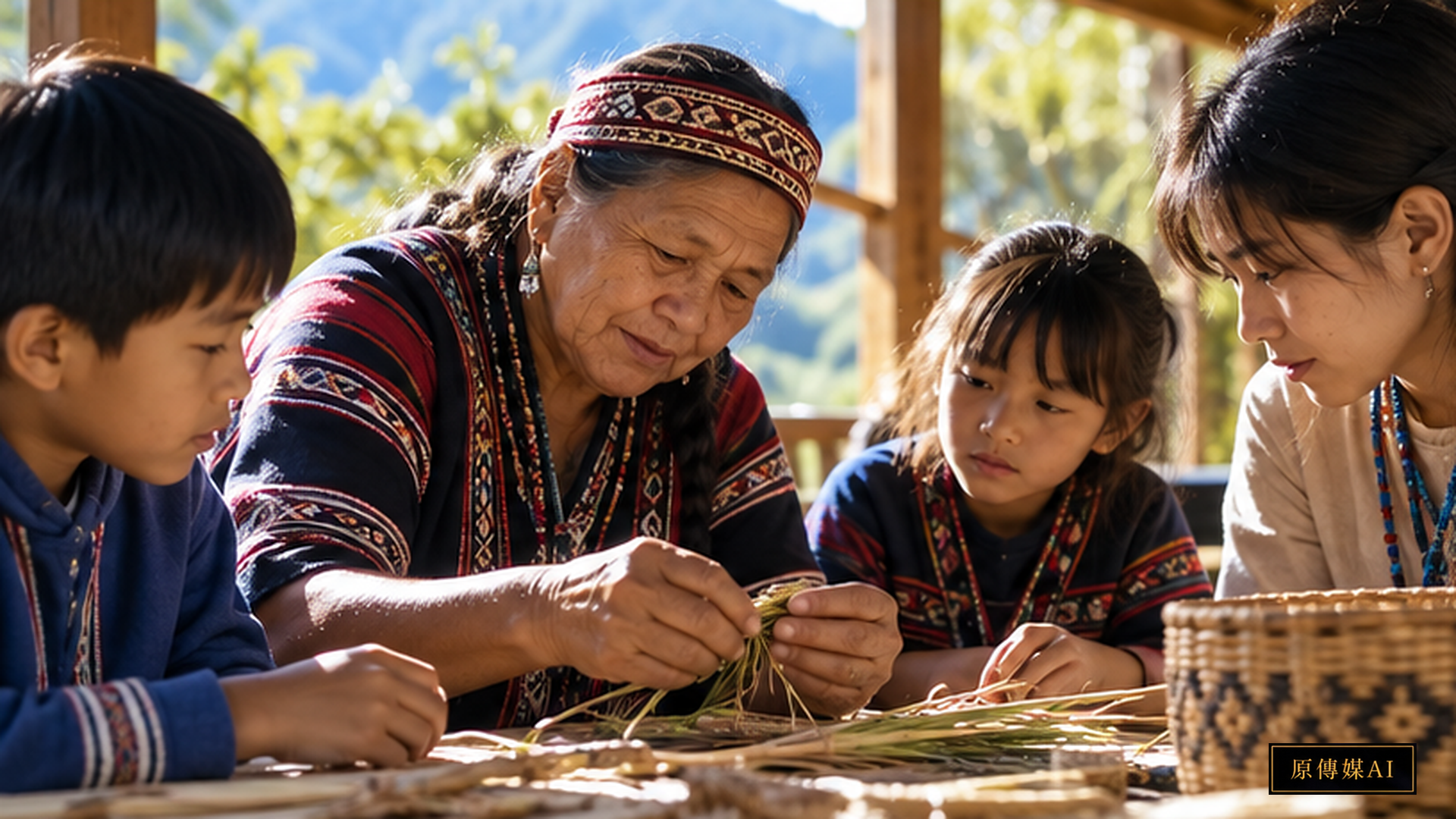
A curriculum can contain Indigenous photographs, vocabulary, festival descriptions and local history while leaving the authority to define knowledge entirely in the hands of the school. The decisive question is not how many pages mention Indigenous peoples. It is who decides which knowledge may be taught, what contextual information must accompany it, who can correct mistakes, and whether a community can decline publication. The AIATSIS Education Strategy and Guiding Principles centres First Nations voices, histories, cultures and knowledge systems. Its framework of truth-telling, translation and transformation invites institutions to examine their own responsibilities rather than treating culture as classroom decoration.
This Australian strategy offers questions for Taiwan, not a ready-made model. Education laws, Indigenous nations, languages and historical circumstances differ. Nevertheless, the distinction between cultural inclusion and shared authority matters in both settings. A school may celebrate diversity while retaining all decisions over recording, editing and distributing community knowledge. A culturally responsive system must make those decisions visible and negotiable.
More cultural material does not necessarily mean more cultural responsiveness
In early phases of curriculum reform, policymakers often mistake frequency of mention for substantive multicultural progress. When a textbook review committee announces that references to Indigenous topics have increased by a notable percentage, the broader public easily assumes that inclusion has been realized. Yet if those materials are assembled exclusively by non-Indigenous authors without consultation, if local communities are never asked whether descriptions of ancestral geography are appropriate, and if historic trauma is diluted into superficial harmony narratives, such inclusion remains an act of unilateral consumption.
The essence of culturally responsive education lies in restructuring authority. Institutions must move beyond asking what cultural artifacts can be exhibited in classrooms to examining who authorized the display, how communities participate in review, and what transparent mechanisms exist to repair errors. True educational equity begins only when school systems return interpretive authority and custodial oversight to Indigenous peoples themselves.
Truth-telling requires attention to both history and living communities
Truth-telling is more demanding than adding a paragraph about colonisation. Students should ask whose records formed the accepted narrative, which experiences were excluded, and how past policies continue to shape contemporary opportunities. Equally important, Indigenous communities are not historical exhibits. Young people live in cities and villages, use contemporary technology, study, work and develop cultural practices in changing circumstances. Teaching only ceremonies from the distant past risks freezing a living society into a museum image.
A responsible lesson can compare publicly authorised oral accounts with maps, official records and historical scholarship. It must not require an Indigenous student to disclose family knowledge or act as a representative of an entire people. Some stories are public; others have specific permissions or restrictions. Respecting a refusal to record or publish is a learning outcome, not an obstacle to the lesson.
Translation is not unlimited permission
The strategy's idea of translation involves making collections and knowledge useful in education. Yet translating a term into the dominant language does not transfer ownership or interpretive authority. Place names, linguistic distinctions and oral histories can carry relationships that a single database label cannot reproduce. The Australian Curriculum: Aboriginal and Torres Strait Islander Histories and Cultures supplies a national framework, but local teaching still requires consultation and contextual accuracy.
The same issue becomes urgent when educational materials are used to train or populate an AI chatbot or automated query system. A model may combine knowledge from different nations, invent a missing explanation, or treat a publicly readable page as permission for unrestricted machine learning. Data architecture should distinguish public material, community-restricted material, material excluded from model training, and content whose permission can be withdrawn. Responses should preserve cultural and geographic context and acknowledge uncertainty. A fluent answer is not evidence of cultural authority.
Transformation must reach school procedures
Transformation cannot be measured only by the number of annual cultural events. It concerns teacher preparation, procurement, assessment, community review and correction procedures. The AITSL Indigenous Cultural Responsiveness Capability Framework provides a professional reference for teachers and school leaders. Such frameworks describe aspirations and competencies; they do not prove that every institution has implemented them. Evidence of implementation lies in lesson plans, community agreements, student experiences, payment arrangements and records of how mistakes were repaired.
For example, a school could establish a recurring review process with language educators, community representatives and subject teachers. The reviewers would consider not just factual accuracy but whether an image is licensed, a story is detached from its setting, or a location reveals knowledge that should not be public. Community contributors should receive fair recognition and compensation. Consent should be specific enough to distinguish classroom use from online publication or AI training.
Two-Eyed Seeing as a method rather than a slogan
Two-Eyed Seeing invites people to learn from the strengths of different knowledge systems without pretending that they are identical. Scientific education can teach measurement, reproducibility and statistical inference. Community knowledge can foreground relationships, responsibilities, place-based observation and long-term care. A class studying a river could compare water-quality measurements with publicly shared seasonal observations. Neither side should be reduced to a decorative supplement to the other, and neither should be presented as speaking for every member of a community.
This approach also connects with global citizenship and the Sustainable Development Goals. The value of a partnership cannot be demonstrated by displaying SDG icons or photographing an international seminar. Meaningful partnership asks who makes decisions, who benefits from research, how results return to communities, and what happens when permission is withdrawn. The principles of cultural diversity and sustainability acquire substance through governance and reciprocal responsibility.
What should students actually learn?
Four assessment questions offer a useful starting point. Can students trace the origin and permission status of a learning resource? Can they distinguish one community's public statement from the position of an entire people? Can they explain how a knowledge holder might correct or withdraw content? Can they ask questions across knowledge traditions without treating difference as spectacle? These indicators are more meaningful than counting how many Indigenous motifs appear in textbooks.
Technology can help when its boundaries are clear. Games can support contextual exploration, chatbots can lower search barriers, and multimedia can communicate language and place. But none of these tools removes the need for permission, review and transparent correction. A synthetic image should never be presented as documentary evidence of a specific nation's dress. An AI voice should never be assumed to speak with community authority merely because it pronounces a language accurately.
What Taiwan can learn rather than copy
The Australian policy context, demographic distribution, and statutory landscape differ markedly from Taiwan's circumstances. As reflected in the breadth of public consultation documented in the Australian Department of Education: First Nations Education Policy Discussion Paper, what Taiwan can fruitfully adopt is procedural rigor: inviting communities to establish educational objectives before materials are developed, executing cultural safety and data governance audits prior to public release, and maintaining multi-stakeholder feedback loops following instructional delivery.
What cannot be uncritically replicated is transplanting foreign bureaucratic nomenclature directly into domestic regulations, or presuming that a single curricular model suits every Indigenous nation. Taiwan recognizes sixteen distinct Indigenous peoples, each possessing unique linguistic lineages, social structures, and customary protocols. Pilot initiatives should begin with closely collaborating schools, well-defined licensing agreements, and measurable learning indicators grounded in mutual respect.
A practical four-week pilot
A school might begin with publicly available information about a local river. In week one, teachers introduce ecological measurements and source literacy. In week two, an authorised community educator contributes publicly shareable place-based observations. In week three, students create a small digital presentation that identifies the sources and their permitted uses. In week four, teachers and community partners review the results together.
Students may choose a non-digital form of participation if they do not wish to record or upload personal material. The test of cultural responsiveness is ultimately whether communities gain a stronger voice over their knowledge's future. If schools and platforms retain exclusive authority to define, publish and reuse knowledge, the curriculum may contain more culture without becoming more accountable. Moving from inclusion to co-governance is the strategy's most useful challenge.
What records an educational resource should preserve
When an educational institution chooses to incorporate public oral histories or regional knowledge into curricula, documenting provenance is only the first step. Records should specify licensing date, permitted pedagogical scopes, authorized language variants, whether editing is permissible, online dissemination rights, and explicit policies on AI crawler indexing. While seemingly administrative details, these fields determine whether content can be responsibly updated or retracted in the future.
When educational materials are converted into interactive digital modules or conversational interfaces, systems must track model checkpoints, citation boundaries, and designated error reporting channels. Should licensing parameters alter, digital infrastructures must enforce real-time display cessation rather than relying on obscure footer disclaimers. For schools, this constitutes essential digital governance; for communities, it proves whether cultural sovereignty can be safeguarded by technology.
Preventing "co-production" from becoming another form of unilateral extraction
Many collaborative proposals celebrate co-production on paper, while actual workflows reduce communities to passive informants. Institutional leaders determine the topic, academic researchers construct the questionnaire, community members provide narratives, and publishing platforms unilaterally control public distribution. Dismantling this extraction requires negotiating decision rights, data residency, review timelines, equitable compensation, and revocation procedures before collaborative work begins.
Research deliverables must not reside solely in international journals or academic repositories; they must return to communities in accessible languages, intuitive formats, and barrier-free channels. These protocols do not diminish empirical rigor; rather, they prevent interpretive distortion, cultivate enduring trust, and ensure future collaborations begin from reciprocal respect rather than justified apprehension.
Sources and Further Reading
* AIATSIS Education Strategy and Guiding Principles
* Australian Curriculum: Aboriginal and Torres Strait Islander Histories and Cultures
* AITSL Indigenous Cultural Responsiveness Capability Framework
* Australian Department of Education: First Nations Education Policy Discussion Paper
Role-Driven Inquiry
Yuan Media AI | Guided Questions by Role
Select a role first, then review the complete questions from that perspective; clicking a question will display Yuan Media AI’s response in real time.
Select a role
Curriculum Coordinator
Examine the article's evidence, governance boundaries, data rights, and actionable steps from the perspective of a Curriculum Coordinator.
Choose a question
AI use and content-safety disclosure
AI assisted in organizing public research and institutional information for this article and its guided questions. Findings, limitations and practical proposals are distinguished. The cover is an AI-generated concept image.